Nitin Rai bought his investors out, kept his company, and eventually became an investor himself. There is a certain economy to this arrangement: after years of learning how a boardroom can complicate a founder’s life, he acquired the opportunity to improve the experience for somebody else. First Insight, the software business he founded in 1994, came first. Elevate Capital, launched in 2016, came with a memory.
The share buyback happened in 2010. It gives his career an unusual hinge. Many biographies hurry from founding to funding to exit, as though the company were a house purchased chiefly for the pleasure of moving out. Rai stayed. His investors got their departure; he continued with the business. When he later began managing a venture fund, he brought experience of needing capital, negotiating its conditions, and living with the consequences.
Four lines of Pascal, and a change of plans
One beginning belongs to Halifax. In 1984, at Dalhousie University, Rai wrote his first lines of Pascal in a computer programming class. Decades later, he remembered those four lines when introducing Elevate Capital to the world. The title of his launch essay was the programmer’s familiar greeting: Hello World!
His route had taken him from India to Canada, then through Silicon Valley, Oregon and Seattle. The geography matters because his career was assembled across places, employers and communities. A programming class supplied an unexpected direction. Subsequent jobs gave him problems to work on. Eventually, employment ceased to contain everything he wanted to do.
By 1992, Rai was at Mentor Graphics, working in its Common User Interface group. This part of his career has the pleasingly unglamorous texture of engineering: particular tools, particular problems, and work that has to function before anyone can admire it. He was project leader for GUI Builder, a dialog box editor, and the AMPLE debugger. His background included object-oriented interface toolkits and object management systems.
These are the sorts of tools that help other people build things. Long before Rai had a portfolio of founders, his working day involved the machinery behind somebody else’s work. He had earned his computer science degree from Dalhousie. He was in the middle of a technical career, before later chapters could lend the early ones an air of destiny.
Halifax, Canada
Oregon, United States
bought back
launched
The company he kept
In 1994, he founded First Insight. The company’s origin includes a piece of software that caught his attention: a computerized tracking system in an office. Rai saw room for a better product and built a business around the opportunity, working with users and a team of employees. Its flagship became MaximEyes.
The company’s history is a succession of practical additions: integrations, online ordering, connected transactions and, later, AI assistants. The product grew through work that rarely lends itself to a triumphant photograph. Someone has to notice an awkward step, understand why it exists, and make a replacement fit into the rest of the day. There is a great deal of software entrepreneurship hidden inside that sentence.
Funding the business required another education. Rai raised about $20 million in angel and venture investment. He eventually bought back his investors’ shares, an outcome that kept him attached to the company while changing its ownership. Capital had helped build the business; the relationship with its providers had a history of its own.
He has spoken about the barriers he encountered before and during that journey. At Mentor Graphics, he felt blocked from advancement by racial bias. He left to start First Insight. Years later, that experience helped explain why he paid attention to founders who might possess a sound idea and still struggle to be welcomed into the right room.
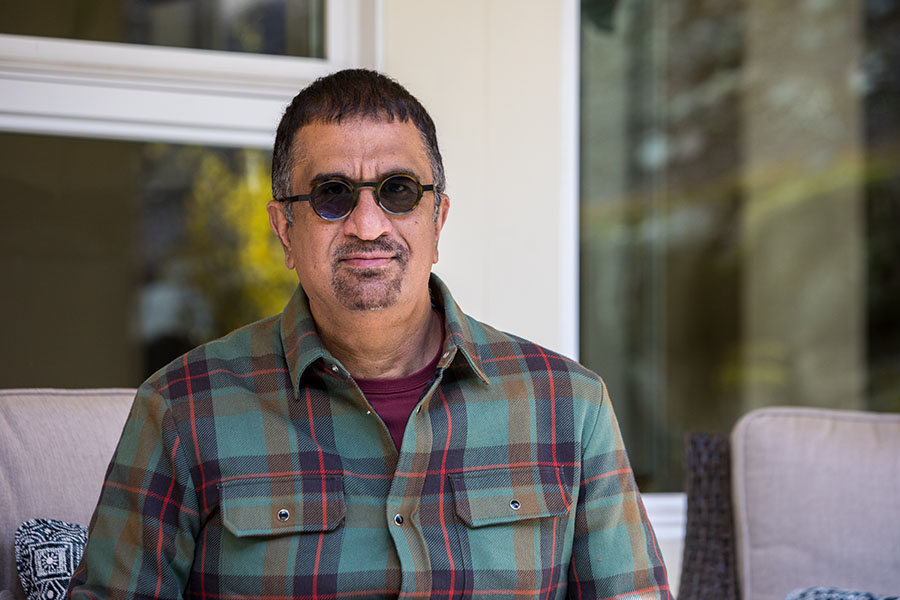
When the founders of GrowthPlug considered moving their company to Portland, Rai helped persuade them. Shared experience made him a useful person to talk to: he had come from India, worked in Silicon Valley and established himself in Oregon. An investor’s contribution can begin before a term sheet, with a conversation about whether a city might become home.
An invitation he had not asked for
The next business emerged partly because someone turned the attention back toward him. While presenting work connected with TiE, Rai encountered Rukaiyah Adams, then associated with Meyer Memorial Trust’s investment leadership. She wanted to discuss his next career move. She thought he should consider running a fund.
He had spent years trying to persuade people to back a business. Here was encouragement arriving before the business existed. Rai has described how startling that felt. He considered the possibility, developed a vision and agreed. The future fund manager had needed someone to see him in the role before he had fully imagined himself there.
Elevate Capital launched in 2016, twenty-two years after First Insight. Its founding intentions included investing in women and communities of color, reaching places with less capital, and combining money with mentoring. The geographical list extended beyond Portland to areas including the Willamette Valley, Central Oregon, Southern Oregon and Southwest Washington.
That founding list gives the ambition some texture. It names places where a promising business might sit outside the usual investor circuit. It also leaves room for businesses beyond software, including apparel and food. Rai was building a fund around access to opportunity, with an entrepreneur’s appreciation for how many forms a workable idea can take.
“I was overlooked too when I started my company First Insight 25 years ago.”
Nitin Rai, on the origins of Elevate Capital
A network is built one introduction at a time
TiE provided a setting in which that work could spread. Rai was a founding charter and board member of TiE Oregon from 2007. He served as the chapter’s president from 2012 to 2023, and led the TiE Oregon Foundation from 2018 to 2023. An eleven-year presidency suggests a commitment with rather more staying power than a visiting appearance at a pitch competition.
The chapter developed angel investing, mentoring, education and accelerator programs. By its 2018 account, its angels had invested more than $12 million in 52 startups. Those figures describe that period, rather than today’s total. They show the scale of an activity that can otherwise sound pleasantly abstract: connecting entrepreneurs with people willing to commit money and attention.
His responsibilities also extended to TiE Global’s Board of Trustees and TiE Global Angels. The work linked local relationships to an international entrepreneurship network. For a founder seeking an introduction, the distinction between a nearby mentor and a distant contact can disappear remarkably quickly once somebody is willing to make the call.
The check has company
Rai calls Elevate’s approach mentor capital. In practice, the firm’s support includes board participation, fundraising help, strategic guidance and work on reaching customers. The approach gives experienced operators a continuing role alongside an investment. An entrepreneur who has just raised money still has Monday morning to contend with.
That continuing work has become more structured through Elevate Edge, led by operating partner Allie Persitz. Its programs include sprint workshops, preparation for the operational demands around Series A, and confidential peer discussions called Pressure Valve sessions. The subjects range from financial planning and governance to positioning and customer success.
These activities bring the relationship down to the level of decisions. A founder may need to prepare a credible annual plan, identify the right customers or discuss a problem candidly with peers. Each calls for a different kind of help. A useful network contains people with different experiences, and enough trust for an unfinished answer to be admitted out loud.
Sprint workshopsLeadership, planning and market strategy.
Series A BridgeAnnual plans, governance and board preparation.
Pressure ValveConfidential feedback from peers.
By its 2025 year-end review, Elevate reported investments in 92 startups and $60 million in assets under management, helping create more than 1,200 jobs. It reported that 65 percent of its investments were in women-led companies. These are the firm’s own dated figures. Assets under management describe the fund business, rather than Rai’s personal wealth or an amount already paid into companies.
Elevate Capital’s reported year-end 2025 figures
The review also recorded Weave Communications’ acquisition of portfolio company TrueLark. For Rai, a completed sale has significance beyond a portfolio update. His stated ambition includes creating wealth for founders, their families and employees. The destination is a business outcome with people attached to it: a stake in what they helped build becoming something they can use.
Still asking the next question
First Insight remains part of his working life. In September 2026, the company launched The Focal Point, a monthly podcast hosted by Rai. The microphone adds another form of conversation to a career already crowded with them. Building, investing and interviewing share at least one demand: the willingness to ask a question whose answer might require changing the plan.
He has been candid about how he manages several responsibilities. Delegation matters. So does transparency between founders and investors. His account of a heated board disagreement at his own company carries the authority of someone who has experienced a meeting becoming less useful as its volume increases.
Asked in 2025 for three words that defined his life, he chose “Centered, calm, patient.” Patience, he acknowledged, had needed learning. The description sits well beside a company founded in 1994 and a second startup devoted to other people’s beginnings. Rai has given himself a working life in which the next promising founder might always require another conversation. He appears quite prepared to stay for it.