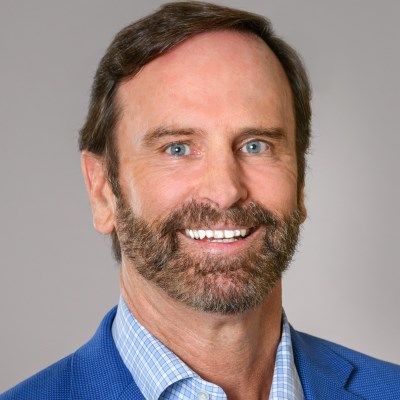
When David Andrews launched Gryphon Investors out of San Francisco in 1995, middle-market private equity was a simpler proposition: buy a company, cut costs, sell it in five years. The operations team was the CFO and a couple of consultants on speed dial. Andrews thought that was wrong. Not wrong in a business-school-whiteboard way. Wrong in the way that misses the point of what value actually is. So he built something different - a firm where a 40-person operations team is standard equipment, not a luxury add-on.
The biography matters here, because it explains the instinct. Andrews is a Stanford triple: B.A. Economics, J.D., M.B.A. He went to Salomon Brothers and Shearson Lehman Brothers, the kind of shops where you learn the machinery of capital at speed. Then Adler & Shaykin for private equity, then Oak Hill Partners where he co-led investments in CapStar Hotel Company, Pinnacle Automation, and Holophane as a Managing Director. By the time he founded Gryphon, he had sat inside the financial engineering model long enough to know what it couldn't do: build better companies.
The Challenge He Set for Himself
Andrews has described the core problem with a precision that makes it obvious once you hear it: "The challenge for middle-market firms is: How do you build shared services and capabilities of the large firms?" The megafunds had armies. Operations chiefs, functional specialists, IT teams, sector-specific partners. A middle-market firm with a $300M fund couldn't justify that headcount - or so the conventional wisdom went. Andrews decided the conventional wisdom was a trap.
The answer Gryphon built is called Deal-Ops. It is not a rebrand of the old operating partner model. It is a fully integrated structure that deploys industry expertise, general management depth, human capital professionals, IT and AI capability, and finance and accounting muscle into every portfolio company from day one. The 40-person operations team isn't overhead. It's the product.
The challenge for middle-market firms is: How do you build shared services and capabilities of the large firms?
- R. David Andrews, on building Deal-Ops at Gryphon InvestorsA Letter No One Wanted, and Everyone Needed
In August 2022, Andrews wrote to Gryphon's LPs. The message: we are about to enter one of the harshest cycles in private equity history. This was August. The Fed had been hiking rates since March, but the PE industry was still processing its record 2021 vintage. Deal volumes were still flowing. The consensus was that things would slow, not stop. Andrews read the specifics differently. High leverage costs, compressed multiples, portfolio company pressure all converging at once. He put it in writing and sent it.
The value of that letter is not that he was right, though he was. It's what the letter reveals about how Andrews operates: he watches cycle dynamics with the same rigor that most firms apply to individual deal underwriting. The early warning gave Gryphon time to adjust portfolio management, communication cadence, and deal pacing - the kind of operational advantage that compounds when things get harder for everyone else.
By the time Bain & Company brought him on their "Dry Powder" podcast to discuss it - titled "Spotting the Downturn Early and Coming Out Ahead" - the insight had aged well. The episode aired in a market where most firms were deep in markdowns. A second episode followed in February 2026: "Megafund Capabilities on a Mid-market Budget." Same thesis. Different proof points.
What the Portfolio Actually Looks Like
Gryphon runs three fund strategies: the Flagship Fund, the Heritage Fund (focused on smaller, family-owned businesses), and the Junior Capital Fund. The sectors are healthcare, business services, industrials, consumer products and services, and software and technology solutions. Each has a dedicated sector team. Andrews chairs the Investment Review Committee and sits on the Management Committee - the firm's principal decision-making architecture.
The healthcare focus reflects a genuine analytical position: aging demographics, cost containment pressure, consumerization of care, and the persistent fragmentation of provider services all create durable middle-market opportunity. Gryphon has built meaningful healthcare portfolio concentration - dermatology, behavioral health, outpatient rehabilitation, hospitalist programs - with the operational infrastructure to actually improve how these businesses run, not just how they're financed.
3Cloud is the clearest recent proof point. Gryphon backed the Microsoft Azure services provider in 2020. Over five years, organic revenue growth exceeded 20% annually. Total revenue grew more than 12x. In 2026, Gryphon sold 3Cloud to Cognizant. The deal was not about financial engineering - Azure services is not a leveraged buyout play in the traditional sense. It was about identifying a sector where specialized operational expertise (IT and cloud transformation) matched Gryphon's Deal-Ops infrastructure, then executing.
Over 30 years, Andrews has served as Chairman or Director of more than 50 companies. AlliedBarton Security. Bright Now! Dental. Eight O'Clock Coffee. Intelligrated. K&N Engineering. Sheplers. Trinity Consultants. Current roles include Jensen Hughes, Transportation Insight, and Wind River Environmental. That list represents something real: each company is a bet on a specific sector thesis, with a specific operational plan. Fifty-plus companies means fifty-plus versions of that process.
He spoke at the Milken Institute Global Conference in May 2025 - the kind of venue where middle-market PE founders don't usually headline. The fact that he was there is a data point about how Gryphon's profile has changed over 30 years. From a niche San Francisco shop to a firm that manages $10B+ and gets booked at Beverly Hilton panels alongside megafund CEOs.
On PE-to-PE Transactions
Andrews is precise about what makes a good deal and what makes a bad one. On sponsor-to-sponsor transactions, he draws a distinction: "You have to look into the specifics of each deal. When you see one mega-firm selling to another mega-firm, yes, that looks like a hot potato." The willingness to call that out - fund managers passing overvalued assets to each other at the top of a cycle - says something about how he approaches reputation and relationships in the industry. He's not interested in the deal that looks good at announcement and unwinds badly three years later.
The firm hit the hard cap on Fund V in 2019. In middle-market PE, hitting a hard cap means LPs wanted to put in more money than you'd allow. Andrews's response was to hold the line. Discipline about fund size is a form of honesty with LPs - it's a commitment that the strategy won't drift because the management fee math got attractive.
Thirty Years in One Sentence
Andrews built a firm that does what it says it does, at a scale that took three decades to reach, in a market where most firms talk about operations and most actually mean they know a few former executives. Gryphon's 40-person ops team, its sector-focused Investment Review Committee, its three-strategy fund structure, and its track record in healthcare and technology all compound from the same 1995 premise: that owning a company means being responsible for how it operates, not just how it's capitalized. That premise is now an industry consensus. Andrews got there first.