Anna Fang remembered the questions. On a visit to Stanford, she noticed a student who kept putting his hand up. Charlwin Mao would go on to co-found Xiaohongshu. Fang would back it at seed stage in 2013. In the neat retrospective version of venture capital, this becomes a story about spotting a valuable company. At the time, there was a much smaller thing to notice: a person who wanted to know more.
A raised hand is hardly an investment prospectus. Classrooms contain plenty of enthusiastic people who will never start a business. Yet the detail has stayed attached to Fang’s account of the investment because it makes her work legible. Before a company has results, an investor has to decide which human signals deserve weight. Curiosity is one of them. The trick is deciding when it points beyond a good afternoon in class.
Fang, the founding partner and CEO of Beijing-based ZhenFund, has spent her career close to that uncertain beginning. Consumer companies, robotics and artificial intelligence have all entered her field of view. The industries change. The awkward moment remains: someone is asking for money to build something that cannot yet supply much evidence on its own behalf.
The invitation she nearly declined
Her route into that work involved a certain amount of resistance. She began in investment banking at J.P. Morgan in New York after studying economics at Columbia. She later worked with China Now, earned an MBA at Stanford and joined GE China in corporate business development. These were recognizable jobs with recognizable organizations. A seed fund taking shape around an angel investor offered a less settled proposition.
In 2011, a Stanford connection, Dan Hu, brought her an opportunity involving Bob Xu. Hu was working at Sequoia Capital China, which was helping turn Xu’s personal angel investing into an institutional fund. Fang initially turned down the suggestion of investing. She wanted to get closer to startups, but the invitation did not immediately sound like her destination.
Meetings changed the calculation. Xu offered the perspective of an entrepreneur and former educator. Neil Shen helped explain the case for the proposed fund. Fang joined at 29 and co-founded ZhenFund with Xu and Victor Wang. Looking back, she has treated the decision as a piece of good fortune. Her career depended on somebody thinking she might suit work she had not been seeking.
There is a pleasing reciprocity in that origin. Hu saw something useful in Fang before she had an investing record to exhibit. She would spend the following years making judgments about other people whose records were also incomplete. The introduction gave her a chance to acquire the experience that would later make the choice look obvious.
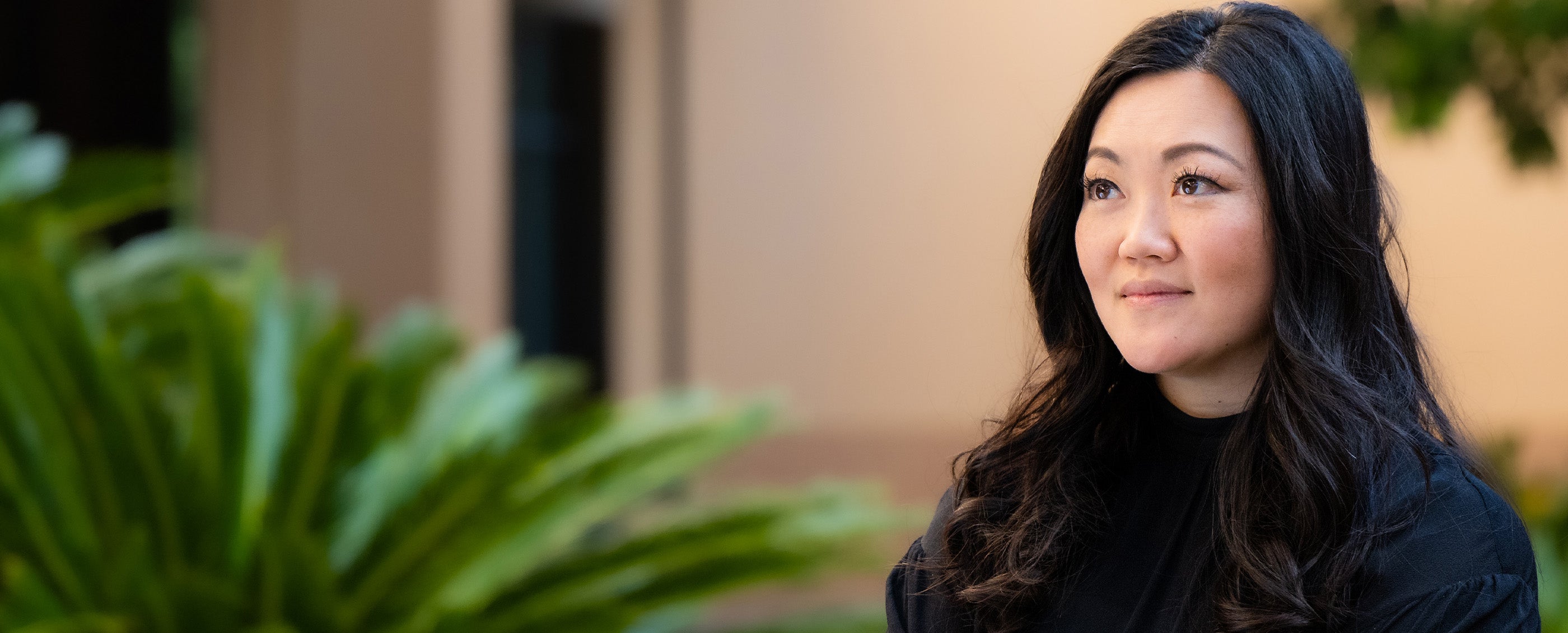
One of the first businesses she encountered at ZhenFund was a backpack travel startup. She enjoyed the conversation and the question of whether to invest. The appeal was in the task itself. A founder would explain a possible business; she could help determine whether it got a beginning. After jobs that had left her searching for a satisfying direction, this was work she wanted to repeat.
A question from the front row
The Xiaohongshu connection places that appetite beside a concrete decision. Fang recognized Mao from Stanford and invested early in the business he co-founded. What later became a familiar social and shopping platform first passed through the less glamorous condition of being a young company seeking belief and capital.
It is tempting to treat the classroom memory as a secret recipe. Put the inquisitive student in a fundable company and wait for the returns. The anecdote supports a narrower, more useful observation. Fang had paid attention before there was a transaction to negotiate. The encounter gave her an impression of the person, independent of the formal pitch.
That distinction matters in her account of learning from Xu. He encouraged her to notice entrepreneurs whose way of seeing things made a different world seem possible. She also sought a place on the investment side of ZhenFund when the original opportunity leaned toward operations. Being useful to the institution and choosing its investments became connected parts of the job.
Her early investment record includes Yatsen Group, the business behind Perfect Diary, alongside Xiaohongshu. Lightelligence adds a very different kind of technology company to the picture. This breadth helps explain her description of herself as a generalist. A founder’s specific understanding can take her into an unfamiliar area; she does not need every meeting to resemble the one before.
“I’m still looking for my ByteDance.”
Anna Fang, 2022
Twelve years between a demo and a bell
Mobvoi supplies a useful antidote to the speed of a good investment anecdote. ZhenFund joined its angel round in 2012. Mobvoi listed on the Hong Kong Stock Exchange on April 24, 2024. Between those dates lay twelve years. A reader can move across them in a sentence. A founder has to live every one.
Fang first met Zhifei Li through a ZhenFund pitch day in the Bay Area while he was still working at Google. She recalled noticing his scientific disposition, knowledge of his field and personal appeal. The company was then a demo app. Natural-language processing entered her own understanding through that encounter, too. She was learning about the subject while evaluating the person explaining it.
12 years between two public milestones.
The relationship also included people moving through ZhenFund’s orbit. Li recruited trainees and interns associated with the firm. Other ZhenFund investors spent time with him discussing the field. This is a more substantial picture of early investment than a handshake followed by a celebration years later. Introductions, recruiting and shared learning are part of the work around the capital.
The listing provides an observable endpoint for this chapter, rather than a verdict on every decision made along the way. It establishes the length of the relationship. For a profile of Fang, that duration is revealing enough. Her interest in the person at the demonstration had consequences that stretched well beyond the demonstration.
Teaching an instinct to a team
ZhenFund itself required building. Xu and Wang brought an entrepreneurial and educational history through New Oriental. Fang brought experience in finance, corporate development and organizing people. The fund needed a way to connect those backgrounds to a repeatable working practice. An investor’s instinct can begin a conversation; colleagues still need to understand how decisions are made.
Fang’s public responsibilities have encompassed investments, portfolio management and operations. Those duties introduce a second scale to the story. She evaluates founders while helping run the organization that evaluates them. The combination gives practical weight to the word partner. A fund has its own recruitment, relationships and decisions to manage while its portfolio companies attend to theirs.
Her university connections have continued alongside the investing. Columbia Global Centers identifies her with its Beijing advisory board and describes her earlier work at GE and J.P. Morgan. The record puts her in several overlapping communities: alumni, entrepreneurs, investors and former colleagues. Some connections produce an introduction. Others offer a place to keep exchanging ideas without an immediate deal attached.
The prize and the unfinished search
In 2022, Fang ranked first on the inaugural Forbes Midas Seed list and twelfth on the broader global Midas List. She was the highest-ranked woman on the latter that year. By June 2024, ZhenFund was announcing her placement at number 63. The dates belong beside the numbers. Rankings describe a particular assessment at a particular time; a career continues on either side of the announcement.
Fang’s reaction to the 2022 recognition contained some surprise and a conspicuously unfinished ambition. She wanted an investment with the scale of ByteDance. That wish gives her achievements a useful human proportion. An external list could place her first while her own attention remained on a company she had yet to discover.
Her later public appearances suggest continuity in what she looks for. At the Asian Financial Forum in January 2025, she described ZhenFund as investing in people rather than proceeding by themes. She also reported more deals in 2023 and 2024. In November 2025, she joined an AI discussion at the Bloomberg New Economy Forum in Singapore with technology founders and executives.
The AI conversation puts her among new products and technical questions, while the investment principle remains familiar. A fashionable category does not remove the need to understand who is building inside it. There is still a person explaining a possibility, and an investor deciding whether the explanation merits a longer relationship.
“The true measure of an investor lies in how you support founders when things get tough.”
Anna Fang
Her Chinese given name, Ai, means love. Fang connects that name to the way she thinks about helping founders. The sentiment acquires substance when she talks about staying alongside them during difficult periods. Early enthusiasm is easy to display. Remaining useful when a company struggles requires a less photogenic commitment.
The raised hand is a good place to return because it preserves the scale of the beginning. Fang did not encounter Xiaohongshu as a completed success story. She noticed Mao asking questions. Years of work, decisions and uncertainty separated that impression from what followed. Her career gives that small act of attention its proper importance, with all the waiting left in.
Keep the conversation going
Interviews, public profiles and a seat at the AI discussion.
Watch: Bloomberg New Economy Forum, 2025 ↗Listen: Analyse Asia with Bernard Leong ↗Read: Stanford GSB’s conversation with Fang ↗Read: The 2022 Midas Seed profile ↗Read: Fang reflects on twelve years with Mobvoi ↗