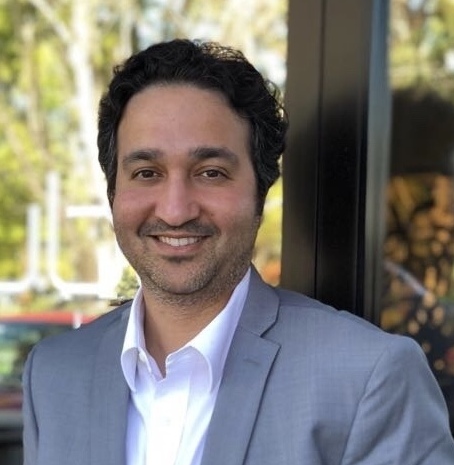
Talat Imran
CEO, Rani Therapeutics
CEO, Rani Therapeutics
Biotech / Drug Delivery / Oral Biologics
Talat
Imran
Building the pill that replaces the needle. One swallowable autoinjector at a time.
Biotech / Drug Delivery / Oral Biologics
Building the pill that replaces the needle. One swallowable autoinjector at a time.
Profile
Somewhere in a clinical lab, a small capsule is swallowed. It passes through the stomach intact, protected from the acid bath that would destroy most biologics. It reaches the small intestine. A tiny, precisely deployed needle - invisible, painless - injects its payload through the intestinal wall directly into the bloodstream. The capsule then passes out of the body, leaving behind a full dose of a drug that previously required a syringe, a nurse, and a decent amount of grimacing.
That capsule is the RaniPill. And Talat Imran is the person leading the company building it at scale.
Imran became CEO of Rani Therapeutics in June 2021, stepping into a role he had been preparing for since 2014, when he joined as Vice President of Strategy. He had spent years at the intersection of healthcare venture capital and technology - running a web development firm, managing deal flow for angel investor networks, co-founding a venture fund that connected physician investors with early-stage health companies. None of these roles look like traditional biotech CEO training. That might be why the approach feels different.
Rani Therapeutics is a clinical-stage biotech built around a single, audacious premise: the injection is a bug, not a feature. More than 100 approved biologic drugs currently require patients to self-inject or visit clinics for infusions. These are medicines for rheumatoid arthritis, Crohn's disease, diabetes, rare genetic disorders, and now - increasingly - obesity. The RaniPill platform is drug-agnostic. Feed it a peptide, a protein, a monoclonal antibody, or an oligonucleotide, and it will deliver it orally. Bioavailability comparable to subcutaneous injection. No sharps disposal. No injection anxiety. No cold chain requirements at the point of administration.
The market for injectable biologics runs into the hundreds of billions of dollars. Imran is not subtle about what that means. "I believe [Rani] has the potential to reinvent, disrupt and expand the biologics industry as we currently know it," he said at the time of his CEO appointment. That is not hype - it is a description of the attack surface.
"I am honored to be appointed CEO of Rani Therapeutics - a company that I believe has the potential to reinvent, disrupt and expand the biologics industry as we currently know it."- Talat Imran, on his CEO appointment, June 2021
Technology
The Swallowable Autoinjector: Four Steps
Step 1
Swallowed - Patient takes the RaniPill capsule like any other oral medication
Step 2
Protected - The capsule passes through the stomach acid intact, shielding the biologic drug
Step 3
Deployed - In the small intestine, a tiny needle deploys and injects the drug through the intestinal wall
Step 4
Absorbed - The biologic enters the bloodstream at bioavailability comparable to subcutaneous injection
The intestinal wall lacks sharp pain receptors - the injection is painless. The capsule passes naturally from the body.
The science behind the RaniPill is not hand-waving. The intestine, unlike the skin, contains few of the nociceptors that make injections painful. Rani's platform exploits this gap in the body's pain geography. The capsule - built with precision manufacturing - uses temperature, pH, or pressure to trigger deployment at exactly the right location in the gastrointestinal tract. The result is a transenteric injection: through the intestinal wall, not through the skin.
The platform is drug-agnostic by design. Rani's pipeline includes RT-114, a GLP-1/GLP-2 dual agonist for obesity (in Phase 1 trial as of January 2026, developed in partnership with ProGen), and a research collaboration with Chugai Pharmaceutical signed in May 2025 targeting two undisclosed molecules. The company's value proposition is not a single drug. It is a delivery technology that makes existing and future biologics tolerable for the patients who need them.
Background
Talat Imran grew up in Palo Alto, California, in a household where medical device invention was a daily occupation. His father, Mir Imran, is one of the most prolific medical device inventors in American history - credited with founding over 20 companies, including early work on the implantable cardioverter-defibrillator and development of the capsule endoscopy that preceded modern pill cameras. Rani Therapeutics is itself one of Mir Imran's creations.
This context matters. Talat did not study biology or medicine. He studied computer science at UC Santa Cruz - a choice that in retrospect makes sense for someone who would spend a decade building web applications, scaling startup infrastructure, and eventually applying the logic of platforms and networks to drug delivery. His path from software to surgery-without-surgery is not a detour. It is a through-line about systems thinking applied to hard physical problems.
Before joining Rani, Talat spent years in the ecosystem around Silicon Valley healthcare investment. He worked with The Angels' Forum, helping early-stage founders refine pitches and evaluate business plans. He served as Managing Director at InCube Ventures, the venture arm connected to his father's InCube Labs, evaluating early-stage health technologies. He co-founded VentureHealth, which created pathways for physician investors to back healthcare innovation. He ran Venture Web Partners as CEO, building web applications for startups. Each role added a layer: investment judgment, technology architecture, founder psychology, operational discipline.
By the time he became Rani's VP of Strategy in 2014, Imran had already spent years on the edges of the company's orbit. When he was appointed CEO in June 2021 - the same month Rani prepared for its Nasdaq IPO - he was not a surprise choice. "Talat has extensive experience in corporate development and fundraising and has been actively involved in Rani's key strategic decisions for many years," said board member Maulik Nanavaty at the time.
Leadership
Ask Imran what makes a technology company actually create impact, and he does not talk about the technology first. He talks about problem selection. "Make sure you're solving a really big problem that is poorly addressed and that you have the capacity to solve it, based on personal experience, technical abilities, and deep research," he has said. For Rani, the problem is not abstract: over a billion people worldwide receive injectable biologic therapies. Many of them would choose an oral alternative if one existed.
His leadership approach is built around a few principles that repeat across his interviews. One: revenue models are survival mechanisms. "Your solution must be profitable - you can't have a sustainable social impact that's based only on charity." Two: emotional stability during crises is not optional - it is the job. Running a clinical-stage biotech means living in permanent runway uncertainty, where every quarter of cash preservation buys time for science to catch up to ambition. Three: delegation is not weakness, it is the only way to manage simultaneous oversight of engineering, biology, clinical, regulatory, quality, operations, finance, HR, legal, and accounting. "While you may be able to do anything, you can't do everything."
The software background shows in how he thinks about communication inside the company. "People work best when they understand why they're doing what they're doing." At a company where a biologist, a regulatory affairs specialist, and a supply chain manager need to row in the same direction without anyone having full visibility of the others' work, that principle is not a platitude. It is architecture.
"Success is often a byproduct of not failing. The longer you can survive, the more time you give the market to catch up."- Talat Imran, on building sustainable companies
Words Worth Keeping
"Make sure you're solving a really big problem that is poorly addressed and that you have the capacity to solve it."
"While you may be able to do anything, you can't do everything."
"People work best when they understand why they're doing what they're doing."
"You can't have a sustainable social impact that's based only on charity. Your solution must be profitable."
"Success is often a byproduct of not failing. The longer you can survive, the more time you give the market to catch up."
"[Rani has] the potential to reinvent, disrupt and expand the biologics industry as we currently know it."
The Person
Talat Imran sings opera. Not casually - he has pursued classical voice training seriously enough to also write and record songs. This is a detail that tends to appear in profiles of him as a curiosity, but it reveals something: he has the patience for disciplines that require years before they reward you. Opera does not show progress the way software does. Clinical trials do not either.
He also practices jiu jitsu, and he is, by his own assessment, terrible at it. He keeps going anyway. This particular brand of self-awareness - accurate about shortcomings, unbothered by them, continuing regardless - describes how he talks about the biotech business as well. Rani Therapeutics has faced cash constraints, clinical uncertainty, and the particular pressure of being a platform technology company where the value is not in one drug but in the plumbing beneath every drug. The runway is finite. The clinical timelines are long. The market has not fully priced in what oral biologics could mean.
He maintains a vegetarian lifestyle and gardens - grounding practices for someone who manages the kind of organizational complexity that comes with a 110-person clinical-stage company spanning multiple scientific disciplines. The choice of these particular hobbies - long-cycle, craft-based, requiring attention without immediate payoff - is consistent. This is someone who is comfortable with latency between effort and result. That is exactly the disposition a company like Rani Therapeutics requires from its CEO.
Fun Facts
His father Mir Imran has founded more than 20 medical device companies. Talat is now running one of them.
The RaniPill uses the intestinal wall as its injection site specifically because the intestine has no sharp pain receptors - the injection is painless.
Studied computer science at UC Santa Cruz before pivoting entirely to healthcare venture capital - with no biology degree between the two.
The word "Rani" is Hindi and Urdu for "queen" - a choice with both cultural meaning and memorable brevity for a pharma brand.
Takes jiu jitsu classes and openly admits he is not good at it. He keeps going. The company keeps going too.
Sings classical opera and writes songs - a creative counterweight to running a company that spans engineering, biology, clinical research, and regulatory affairs simultaneously.
Latest Updates
Rani Therapeutics initiated a Phase 1 clinical study for RT-114, an oral GLP-1/GLP-2 dual agonist targeting obesity treatment, developed in partnership with ProGen and delivered via RaniPill.
Announced a Research Agreement with Chugai Pharmaceutical to evaluate oral delivery of two molecules with undisclosed therapeutic targets using the RaniPill platform.
Rani Therapeutics reported $27.6 million in cash, cash equivalents, and marketable securities as of December 31, 2024, with operations funded into Q3 2025.
Talat Imran participated as a speaker in the 2024 Maxim Healthcare Virtual Summit, representing Rani Therapeutics in a fireside chat format.
Established transformative partnership with ProGen for the RT-114 RaniPill formulation containing ProGen's PG-102, a GLP-1/GLP-2 peptide, targeting the obesity drug market.
Topics
Links & Profiles