Breaking
Talal Shamoon - CEO, Intertrust Technologies Pioneer of Digital Rights Management Cornell PhD in Electrical Engineering IEEE Signal Processing Sustained Impact Award - 2015 Co-founder of TEIA (Trusted Energy Interoperability Alliance) His patents power billions of devices worldwide Leading the energy data trust revolution Substack: Trust Rubicon Talal Shamoon - CEO, Intertrust Technologies Pioneer of Digital Rights Management Cornell PhD in Electrical Engineering IEEE Signal Processing Sustained Impact Award - 2015 Co-founder of TEIA (Trusted Energy Interoperability Alliance) His patents power billions of devices worldwide Leading the energy data trust revolution Substack: Trust Rubicon
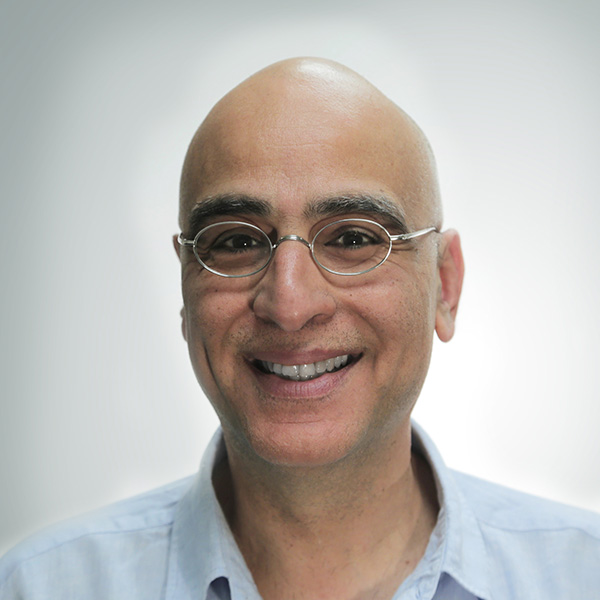
Talal G. Shamoon, CEO of Intertrust Technologies
Silicon Valley Executive / Computer Scientist / CEO

TalalShamoon

The man who secured your streaming movies is now securing the power grid - and has been at it longer than you think.

CEO DRM Pioneer IEEE Award Intertrust Technologies Cornell PhD Berkeley, CA
20+
Years as CEO
1B+
Licensed Devices
1997
At Intertrust Since

"The world we are moving into is one where the baby camera is going to wake up and say 'Hey home gateway, I am a baby camera.' That home gateway better know that it's really a baby camera and not some creep watching your kid."

- Talal Shamoon, CEO, Intertrust Technologies

$32M
Annual Revenue
160
Employees
$43M
Total Funding
2003
CEO Since

The Long Game of Trust

In 1997, Talal Shamoon walked into Intertrust's research lab in Sunnyvale, California, carrying a Cornell PhD in electrical engineering and fresh off three years at NEC's Princeton research institute. He would not leave. Twenty-seven years later, he still runs the place - and the domain he chose to work in, digital trust, is more relevant than ever.

Intertrust built the plumbing for content protection - the invisible machinery that lets a movie travel from a studio server to your screen without being copied along the way. Shamoon was there when that was a radical idea, when the internet was eating the music industry alive and studios were bracing for impact. He helped build the SDMI (Secure Digital Music Initiative) framework and became the company's leading voice on DRM at a moment when the acronym meant everything.

When Sony and Philips acquired the company in 2003 - pulling it out of bankruptcy - they handed Shamoon the top job. He's been running it ever since, which puts him in a rare category: Silicon Valley CEOs who've held the same chair for more than two decades without being pushed out, bought out, or burned out.

What changed is not the man but the market. DRM for entertainment was the starting point. Now Intertrust's trusted computing platform spans IoT device security, energy data governance, PKI infrastructure, and zero-trust network architecture. The company's inventions underpin billions of licensed products globally - from the chips inside consumer electronics to the protocols securing virtual power plants.

In 2022, JERA - Japan's largest power generation company - led a strategic investment round in Intertrust, a signal that the energy industry took Shamoon's pivot seriously. The following year, he co-founded the Trusted Energy Interoperability Alliance (TEIA) alongside E.ON, JERA, and Origin Energy, a coalition focused on open standards for secure energy devices and data systems. The ambition: build trust infrastructure for the decarbonization era the same way Intertrust built it for the media era.

He publishes a Substack called "Trust Rubicon" - covering technology, business politics, and life - which fits the profile of a systems thinker who doesn't believe trust is a technical problem alone. His 1997 paper on secure spread spectrum watermarking for multimedia, co-authored at NEC Princeton, won the IEEE Signal Processing Society's Sustained Impact Paper Award in 2015 - 18 years after it was written. That's not a career highlight. That's a proof-of-work.

From Lab Bench to Corner Office

1994 - 1997
Researcher at NEC Research Institute, Princeton, NJ - focused on digital signal processing and content security. Co-authored foundational watermarking research alongside colleagues including Ingemar Cox.
1997
Joined Intertrust Technologies as a member of the research staff in Sunnyvale, CA. Collaborated with legendary computer scientist Robert Tarjan.
1997
Co-published "Secure Spread Spectrum Watermarking for Multimedia" in IEEE Transactions on Image Processing - a paper that would become a citation cornerstone in the field.
1999 - 2002
Became a key technologist for the Secure Digital Music Initiative (SDMI). Led Intertrust's DRM efforts targeting movie studios, music labels, and publishers as EVP for Business Development and Marketing.
2003
Appointed CEO of Intertrust Technologies after Sony and Philips acquired the company out of bankruptcy. Began rebuilding the company around trusted computing services and IP licensing.
2015
Received the IEEE Signal Processing Society Sustained Impact Paper Award for the 1997 watermarking paper - 18 years after publication.
2022
JERA, Japan's largest power generator, led a strategic investment round in Intertrust, validating the company's energy sector pivot under Shamoon's direction.
2023
Co-founded the Trusted Energy Interoperability Alliance (TEIA) with E.ON SE, JERA, and Origin Energy to develop open standards for secure, interoperable energy devices and data systems.

"The confluence between secure data rights management in the cloud and secure, authenticated IoT devices is where it's at right now. The plumbing is in place, but without the proper security infrastructure in place, the pump won't pump."

- Talal Shamoon

Proof of Work

🏅

IEEE Sustained Impact Award

Received the IEEE Signal Processing Society's Sustained Impact Paper Award in 2015 for a 1997 co-authored paper on secure spread spectrum watermarking - proof that foundational research compounds over time.

🌟

DRM Pioneer

One of the earliest architects of Digital Rights Management technology, helping define how content gets protected and licensed in the digital age. His work at SDMI shaped industry standards in the critical Napster era.

🌎

Billions of Licensed Devices

Under his leadership, Intertrust's patents and technologies now underpin billions of licensed products worldwide - from consumer electronics to enterprise infrastructure.

Energy Sector Pivot

Successfully repositioned Intertrust from media DRM to energy data governance, attracting JERA as a strategic investor and building the Trusted Energy Interoperability Alliance with E.ON, JERA, and Origin Energy.

🔒

Marlin DRM Chairman

Serves as chairman of the developer community for Marlin, an interoperable DRM standard used across the global media ecosystem to secure content delivery.

📈

Two Decades at the Helm

Rare by any measure: 20+ consecutive years as CEO of the same company, navigating from bankruptcy recovery through licensing dominance to global trusted infrastructure provider.

Trust as Infrastructure

The word "trust" gets thrown around Silicon Valley like confetti. Shamoon means it architecturally. Intertrust's core thesis is that in a world of billions of connected devices and distributed data, the question is not just "is this data encrypted?" but "does the system know what it's supposed to do with this data, and can it verify who's asking?"

That's a harder problem than encryption. It requires policy enforcement, identity verification, rights management, and audit trails - all of which scale across heterogeneous systems that don't share a common owner. This is what Intertrust calls trusted computing, and it's what Shamoon has been building for three decades.

The energy transition gave the problem new urgency. Distributed energy resources - solar panels, batteries, EV chargers, smart meters - are proliferating faster than the governance frameworks to manage them. Who can command your home battery to discharge to the grid? Who is authorized to read your energy usage data? How does a virtual power plant operator know the devices in the pool are actually there, actually working, and actually compliant?

These are, at their core, DRM problems dressed in orange safety vests. Shamoon saw the isomorphism and followed it.

Planet OS - a company he chaired the board of - focused on making energy data interoperable and usable for AI-driven analytics. The play: if you can give utilities and energy companies a trusted, governed data layer, you unlock everything from predictive maintenance to real-time carbon accounting.

TEIA, announced in 2023, takes this further. Rather than proprietary solutions, TEIA pushes for open technology standards - the belief being that trust infrastructure, like internet protocols, should be shared and not owned. It's an unusual stance for someone running a company whose business model depends partly on proprietary technology, but Shamoon has consistently framed interoperability and open standards as the path to scale, not a threat to it.

His third quote sums up the operating philosophy: "We do only one thing - provide software for secure interoperability. We are neutral, we don't compete with our customers, we don't try to upsell them hardware, other software or consulting." In an industry full of platform companies trying to lock you in, that's a deliberate positioning - and it's survived 20+ years of market changes.

Trusted Computing DRM IoT Security PKI Energy Data Zero Trust Open Standards Blockchain

"We do only one thing - provide software for secure interoperability. We are neutral, we don't compete with our customers, we don't try to upsell them hardware, other software or consulting."

- Talal Shamoon, on Intertrust's competitive positioning

Fun Facts

The Details That Matter

01

Shamoon's 1997 watermarking paper has been continuously cited for nearly three decades - in a field that moves at internet speed, that's geological time.

02

He runs a Substack called "Trust Rubicon" on technology, business politics, and life. The name is a reference to a point of no return - fitting for someone building infrastructure that once deployed, you can't easily walk back.

03

He was working on music protection at SDMI just as Napster was building the category-killer that proved the music industry wrong about everything. His response wasn't to pivot away from trust - it was to build more of it.

04

When Intertrust went through bankruptcy in 2003 and Sony and Philips bought it, they kept the man who had been there since 1997 and made him CEO. Twenty-plus years later, he's still there.

Talal Shamoon in Conversation

Kill Hierarchy for Better Performance in Business

Talal Shamoon on flat organizational structures, decision velocity, and why hierarchy slows companies down at critical moments.

Intertrust CEO at IBC 2017 (Bitmovin Interview)

Talal Shamoon at the International Broadcasting Convention discussing content security, DRM evolution, and Intertrust's platform strategy.