retail-analytics
(42)
The Retail Refinery wants your spreadsheets to have better taste
Adam Fox brings a luxury buyer’s eye to retail analytics, websites, and pitch decks. His boutique consultancy treats the way a business looks as part of the way it works.

Hanwha Vision Europe wants your cameras to earn their keep
A warehouse conveyor, an airport checkout and a Finnish substation explain Hanwha Vision Europe’s bet: cameras become more useful when they help people act on what they see.

Red Ant and the art of the five-minute checkout
Furniture Village cut checkout from 20–30 minutes to five with Red Ant’s retail software. Behind the faster sale is a bigger ambition: giving store associates the information, tools and credit to serve customers wherever they buy.

Kalibrate knows the corner. And the price at the pump.
Where should the next store go, and what should it charge? Kalibrate has built a business around those expensive questions - with retail forecasts, fuel pricing software and a growing debate over algorithmic power.

Symphony EYC wanted your shopping basket to run the supermarket
EYC turned loyalty data into decisions about what to stock, promote and put on the shelf. Its journey into SymphonyAI shows why knowing the shopper was only half the job.

Flooid wants every checkout to agree
A coupon should not need a passport to travel from an app to a till. Flooid’s business is making the rules of retail work across both - and its customers show why that is harder than it sounds.

The Shelf Is Lying. Retail Insight Wants the Truth.
Retailers have oceans of data and five minutes to act. Retail Insight's bet is that the valuable product is not another dashboard - it is the next task, ranked, explained and pushed to the person who can fix the shelf.

Brands Were Copying Amazon Reviews Into Excel. Revuze Turned the Mess Into a Daily To-Do List
Revuze started with a travel-planning idea, found its real market in retail, and built an AI system for turning scattered customer comments into product fixes, sharper listings and earlier warnings. The bet is simple: a complaint becomes valuable when someone knows what to do next.

SPS Commerce Fired 225 People, Bet on the Cloud, and Built Retail's $650 Billion Back Room
In 2001, a nearly insolvent software company chose a brutal third option: shrink to 75 people and build the cloud network nobody in retail wanted to maintain. Twenty-five years later, that network moves more than 750 million transactions a year - and its next test is whether all that memory can make AI useful.
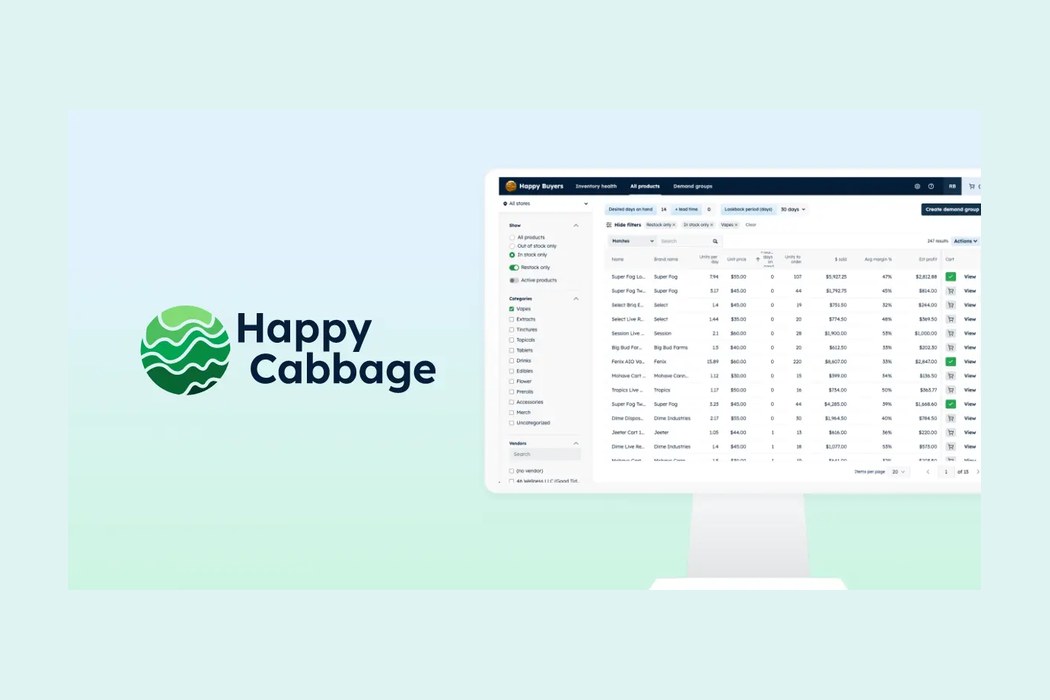
Happy Cabbage Sold Its Marketing Machine to Fix the $150,000 Problem Hiding on Dispensary Shelves
Cannabis shops do not usually run out of data. They run out of clean answers. Happy Cabbage bet that the sharper business is not sending another text - it is stopping cash from going stale in the stockroom.
YipitData’s Coupon Business Died. The Data Exhaust Became a $1 Billion Company
Yipit started by saving shoppers from coupon-email purgatory. When daily deals cooled, its founders discovered that hedge funds would pay far more for the machinery underneath - a pivot worth studying by anyone sitting on an overlooked data asset.

FoodHealth Built the Everything App. It Failed. Now It Wants to Score Every Grocery Aisle.
FoodHealth's first nutrition app tried to do everything and did none of it especially well. Two pivots later, its 1-to-100 score is inside major grocers, industry data products and a new GLP-1 shopping app - a useful lesson in saving the engine while scrapping the vehicle.

The Retail World Runs on Guesses. MarketDial Sells Proof.
A pair of Salt Lake City founders - one ex-VC, one ex-McKinsey - built software that lets chains like Kum & Go, Dick's, and Woolworths test a store idea in a few dozen locations before betting the whole business on it. Then they took the incumbent to court.
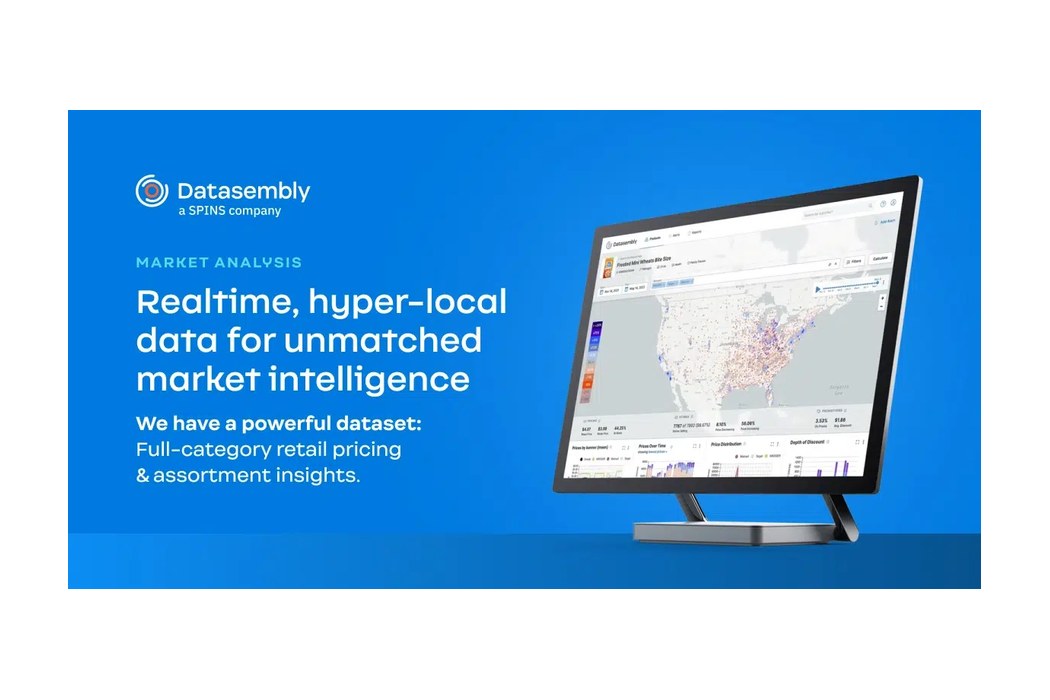
The 13-Week Price Problem Datasembly Cut to Three - and the Retail Playbook Worth Copying
Retail brands were still sending people into stores with clipboards. Datasembly built a live map of the shelf, raised roughly $35 million, and joined SPINS - here is where its speed advantage works, and where it does not.

The 'Where to Buy' Button Grew Up and Learned to Talk to Robots
PriceSpider spent 20 years turning a little 'Where to Buy' button into a business. Now, rebranded as Wayvia, it is wagering that the next shopper won't be a person at all - it will be an AI agent doing the buying.

The Company That Reads the Return Line
It sits behind the return counter at most of America's biggest stores, deciding in a fraction of a second whether to trust you. Here is how a quiet analytics company turned $796 billion in retail loss into a business.

The Company Keeping 1.9 Billion Shoppers From Becoming Strangers
Every purchase leaves a clue. Capillary Technologies turns billions of those scattered signals into loyalty programs that can recognize a shopper, choose a reward and act before the relationship goes cold.

The Receipt Is the Research: How Numerator Turns Shopping Trips Into Market Intelligence
A rewards app collects the receipts. A global measurement system turns them into a living map of consumer behavior - linking what shoppers say to what they actually buy.

Intelmatix
Intelmatix is a deep-tech enterprise AI company founded by MIT-trained technologists that builds EDIX, an Enterprise Decision Intelligence Platform designed to act as a 'digital brain' for organizations. Using context-aware AI agents, knowledge graphs and generative AI, EDIX lets companies sense, learn, decide and act across functions like demand forecasting, inventory, workforce planning and site selection - without needing an in-house data science team. Headquartered in Riyadh with offices in London and Boston, Intelmatix focuses on the MENA region, training on local context data that global platforms overlook. It raised a $20M Series A in 2024 - the region's largest AI Series A of its kind - and in 2025 became the first Saudi and MENA AI company named a World Economic Forum Technology Pioneer.

Kepler Analytics
Kepler Analytics is a Melbourne-founded retail technology company that helps brick-and-mortar retailers grow store sales through AI-powered foot-traffic sensors and a cloud analytics platform. By measuring how many people pass by, enter, dwell and convert in a store, Kepler turns physical retail into a data-driven operation - benchmarking store performance, guiding staffing and layout, and informing where to open, close or renegotiate leases. The company serves roughly 500 retailers across more than 30,000 locations in 35 countries.

The TJX Companies, Inc.
The TJX Companies, Inc. is the world's largest off-price retailer of apparel and home fashions, operating more than 5,200 stores across nine countries under brands including T.J. Maxx, Marshalls, HomeGoods, HomeSense, Sierra, TK Maxx, and Winners. Headquartered in Framingham, Massachusetts, TJX buys excess inventory, closeouts, and canceled orders from thousands of vendors and sells brand-name and designer merchandise at prices typically 20% to 60% below full-price retailers, creating a rotating 'treasure hunt' assortment. The Fortune 100 company surpassed $60 billion in annual sales in fiscal 2026.

Omnistream
Omnistream is an AI-powered category-management platform that helps retailers build consumer-centric, store-level planograms in minutes. Founded in 2018 by former quant trader Wendy Chen, the company integrates a retailer's sales and product data to generate assortment and shelf-space recommendations tuned to each store's local demand. Its software is deployed across 8,500+ retail locations in convenience, grocery and health & beauty, serving names like 7-Eleven, Watsons and FairPrice, and reports incremental sales gains of roughly 4-11% alongside sharp reductions in waste.

Datavations
Datavations is a New York-based, AI-powered market intelligence platform built exclusively for manufacturers and distributors in the building materials and home improvement industries. It aggregates granular, store-level and SKU-level retail data across thousands of stores to give suppliers the cross-retailer visibility they otherwise lack - helping them optimize pricing, inventory, and product assortment, and walk into merchant meetings armed with data their retail partners don't have. Founded in 2020 by Philip Odelfelt, the company raised a $17M Series A in July 2025 led by Forestay Capital.

DataWeave
DataWeave is an AI-powered digital commerce analytics company that helps consumer brands and retailers grow revenue and protect margins online. Its SaaS platform aggregates and analyzes public e-commerce data at massive scale to deliver pricing intelligence, digital shelf analytics, assortment insights, and brand protection to more than 400 global brands and retailers, including Zappos, Costco, and Home Depot.

Grips Intelligence
Grips Intelligence is an e-commerce market research platform that measures daily online and offline product sales, giving brands, retailers, and investors a competitor- and SKU-level map of digital commerce. Founded in Berlin in 2018 by Moritz Thoma and Daniel Schmeh, Grips turns transaction signals into estimates of revenue, units sold, pricing, conversion, and market share so customers can spot growth opportunities and blind spots across marketplaces and direct-to-consumer stores.

Polar Analytics
Polar Analytics is a multichannel AI analytics platform for ecommerce and direct-to-consumer brands, built to unify scattered marketing, sales and CRM data into one dashboard on top of a warehouse-native data stack. Founded in 2021 by David Dokes and Charbel Seif, it centralizes 45+ data sources, tracks metrics like CAC, ROAS, MER and LTV, and layers AI agents and a Model Context Protocol connector so merchants can query live data and act on it. Polar serves 4,000+ brands across 45 countries and has raised roughly $28.5M, including an $18M Series A led by Chalfen Ventures in November 2024.

SandStar AI Retail
SandStar AI Retail is a retail-technology company that uses computer vision, deep learning and big-data analytics to power cashierless, autonomous shopping. Founded in 2017 as YI Tunnel and rebranded to SandStar after a 2020 Series B+ round, it builds AI vending machines, pure-vision unmanned stores and smart-store analytics that recognize what shoppers pick up - no RFID tags, barcodes or sensors required - and automatically generate the bill when they walk out. Its systems are deployed across roughly 30 countries and serve dozens of global brands and Fortune 500 operators, including a Coca-Cola Smart Lounge in Beijing.

Style Arcade
Style Arcade is an Australian-founded software company that builds a buying and planning workspace for fashion brands and retailers. Its platform pulls together sales, stock, orders, imagery and web data into one visual source of truth, then uses analytics and AI-driven recommendations to help merchandising teams plan ranges, forecast demand, optimize size curves and reorder inventory. Founded in 2018 by Michaela Wessels and Tristan Hoy, the company serves thousands of teams globally - including Ralph Lauren, David Jones, Princess Polly and Tibi - and positions itself as a faster, more visual alternative to spreadsheets and generic BI tools.
ThirdChannel
ThirdChannel is a Boston-based retail execution company that pairs cloud software with a nationwide network of vetted, on-demand brand representatives. Founded in 2012, it gives consumer brands and retailers real-time visibility into what is actually happening on store shelves - from merchandising compliance and inventory to assisted selling and audits - so decisions at the point of sale are driven by data rather than guesswork.

Wizard
Wizard is an AI-native shopping agent that turns online buying into a single conversation. It interprets natural-language requests, searches across websites, customer reviews, editorial and social content, and returns a tightly curated set of products - usually a top five - then lets shoppers complete the purchase through native checkout without leaving the app. Cofounded by CEO Melissa Bridgeford and chairman Marc Lore, the New York company launched publicly in February 2026, beginning with electronics and a native checkout integration with Best Buy.