online-grocery
(14)
Migros One Wants the Whole Shopping List
Groceries, dinner, pet food: Migros One is gathering the household shop into one app. Behind the screen, the Turkish retailer is putting its stores, software and delivery network to work together.
Ocado built the robots. Now comes the hard part.
The British grocery technology company taught machines to pack the weekly shop. Warehouse closures and new customers are teaching it where automation earns its keep.
Ocado Put the Supermarket on a Grid. Now It Has to Prove the Grid Travels.
The British grocer became a robotics company by solving its own least glamorous problem: picking milk, melons and frozen peas without losing money. After a costly first act, Ocado is making the machine lighter, the software looser and the pitch more practical.
FreshDirect Bet the Grocery Aisle Could Be Rebuilt as a Supply Chain
Long before grocery apps became ordinary, FreshDirect built a Bronx food machine that could taste a peach, portion a salmon and route both to a New York doorstep. Its next act is testing how far that tightly controlled system can open up without losing the quality that made it matter.
The Grocery Store That Put the Bouncer at the Ingredient List
Thrive Market built a 1.7 million-member grocery business by making the aisle smaller, the standards stricter and the box easier to trust. Its real product is not delivery - it is relief from reading every label.

Tata Built an App for Everything. Now It Has to Make Everything Feel Like One Thing
Tata Digital put groceries, medicine, electronics, travel, payments and rewards behind one blue icon. The next act is less about adding doors - and more about giving 140 million NeuPass members a reason to keep walking through them.
Asda Built a Nation of Big Shops. Now It Has to Win the Small Moments.
The supermarket that taught Britain to tap its pocket is rebuilding the machinery behind the promise. Its next act runs from greengrocers and £1 roundels to cloud systems, convenience stores and a basket full of data.
The Grocery Chain That Built a Moat Out of Being Local
Stater Bros. cannot outscale Walmart or Kroger. Its answer is a dense Southern California network, staffed counters, local memory and the stubborn belief that a grocery store can still feel like part of the neighborhood.
The Red Bag at 100: How Sendik's Made a Moat Out of Knowing Milwaukee
A horse-drawn produce route became a 17-store regional grocer by treating fresh food, helpful people and neighborhood memory as infrastructure. In its centennial year, Sendik's is betting that a red bag can still carry more meaning than a national loyalty card.
Giant Food
For 90 years Giant Food has run the same play in the same four zip-code clusters: know the Beltway shopper better than anyone from out of town ever could.
Krave Mart
Krave Mart is a Karachi-based quick-commerce grocery startup that delivers everyday household essentials from a network of neighborhood dark stores, typically in 30 minutes. Founded in 2021 and part of Y Combinator's Summer 2022 batch, it raised what was then Pakistan's largest pre-seed round and built its model around sustainable unit economics and private-label products rather than pure delivery speed. In 2026 it was acquired by ride-hailing company inDrive to power grocery delivery inside inDrive's app.
Segari
Segari is an Indonesian e-grocery company that sources fresh fruit, vegetables, meat and staple goods directly from farmers and delivers them to urban households in the Greater Jakarta area, typically within 15 hours from farm to table. Founded in 2020, it combines a direct-to-consumer app with a network of neighborhood agents who acquire customers and handle last-mile delivery, aiming to cut out the many layers of Indonesia's traditional agricultural supply chain so consumers get fresher produce at lower prices and farmers get fairer returns.
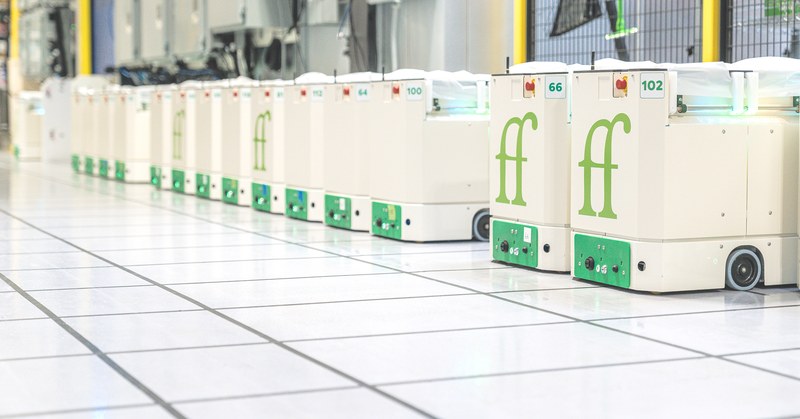
Fulfil
Fulfil (Fulfil Solutions) is a Mountain View robotics company building a fully automated grocery pick-and-pack system. Its ShopBot robots handle every grocery category and temperature state - produce, refrigerated, frozen - with item-level tracking powered by AI, computer vision and sensor fusion. The goal is to make online grocery, a famously unprofitable business, actually pencil out for retailers while cutting food waste. Fulfil emerged from stealth in February 2023 with $60M in Series B funding and powers Save Mart's Lucky Now same-day delivery service.
Weee!
Weee! is North America's largest online ethnic grocer, delivering Asian and Hispanic groceries direct to homes across the United States. Founded in 2015 by Larry Liu as a WeChat group-buying experiment, it has grown into a vertically integrated platform with a $4.1B valuation and more than $1B in annualized revenue.