medical-billing
(29)
AdvancedMD Bet on the Boring Machinery of Medicine - Then Sold for $1.13 Billion
The company began with a medical office manager who was fed up with clumsy billing software. Twenty-five years later, its single-database bet runs the daily machinery of 13,000 practices - and reveals both the appeal and the cost of buying the whole stack.
TruBridge Found $4.3 Million Hiding in a Rural Hospital’s Paperwork
The former CPSI spent 45 years selling hospital software. Its more revealing act was learning to operate the business office - and getting paid when its clients do.
Experity Won Urgent Care by Making the Software Move as Fast as the Clinic
The company merged the market's two toughest rivals, built one operating system around the peculiar speed of urgent care, and now serves nearly half of America's clinics. Its real advantage is not a shinier chart - it is knowing exactly where a 20-minute visit gets stuck.
XiFin Spent 29 Years Teaching Software How to Get a Medical Bill Paid
The San Diego company began with the least glamorous problem in diagnostics - low-dollar claims at punishing volume. Now it is turning decades of billing rules, denials and payor behavior into an AI operating layer for labs, pharmacies and radiology groups.
Machinify’s $670 Million Bet: Fix America’s Medical Bills Before They’re Paid
Machinify started with a broad promise to turn enterprise data into decisions. A decade later, it is making a narrower, harder wager: teach machines the rules of American healthcare, then catch costly claims errors before the money leaves the building.
RXNT Bet on Boring Healthcare Software - Then Built a $54 Million Business
A Palm Pilot, an SBA-backed loan and one ugly lesson from the IRS became a 26-year lesson in building durable SaaS: solve the dull workflow first, listen when customers ask for the next one, and keep the price visible.
Elation Health Bet the EHR Was the Problem. Now It Wants AI to Give Primary Care Its Evenings Back.
Two siblings built a chart for their father's clinic, then spent 16 years turning that family workaround into the operating system for independent primary care. The new wager is bigger: AI should finish the paperwork without hijacking the visit.
The Back Office Behind One in Five American Doctor Visits
athenahealth doesn't see patients. It runs the billing, charts, and reminders for the clinicians who do - and it's betting the whole network on AI.
Waystar
The company that runs the plumbing behind American medical bills is betting AI can drain billions in administrative waste - and half the country's patients are already in its pipes.

Aegis
Aegis is a San Francisco healthtech startup (YC X25) that automates the insurance denial appeals process for healthcare providers, hospitals, and medical billing groups. Its AI detects denied claims, pulls supporting records from EHRs and clearinghouses, drafts policy-specific appeal letters, and submits and tracks them through payer portals - helping providers recover revenue that would otherwise go unclaimed because appeals are too slow and costly to file by hand.

Arctic Health
Arctic Health is a New York healthcare startup (YC P26) that automates provider credentialing and payer contracting. It pairs credentialing experts with an AI platform to get healthcare providers in-network across all 50 states and 300+ insurance networks, handling documentation, CAQH profiles, payer submissions, rate negotiation, and ongoing compliance so clinics and health systems can get paid faster.

Mantys
Mantys is a Y Combinator W23 company founded by Kriti Arora and Mudit Dangi. It began as a real-time ARR reporting and forecasting tool that pulled revenue data out of the spreadsheets SaaS finance teams live in, and has since moved into healthcare, building AI that automates patient insurance eligibility verification for revenue cycle management. In both incarnations the pitch is the same: take a slow, error-prone, spreadsheet-and-phone-call process and let software do it in real time.

Adonis
Adonis is a New York-based health-tech company that builds an AI orchestration platform for healthcare revenue cycle management (RCM). Founded in 2022 by brothers Akash and Aman Magoon, the platform uses context-aware AI agents to detect revenue risks early and automate resolution across denials, delays, and payer friction - helping physician groups, hospitals, and health systems collect more of the money they are owed while spending less to do it.

Amperos Health
Amperos Health is a New York-based healthcare technology company building agentic AI that automates insurance denial management and revenue recovery for medical providers. Its AI biller, Amanda, works inside providers' existing billing systems to follow up on claims, place calls to payors, file appeals, and collect on denied and outstanding claims. Amperos serves more than 3,000 clinical locations across all 50 states and supports roughly $700 million in annual recovered revenue across 500,000+ claims. The company raised a $16M Series A led by Bessemer Venture Partners in April 2026, bringing total funding to about $20.2M.

Arrow
Arrow is a New York-based healthcare technology company building an AI-powered operating system for revenue cycle management (RCM). Formerly known as Walnut and often described as 'Stripe for healthcare,' Arrow helps healthcare organizations reduce claim denials, accelerate collections, and run billing, claims, and payer communications from a single platform. Founded in 2020 by Roshan Patel and Yash Joshi, the company emerged from stealth in 2024 with $110M in Series A financing led by Gradient Ventures.
Camber
Camber is a New York-based healthtech company building AI-driven revenue cycle management (RCM) software for specialty care practices. Formerly known as Juniper, it automates medical claims processing, denial prevention, and payment reconciliation for ABA therapy, physical therapy, ENT and allergy, and other high-recurring care specialties. Trained on more than $2.5 billion in claims data, Camber helps providers reach roughly 95% first-pass paid rates and get reimbursed faster, replacing the manual, call-center-heavy processes of traditional billing firms.

Cedar
Cedar is a New York-based healthcare financial technology company that helps hospitals, physician groups and payers modernize the way patients understand and pay their medical bills. Founded in 2016 by Florian Otto and Ariel Lidow, Cedar combines consumer-grade digital billing, personalized payment plans, coverage and benefits tools, and AI-powered support - including its Kora AI voice agent - into a single patient financial engagement platform. It works with more than 55 leading health systems and payers, has processed billions of dollars in patient payments, and reached a $3.2 billion valuation after a 2021 Series D.

Headway
Headway is a New York-based healthtech company building a software-enabled network that makes it easier to find a therapist and to pay for one with insurance. Its three-sided marketplace connects patients, mental health clinicians, and insurance plans: patients search for in-network providers with transparent copays, clinicians offload credentialing, billing, scheduling, and claims to Headway, and insurers gain a larger accessible network. Founded in 2019 by Andrew Adams and co-founders, Headway operates in all 50 states with roughly 34,000 clinicians and, after a $100M Series D in 2024, is valued at about $2.3 billion.

Joyful Health
Joyful Health is a New York-based health-tech company building AI-powered financial infrastructure for healthcare revenue. Its platform connects fragmented revenue cycle systems - EHRs, billing software, clearinghouses, payer portals, and bank deposits - into a single structured view of every claim's lifecycle, then pairs AI with experienced revenue cycle operators to investigate denials, file appeals, and recover unpaid and underpaid insurance claims. The company targets the roughly $125 billion U.S. providers lose to denied and underpaid claims each year and charges on a performance basis tied to recovered revenue.

Silna Health
Silna Health is a New York-based healthcare technology company that built what it calls the first ever "care readiness platform." It uses AI paired with insurance specialists to handle prior authorizations, benefit checks, and insurance monitoring upfront - clearing patients for care before their appointments. Founded in 2023 by Jeffrey Morelli, Pavel Asparouhov, and Sagar Jajoo, the company has raised $27 million from Accel and Bain Capital Ventures and says it has cut pre-visit insurance verification from roughly 30 minutes to 30 seconds.
Synthpop - Healthcare AI
Synthpop is a Cambridge, Massachusetts healthcare AI company building agentic automation that eliminates administrative bottlenecks across payer, provider and patient operations. Its platform combines document intelligence, payer-aware reasoning and conversational voice agents into one coordinated system that automates as much as 80% of healthcare back-office processes - referrals, prior authorizations, eligibility checks and claims follow-ups - by integrating directly with EHR, billing and e-prescribe systems. Founded in 2023 by Elad Ferber and Jan Jannink, the company has raised $23M total, including a $15M Series A in February 2026.

Collectly
Collectly is a San Francisco-based healthcare fintech that automates the patient side of revenue cycle management. Its AI platform plugs into more than 20 EHR and practice-management systems to run digital billing, eligibility checks, cost estimates, payments and follow-up, so medical groups collect more, faster, with fewer staff hours. Founded in 2017 and a Y Combinator graduate, Collectly says it serves 3,000+ healthcare facilities and has processed over $1 billion in patient payments. In 2025 it launched Billie, a 24/7 AI agent that answers patient billing questions and takes action across voice, chat, text and email.

Apero Health
Apero Health is a San Francisco-based, Y Combinator-backed healthcare software company that folds scheduling, clinical visit notes, revenue cycle management, patient billing, e-prescriptions, and financial reporting into a single API-first platform. Founded in 2019 by Jacinda and Nick Shelly, Apero aims to bring transparency and speed to the notoriously opaque business of getting doctors paid - promising implementation in under a day, claim denials cut through custom validation rules, and payer enrollment across all 50 states.

Exactrx
Exactrx is a Nashville- and New York-based healthcare AI company that automates revenue cycle management for ambulatory surgery centers and outpatient providers. Its platform reads the operative note, codes the case, validates each charge against more than 80,000 payer rules with a tri-engine system, and generates a submission-ready claim in under 30 seconds - leaving humans to review and submit. Founded in 2024 by Athena Doshi and a clinician-and-engineer team, the company positions itself as access-to-care infrastructure rather than billing software, aiming to recover the revenue that denials and documentation gaps quietly drain from surgical facilities.

Sandy Health
Sandy Health is a San Francisco healthtech company building an AI-powered operations platform that acts as the financial layer for healthcare. It connects scheduling, intake, eligibility verification, prior authorization, an AI clinical scribe, and revenue intelligence into one system so providers can predict reimbursement before, during, and after every visit. Founded by cancer survivor and MIT-trained engineer Diego Saavedra-Kloss, Sandy targets the administrative friction that drains time and revenue from patient care.

Standard Practice
Standard Practice builds voice AI for healthcare revenue cycle teams. Its AI agents place outbound phone calls to insurance payors and pharmacies - dialing, navigating IVR menus, waiting on hold, and speaking in a human-sounding voice - to handle claim follow-ups, benefits verification, prior authorizations, and EDI enrollment. The goal is to strip the phone-tag drudgery out of medical billing so practices get paid more, faster, while staff focus on higher-value work. Founded by Steven Greene and Phil Markunas after pivoting from their earlier venture Nibble Health, the New York company targets the roughly $1 trillion in annual U.S. healthcare administrative costs.
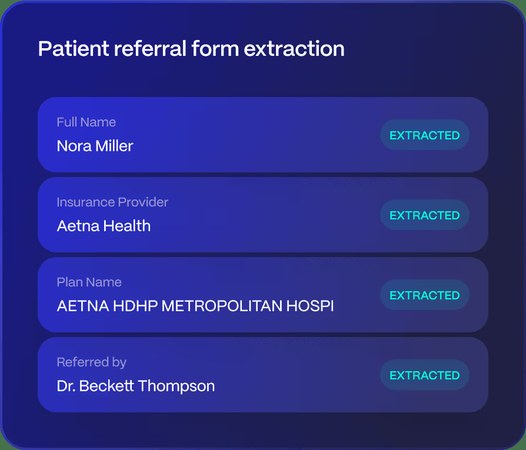
Mandolin
Mandolin is a San Francisco healthcare AI company building agents that handle the paperwork blocking patients from specialty drugs. Its software automates intake, benefits verification, prior authorization, and claims work for infusion providers, specialty pharmacies, and health systems - the back office that decides how quickly a cancer or Alzheimer's patient actually gets treated.
PayZen
PayZen is a San Francisco-based healthcare fintech that gives patients interest-free, fee-free payment plans for their medical bills while paying providers up front. Founded in 2019 by Itzik Cohen, Tobias Mezger, and Ariel Rosenthal, the company uses AI-driven underwriting to embed personalized financing inside the revenue cycle of hospitals and health systems.

Candid Health
Candid Health is a San Francisco-based revenue cycle management platform that uses automation and AI to fix one of healthcare's quietest disasters: medical billing. Founded in 2019 by ex-Palantir healthcare lead Nick Perry with Doug Proctor and Adam Reis, Candid treats claims submission as a data engineering problem, helping providers like Nourish, Allara, and Talkiatry collect more, faster, with less manual work.