Breaking
$232M Series B closed Aug 2024, led by NEA Best in KLAS 2026 #1 Patient Financing Services 6x YoY growth, two years running 100% customer retention - 132% net retention Geisinger, Palomar Health among partners Care now, pay later - zero interest, zero fees $232M Series B closed Aug 2024, led by NEA Best in KLAS 2026 #1 Patient Financing Services
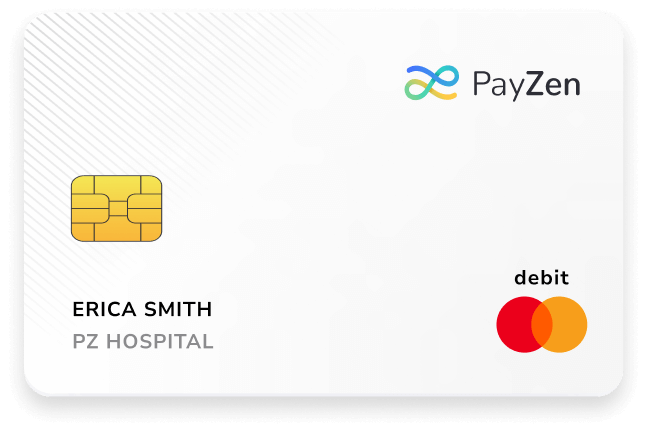
PayZen product card showing a patient payment plan
Exhibit A - the screen that turns a $4,300 hospital bill into 24 months of breathing room.
Company / Healthcare Fintech / San Francisco

PayZen.

The Bay Area startup teaching hospitals a strange new trick - get paid in full today, and let the patient pay it off in monthly installments. No interest. No fees. No credit-score gate.

Founded 2019 HQ San Francisco ~120 employees Backed by NEA
Share this profile
LinkedIn X / Twitter Facebook Instagram
Who they are, May 2026

The waiting room used to be where the financial anxiety started. PayZen wants it to be where it ends.

Walk into a participating hospital today and the front-desk tablet does something quietly radical: it offers you the procedure, the bill, and the option to pay for it over twenty-four months at zero percent - before you've even sat down.

That tablet is the visible tip of a four-year-old San Francisco company called PayZen. Behind the screen sits an underwriting model that doesn't ask for your FICO score, a credit warehouse stocked with $200 million in capital, and integrations into the electronic health records of some of the largest health systems in the country. PayZen pays the hospital in full, on the day of service. The patient pays PayZen back at a pace they can actually afford. Nobody gets a late fee. Nobody gets sent to collections. Nobody's credit gets dinged.

If that sounds suspiciously like buy-now-pay-later wearing a lab coat, the company would politely disagree. There is no interest. There are no fees. There is no penalty for paying late. The economics work because hospitals - desperate to recover the roughly thirty percent of patient balances that historically go unpaid - cover the cost. It is, depending on how you squint, either a remarkable bit of financial engineering or the most obvious idea in healthcare nobody bothered to build.

"We're not lending to patients. We're buying receivables from hospitals and giving the patient a payment plan they can live with."- Itzik Cohen, CEO, paraphrased from his FrontLines interview
The problem they saw

Medical debt is the leading cause of personal bankruptcy in America. The system runs on a quiet assumption that this is fine.

The arithmetic is grim. More than 100 million Americans carry medical debt. Roughly two-thirds of bankruptcies in the country list a medical bill as a contributing cause. Hospitals, for their part, write off enormous sums each year - bad debt that gets baked into the cost of insurance premiums for everyone else. The bill that lands in your mailbox after a routine ER visit was never really priced for the person it was sent to.

What's odder is that the technology to fix it has existed for years. Installment lending is a solved problem in retail. Credit decisioning is a solved problem in fintech. Embedded payments are a solved problem at every coffee shop in Brooklyn. The piece that was missing was someone willing to walk into hospital revenue cycles - those slow-moving, EHR-tethered, deeply unfashionable systems - and connect the wires.

"The patient is the only actor in the U.S. healthcare system who shows up, gets a service, and has no idea what it costs until weeks later. We thought that was strange."- Co-founder lore, paraphrased from public interviews
The founders' bet

Three people, one suspicion: medical bills are a fintech problem hiding inside a healthcare problem.

Itzik Cohen had spent the previous decade arguing with himself about consumer credit. He was an early WebEx engineer in the late nineties, then president and COO of Prosper Marketplace during the peer-to-peer lending boom, then a senior executive at Beyond Finance. By 2019, he had developed an unusually specific opinion: most consumer debt problems were not actually about creditworthiness. They were about the shape of the repayment curve. Stretch the curve, lower the payment, and a stunning percentage of "bad credit" simply pays the bill.

He partnered with two engineers, Tobias Mezger and Ariel Rosenthal, both of whom had spent years in fintech infrastructure. The thesis was as plain as a hospital gown: take the riskiest, most-defaulted-on bill in American life - the medical bill - and apply the stretched-curve playbook. If it worked there, it worked anywhere.

The unfashionable insight

PayZen's underwriting model approves 100 percent of patients who apply. It doesn't pull credit. Instead, it uses an AI model that ingests bill size, demographic context, and provider data to set a personalized monthly payment - one a given patient is statistically likely to keep up with. The interesting variable isn't whether to approve. It's how long the plan runs.

Caption - approval is a foregone conclusion. The art is in the payment size.

Company milestones

From a five-page deck to a Best-in-KLAS plaque in roughly six years.

2019
PayZen is founded in San Francisco
Cohen, Mezger and Rosenthal incorporate the company with a thesis: bring zero-interest installment plans to hospital bills.
2020
$8M seed round
7wireVentures, SignalFire and Viola Ventures back the early team. The first pilot health systems sign on.
2021
$15M Series A
Existing investors double down. Engineering moves toward deeper EHR integrations.
2022
$220M credit facility
Viola Credit anchors a debt warehouse that funds the patient receivables PayZen buys from hospitals.
2024
$232M Series B led by NEA
$32M in equity plus a fresh $200M credit warehouse. NEA's Mohamad Makhzoumi joins the board.
2026
Best in KLAS, #1 Patient Financing
The industry's most-cited vendor rating names PayZen the top patient financing platform in healthcare.
The product

Two SKUs, one ledger - and a surprising amount of plumbing.

PayZen's product surface is small on purpose. There is Care Now, Pay Later, which sits at the point of scheduling and lets a patient commit to a future procedure with a payment plan attached. There is Post-Care Payment Plans, which catches everyone who didn't pay at the front desk and routes them into installments before their balance ages into collections. Both run on the same underwriting engine, the same provider integrations, and the same balance sheet.

Underneath, the system has to do four genuinely difficult things at once: read live data out of Epic, Cerner and the rest of the EHR zoo; price a payment plan in milliseconds; pay the hospital from a credit warehouse; and then service that loan - because that is what it functionally is - for up to twenty-four months without a default making it onto the patient's credit report.

"The product looks like a button on a hospital portal. It is in fact a small bank wearing a UI."- PayZen, in essence
The proof, in numbers

Retention metrics that make B2B SaaS founders weep into their dashboards.

$232M
Series B (2024)
100%
Customer retention
132%
Net revenue retention
6x
YoY growth, 2 yrs running

PayZen by the numbers

Cust. retention
100%
Net retention
132%
Approval rate
100%
YoY growth
~6x
Total raised
~$452M
Caption - the bars don't quite agree on what 100% means. They rarely do.

The retention numbers are the ones investors keep circling. A hundred percent of the health systems PayZen has signed are still customers. Net revenue retention sits above one hundred and thirty percent, which means existing customers are expanding their PayZen footprint year over year - rolling the product out to more service lines, more patient cohorts, more of the bill stack.

The mission

Bring financial health to healthcare. Yes, that's the actual tagline. Yes, they mean it.

It would be easy to read PayZen as a fintech opportunity dressed up in a moral coat. It would also be wrong. The team has been notably consistent for six years about the same idea: medical debt is a design failure, not a moral one, and the right interface fixes most of it.

The cultural give-away is the absence of penalty mechanics. There is no late fee. There is no compounding interest. Patients who miss a month aren't reported to a bureau. The model assumes - and the data appears to bear out - that if you give people a payment they can actually make, they make it. The cynical version of fintech makes its money on the edges where customers fail. PayZen makes its money in the middle, where they succeed.

"We make medical debt boring. That's the whole pitch."- An unofficial summary of every PayZen press appearance, ever
Why it matters tomorrow

If patient affordability is solved by software, the entire revenue cycle gets rewritten.

The thing PayZen is quietly proving is that the revenue cycle - that vast, fax-machine-haunted backwater of American healthcare - can be reorganized around the patient instead of the insurer. If you can finance the patient balance in real time, you can also price care in real time. If you can price in real time, you can quote at the point of scheduling. If you can quote at the point of scheduling, then the conversation between a patient and a hospital starts to look less like a hostage situation and more like a transaction.

None of which is to suggest the company is done. The bear case writes itself. A recession compresses repayment rates. A regulator decides care-now-pay-later is consumer credit under another name. A larger fintech with a lower cost of capital looks at the same TAM and decides it would like a slice. The credit warehouse model is elegant but unforgiving; the moment defaults outrun underwriting, the math gets ugly fast.

For now, though, the numbers are pointing the right direction, the customers are sticky, and the company has the rarest commodity in healthcare software: a story patients actually like.

"The waiting room used to be where the financial anxiety started. At a PayZen-equipped hospital, it's where someone hands you a tablet and the bill stops being a surprise."- The closing scene, returned to
Find PayZen

Links, dispatches, and a few videos worth your minutes.