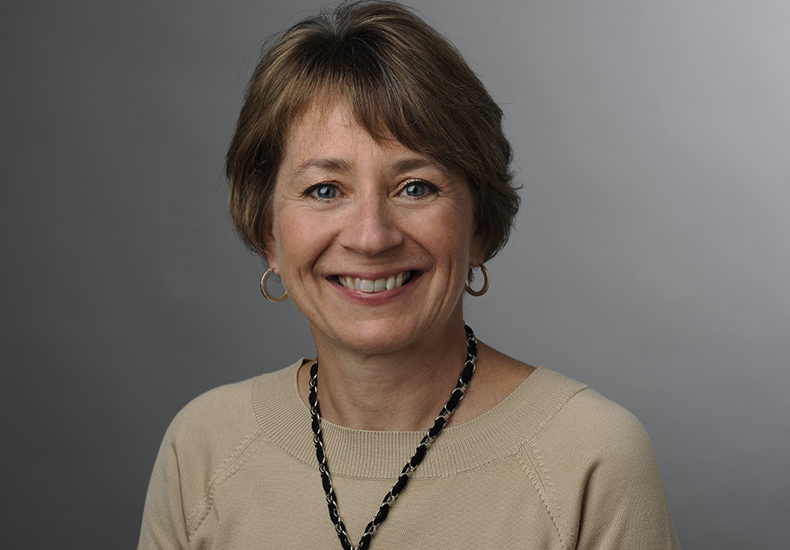
Versant Ventures occupies an office at 1 Sansome Street, just up from the Embarcadero, and Beckie Robertson has been walking into it (or its predecessors) since 1999. The firm she co-founded that year writes checks into early stage biotech and medical devices. The thesis has not really changed. The capital has. The latest fund closed at $400 million in December 2024, with total deployment now north of $1.7 billion. Versant's portfolio runs to dozens of companies in any given year, most of them years from a product, some of them years from a paper.
Robertson does not run the press cycle on these companies. Other partners do. What she runs is the room. Twenty-three years of operating experience before she ever picked up a term sheet - first as a finance and operations leader at Lifescan, the Johnson and Johnson diabetes diagnostics company; then as co-founder and VP of Egis, an Institutional Venture Partners portfolio company; then as Senior Vice President at Chiron Diagnostics, where between 1994 and 1996 she ran a $200 million Critical Care business unit. She joined Institutional Venture Partners as a general partner. Then she left to start something of her own.
The something was Versant. The co-founders included some of the most respected names in West Coast life sciences VC. Robertson was the operator. The one who had cut the payroll, fixed the supply chain, sat in front of the FDA. In a venture business that drifts toward financial engineering, she was the engineer.
The "then" is undergrad. Robertson grew up in a small upstate New York farming community, the daughter of a social worker and an infrastructure lineman. She was a strong enough student to land at Cornell in 1978. She picked chemical engineering, then a department of clipboards and pressure vessels, and got pulled into research by Professor Michael Shuler, one of the founding figures of American biomedical engineering. The lab work would not lead to a Ph.D. It would lead to a thesis statement.
Robertson graduated in 1982 with a B.S. in chemical engineering. She married Neil Robertson, also Cornell Class of '82. Then she went west. The career stack that follows is unusual for venture capital. Most VCs come up through finance, consulting, or another VC firm. Robertson came up through Lifescan, watching a company grow from a fragile venture-backed startup into a global leader in diabetes glucose monitoring. The lessons of that decade are the lessons she now finances. Distribution beats brilliance. Regulatory beats romance. Boards are rarely the problem; people are rarely interchangeable.
By the time she got to Chiron Diagnostics in the mid-1990s, she had operator scar tissue most investors never accumulate. The $200 million Critical Care unit she ran was a serious business, not a science project. When she joined IVP as a GP, she brought that scar tissue with her. When she left to co-found Versant in 1999, the entire pitch of the firm reflected it. Bet on the engineers. Bet on the operators. Bet on the boring detail that turns a paper into a product.
A founder who funds founders
Versant's portfolio reads like a tour of unglamorous winners. Tandem Diabetes Care, where Robertson serves on the board. Enable Injections, the Cincinnati-based maker of large-volume on-body delivery devices, where she is also a director. Diagnostics companies that mostly nobody covers. Device companies that get acquired before consumers can name them. The pattern is consistent: real medical need, defensible IP, founders who have built before, milestones that survive contact with the FDA.
Within the firm, Robertson is associated with the medical devices and diagnostics practice. Versant has a broader biotech engine - Discovery Engines, Inception Sciences, a series of company-creation platforms in Basel and Toronto and San Diego - and Robertson is part of that machinery without being its mouthpiece. Other GPs do the keynotes. She does the boards.
She gives a version of that line at almost every alumni event she does, and the word that does the work in it is "choose." Robertson is, by every indication, deliberate about who she chooses to sit next to in a conference room. The Versant team has unusually low partner turnover. Multiple companies in the portfolio have repeat founders. Her network is wide and quietly indexed - the kind that gets stress-tested when an IND fails or a CEO has to be replaced on a Tuesday.
The Cornell loop
Robertson did not just leave Cornell with a degree. She circled back. She is currently vice chair of the Cornell Board of Trustees and chairs its executive committee. That is not a ceremonial role. Cornell is a $10+ billion enterprise with multiple campuses, a medical college in New York City, and a research portfolio that touches every department of the federal government. The vice chair signs off on real things.
She and Neil also endowed the Michael Shuler Biomedical Engineering Clinical Immersion Program at Cornell, named after the professor who pulled her into research forty years earlier. The program sends biomedical engineering students into hospitals, where they shadow surgeons and clinicians, looking for problems to solve. It is the kind of program Robertson herself might have built her career out of, had it existed in 1980.
On April 23, 2026, the Cornell College of Engineering gave her the Duffield Distinguished Alumni Award - the college's highest alumni honor. Her acceptance line was characteristic. "It's really nothing more than paying it forward."
What she actually does on a Tuesday
Imagine the week of a person whose calendar is filtered by three filters: portfolio company boards (Tandem, Enable, plus the Versant book), Cornell trustee work, and a fund that is actively deploying capital. Some weeks the dominant input is a clinical readout. Some weeks it is a CFO search. Some weeks it is a presentation to the Cornell board on the medical college's research budget.
Robertson is not a content creator. She is not on Twitter. Her LinkedIn is sparse. Her name appears in regulatory filings, board rosters, alumni magazines, and very occasionally in a Fierce Biotech headline when Versant closes a fund. The absence is the signal. In a venture business that has spent the last decade learning how to perform, she has spent the last decade not performing. The portfolio is the performance.
There is a temptation, writing about an investor with this kind of tenure, to draw a clean arc. The chemical engineer who became the operator who became the investor who became the trustee. The girl from a farming town who funded the future of medicine. The arc is real, but Robertson would probably reject it. She talks more about the next IND than the last decade. She talks more about a new CEO hire than a back-cover award. She is mid-stride.
The biotech market, by 2026, is a different animal than the one Versant was founded into. Capital is more cautious. Timelines are longer. The bar on clinical evidence is higher. The companies that work, however, look a lot like the ones Robertson was funding twenty years ago. Real device. Real reimbursement. Real regulatory pathway. Real team. The fundamentals didn't move. The fashion did.
If you ask former colleagues to describe her, the words that come back are not heroic. They are: prepared, blunt, kind, loyal, patient. The word "patient" comes up a lot. So does "long-term." Both are useful adjectives in an asset class where the median company takes a decade to mature and most of them never do. Robertson plays at the patient end of a patient business. She is, in her own self-description, just paying it forward.
The line works for the alumni magazines. But the receipts - the funds closed, the boards seated, the program endowed - suggest something a little more deliberate. Beckie Robertson chose her room a long time ago, and she has been adding chairs to it ever since.