harvard-spinout
(10)
Parastoo Khoshakhlagh Is Teaching Cells to Skip the Waiting
The GC Therapeutics co-founder has moved from neural gels to spaceflight to a library for programming cell fate. Her recurring move is simple to describe and difficult to execute: turn biology's long recipes into instructions.
Circe
Circe (Circe Bioscience) is a Boston-based climate biotech company that engineers microbes to eat carbon dioxide and build valuable molecules - fats, oils, sugars, plastics and fuels - using only CO2, water and electricity. Spun out of Harvard's Wyss Institute in 2021, its gas-fermentation platform consumes roughly 3 kilograms of CO2 for every kilogram of oil it produces, making the process carbon-negative. The company has made the world's first chocolate using fermentation-derived cocoa butter and, in September 2024, raised a $5M seed round to open a pilot plant in Waltham, Massachusetts.
Pascal
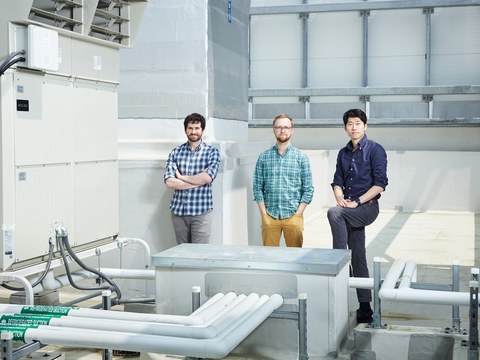
Pascal is a Cambridge, Massachusetts climate-tech company commercializing solid refrigerants to replace the greenhouse-gas coolants that make air conditioners, heat pumps, and refrigerators bad for the climate. Spun out of Harvard in 2023, Pascal builds cooling systems around barocaloric materials - wax-like layered solids that absorb and release heat when squeezed and released - working at pressures low enough to run on today's mass-market HVAC hardware. The company raised an $8M seed round in 2024 and aims to eliminate refrigerant emissions while cutting cost and boosting efficiency.

HyperLight Corporation
HyperLight is a Cambridge, Massachusetts company that designs and manufactures photonic integrated circuits on thin-film lithium niobate (TFLN), a material prized for ultrafast, low-voltage electro-optic modulation. A 2018 spin-out from Marko Loncar's lab at Harvard, the company built what it describes as the industry's first high-volume, qualified 6-inch TFLN manufacturing line - now expanding to 8-inch - and packages it as a modular TFLN Chiplet platform. Its modulator chips target the bandwidth and power-efficiency demands of AI data centers, telecom optical networks and high-performance computing, enabling 1.6 Tbps-class links at CMOS-level drive voltages.
Kula Bio
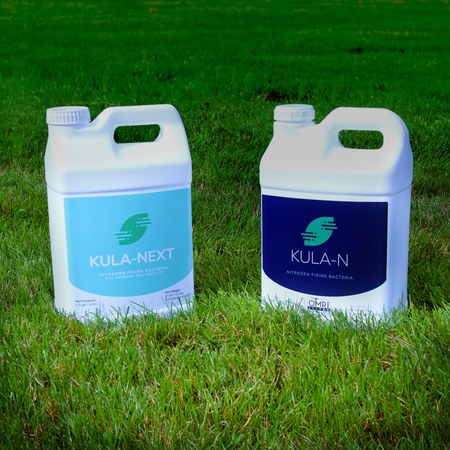
Kula Bio is a Massachusetts climate-tech company turning naturally occurring nitrogen-fixing microbes into living fertilizer factories that run inside the soil. Born from Harvard chemist Dan Nocera's 'bionic leaf' research, the company supercharges Xanthobacter autotrophicus with a renewable-energy carbon source so the bacteria deliver plant-available nitrogen at the root zone, on demand. Field trials show its flagship Kula-N can replace as much as 80% of a farm's synthetic nitrogen use without the runoff or the fossil-fuel footprint of conventional fertilizer.
Quino Energy
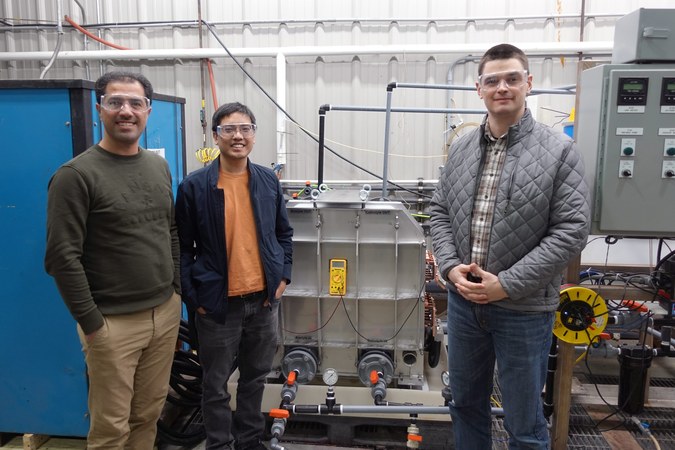
Quino Energy is a clean-tech startup commercializing aqueous organic flow batteries that store electricity in water-soluble quinone molecules instead of vanadium or lithium. Spun out of Harvard University in 2021, the company makes a low-cost, non-flammable organic electrolyte - derived from inexpensive coal-tar dyestuff chemicals through a zero-waste, continuous-flow process - that drops into existing vanadium flow battery hardware. The result targets long-duration grid and commercial energy storage at roughly a quarter the cost of vanadium, with a degradation rate about ten times slower than lithium iron phosphate.

Adden Energy
Adden Energy is a Harvard spinout building dynamically-stable, self-healing solid-state lithium-metal batteries designed to make electric vehicles charge in minutes, last a million miles, and never catch fire. Headquartered in Waltham, Massachusetts, the company is scaling its lab breakthrough into commercial pouch cells on a roll-to-roll pilot line and shipping samples to automakers for validation.
Axoft
Axoft is a Cambridge, Massachusetts neurotechnology company building implantable brain-computer interfaces (iBCIs) out of Fleuron, a proprietary material it claims is up to 10,000x softer than the polyimide used in conventional brain implants. By making electronics roughly as soft as brain tissue, Axoft aims to keep thousands of sensors in stable contact with single neurons for years instead of months - reducing scarring and signal loss - to diagnose and eventually treat disorders of consciousness, paralysis, and other neurological conditions. A Harvard spinout founded in 2021, it raised an oversubscribed $55M Series A in April 2026 and has run first-in-human studies in 11+ patients worldwide.

Metalenz
Metalenz is a Boston-based deep-tech company that replaces stacks of curved glass lenses with a single flat, nanostructured semiconductor chip called a metasurface. Spun out of Harvard's Capasso Lab, it is the first company to mass-produce meta-optics, shrinking cameras and sensors for smartphones, biometrics, and 3D sensing. Its flagship Polar ID brings polarization-based, payment-grade face authentication to devices at a fraction of the size and cost of existing systems.

Nabla Bio
Nabla Bio is a Cambridge, Massachusetts biotech building AI plus wet-lab technology to design antibodies and protein therapeutics from scratch. Its Joint Atomic Modeling (JAM) platform generates de novo binders against historically undruggable membrane proteins like GPCRs, and the company has signed collaborations with AstraZeneca, Bristol Myers Squibb, and Takeda worth over a billion dollars in potential payments.