government-software
(12)
The 47-Year-Old Software Company That Finally Put Its Fleet in the Cloud
RTA spent decades selling maintenance software to the people who keep public vehicles alive. Then a third-generation owner took on the harder repair job: rebuilding the family business without throwing away the fleet knowledge inside it.

Exiger Put the Supply Chain Under an X-Ray - Now It Wants to Tell You What Breaks Next
The company began by helping banks survive regulatory scrutiny. A decade, several acquisitions and one decisive divestiture later, it is selling a more ambitious promise: see every hidden dependency before it becomes an expensive surprise.
CATALIS Bought 30 Gov-Tech Companies. The Hard Part Was Making Them Feel Like One.
CATALIS assembled a billion-dollar government software portfolio by buying the specialists already running courts, tax offices and city halls. Now it has to make those inherited tools easier to use, easier to connect and harder for public servants to dislike.
The Ankle Monitor Is the Small Part of Track Group's $35 Million Bet
Track Group built a recurring business around a device nobody chooses to wear. Its harder job is making every alert useful to the officers, victims, and supervised people who have to live with the consequences.
Brandt Put the DMV Inside a Camping App - and Built a Business Around the Mess
The Tallahassee software company turned permits, park bookings, boat titles, call centers and even waterproof license cards into one government-ready operating system. The trick is less glamorous than a consumer app - and much harder to copy.
OpenGov’s $1.8 Billion Bet: Make City Hall Software Less Painful
OpenGov started by making municipal budgets readable. Fourteen years, ten acquisitions and a $1.8 billion deal later, it is trying to become the operating system behind the permit, purchase order and pothole.
Accela
Accela powers the permits, inspections and licenses most people notice only when they stall. Now the 27-year-old govtech company is stitching city hall into one cloud platform - and betting that practical AI can make the machinery move faster.
Palantir Technologies
Palantir Technologies builds software platforms that integrate large, messy data sets and put them to work for decision-making. Founded in 2003 in the shadow of PayPal's fraud-detection work, the company sells four flagship products - Gotham, Foundry, Apollo, and the Artificial Intelligence Platform (AIP) - to governments, defense and intelligence agencies, and commercial enterprises in finance, healthcare, energy, and manufacturing. Led by co-founder and CEO Alex Karp, Palantir has grown from a controversial government contractor into a fast-growing public company riding demand for operational AI.

Binti
Binti is a San Francisco-based software company building modern workflow tools for the child welfare system. Its cloud platform helps social workers license foster and adoptive families, find kin, manage cases, coordinate service referrals, and meet federal reporting requirements. Used by more than 550 agencies across 36 states plus D.C. - covering roughly half of children in U.S. foster care - Binti aims to reduce paperwork so caseworkers can spend more time helping children find safe, stable, loving families.

Zenysis Technologies
Zenysis Technologies builds data-integration and analytics software for governments and health institutions in low- and middle-income countries. Its flagship product, Harmony, is an open-source platform that pulls together fragmented health data - program records, financials, geospatial layers, surveys - into a single workspace so decision-makers can respond to disease outbreaks, run vaccination campaigns, and manage national health programs. Founded in 2016 by former UN diplomat Jonathan Stambolis, the company has deployed across roughly ten countries in Africa, Asia, and Latin America and is backed by grant funders including the Bill & Melinda Gates Foundation, Gavi, and the Global Fund.
GovWell
GovWell builds an AI-native software platform for state and local governments, replacing legacy permitting, licensing, inspections, planning and code enforcement systems with a single configurable, cloud-based product. Founded in 2023 and based in New York, the company says it cuts permit and license processing time by up to 95% and serves well over 100 municipalities and counties across more than 30 states. In May 2026 it raised a $25M Series A led by Insight Partners.
Kaizen
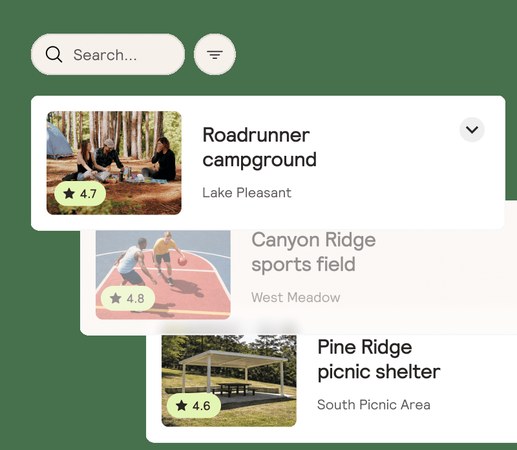
Kaizen (Kaizen Labs) is a New York-based civic technology company building modern, people-first software for America's essential public services. Its AI-native, highly configurable SaaS platform replaces aging legacy systems across permitting, parks and recreation, licensing, transit, payments, and resident engagement. Founded by Nikhil Reddy and KJ Shah, Kaizen partners with local, state, and federal agencies to give residents consumer-grade digital experiences - from reserving a campsite to renewing a license - while restoring public trust in government services.