The most revealing feature in RTA's fleet software may be the one about milk. A food-safety worker at UNFI realized the same system used to track vehicle repairs could also classify spills - milk here, eggs there - and preserve the record. It is a wonderfully unglamorous use of enterprise software. No robotaxi, no chrome concept car, just a database keeping a loading dock and a maintenance shop honest.
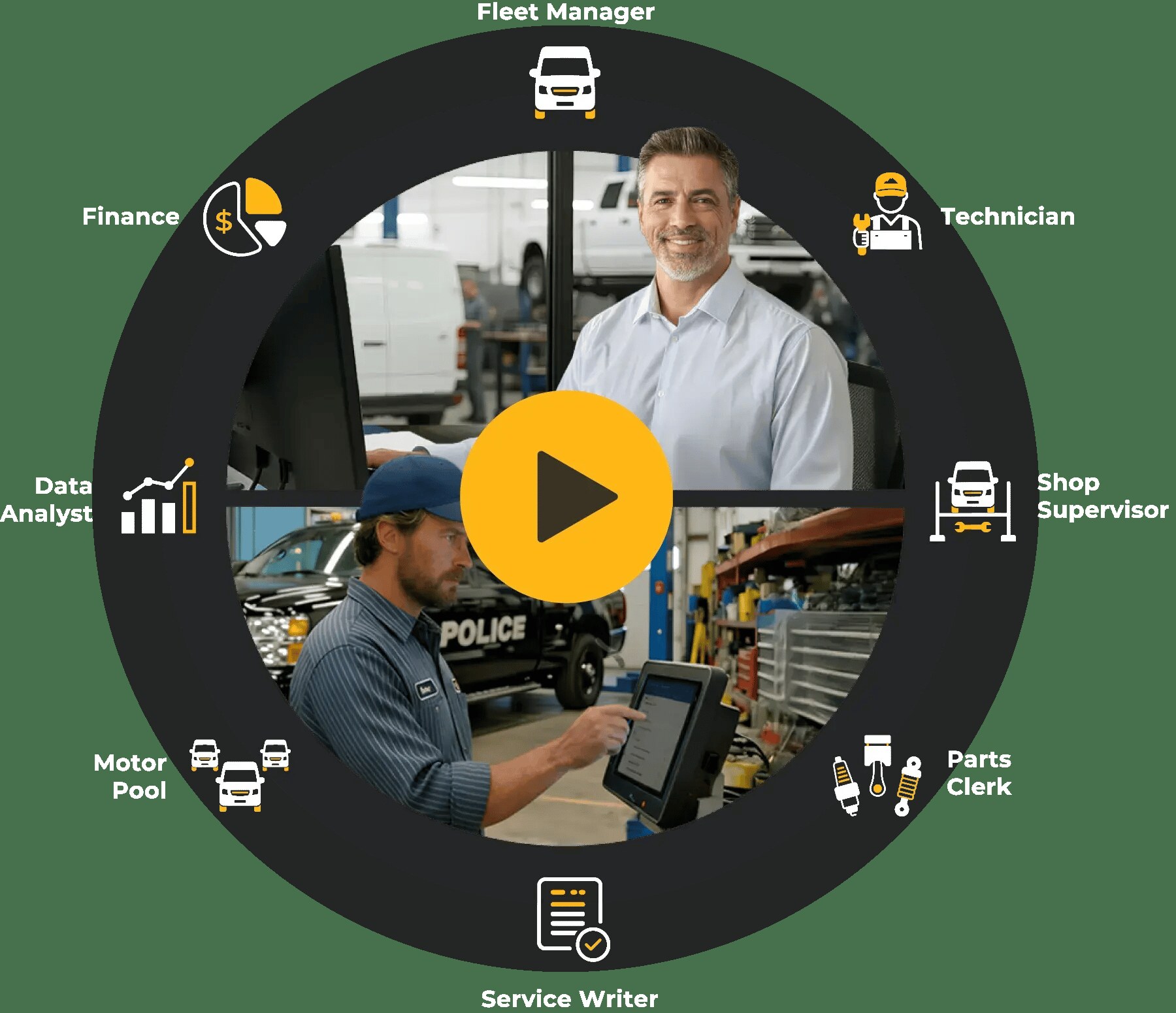
That is RTA's territory. The company makes Fleet360, a fleet management information system for the organizations whose vehicles are infrastructure: state agencies, cities, universities, school systems, public works departments, grocers and waste haulers. It tracks an asset from acquisition to disposal, along with preventive maintenance, repair orders, technician labor, parts, fuel, inspections, accidents, warranties, budgets and the reports that explain all of the above to a skeptical finance office.
RTA is also a 47-year-old family company that had to perform this modernization on itself. The old business had loyal customers and deep operating knowledge. It also had a legacy desktop product, a perpetual-license model and, by CEO Josh Turley's own description, branding that looked trapped in another decade. The interesting story is not that RTA became SaaS. Plenty of old software companies changed their invoices. It is how RTA carried the working knowledge forward while replacing nearly everything around it.
The software began as a shop manual with a database
Ron Turley did not arrive at fleet maintenance through software. He started as a UPS driver in 1961, rose to oversee automotive and building maintenance in Georgia, and later worked across a 48,000-vehicle operation. RTA says his methods helped UPS save $100 million in shop operating costs and enabled mechanics to care for far more vehicles per labor hour. After leaving, he wrote books on preventive maintenance, time management, operations and safety.
In 1979, Ron and his wife, Dixie, founded Ron Turley Associates. The first edition of its fleet information system encoded those practices. Lehigh University became the first commercial customer in 1982. Their son Larry, then studying computer science engineering at Arizona State University, joined the company and later bought the software operation while Ron concentrated on consulting. The product and the advice were separated, but never very far.
RTA's real product is the distance between a work order and a budget decision.The fleet database matters when a manager can explain the shop's value.
This lineage still shapes the pitch. RTA says its employees carry more than 450 years of combined in-house fleet experience and that one in four holds a Certified Automotive Fleet Manager credential. Former fleet managers work not only in consulting, but in product, implementation, customer success and sales. Competitors can reproduce a checklist. It is harder to reproduce the scar tissue behind the checklist.
First, the web team lost the road
Josh Turley had worked across support, quality assurance, product and technology before becoming CEO in 2015. He and his wife, Anjuli, bought the company in 2017, moving RTA into its third generation of family ownership. The business he inherited had reportedly spent decades below roughly $2 million in revenue. Its technical inheritance was heavier: old interfaces and a codebase with remnants of the green-screen era still inside it.
The obvious answer was a clean rewrite. The first attempt did not fail because the developers lacked web skills. It drifted because the team had no clear technical owner and could not agree on a direction. Turley hired a CTO, moved himself out of the technology seat and gave the modernization a leader. That is the least cinematic and most reusable lesson in the story: before funding a rewrite, fund a decision-maker.
Host
Move customer environments onto AWS, even while the established desktop system remains.
Expose
Keep SQL data reachable, build APIs and let new web tools work with the old core.
Subscribe
Shift from perpetual licenses plus hosting fees to annual SaaS agreements in 2018.
Replace
Launch mobile workflows, then make Fleet360 the modern browser-based center.
RTA did have one useful escape hatch. Customer data sat in SQL Server, which made it possible to write APIs and put new interfaces on top. The company hosted customer environments in AWS, delivered the old software through remote desktop, and in 2018 changed from perpetual licensing to annual subscriptions. The commercial model became SaaS before every screen did. Mobile came next, including RTA Inspect in 2020. Fleet360, the web-native platform, followed in 2023.
Customers using RTA Classic later faced a blunt choice: migrate to Fleet360 or remain on Classic. RTA set June 30, 2025, as a decision deadline, surrounded the transition with free online training and assigned customer-success help. That detail matters. A legacy rewrite is not finished when the new application runs. It is finished when customers can carry decades of maintenance history and muscle memory into it.
The price is public. The implementation is not.
Fleet360 is sold by asset, not seat. Pro costs $6 per asset per month, Advanced $8 and Enterprise $11, all billed annually with unlimited users. The minimum is 100 assets, making the visible subscription floors $7,200, $9,600 and $13,200 a year. Setup and implementation are scoped separately. So are add-ons such as motor pool management, custom forms, inspections, tire tracking, a fleet wiki, single sign-on and sandbox environments, depending on the plan.
Annual software cost at the 100-asset minimum
Published subscription math only. Annual billing, unlimited users, 100-asset minimum. Implementation and selected add-ons are separate.
The model rewards broad participation inside a fleet because adding technicians, supervisors, parts clerks and finance users does not add seat fees. It also tells small operators something useful: this may be too much system. RTA's strongest fit is a fleet with at least 100 assets, a meaningful in-house maintenance operation and enough process discipline to maintain good meter, labor and parts data. A ten-van business shopping primarily for GPS dots is solving a different problem.
Against Fleetio
RTA leans into public-sector maintenance depth, consulting and former operators. Fleetio is a modern fleet SaaS alternative with its own tiered per-vehicle model.
Against AssetWorks
RTA stays fleet-specific. AssetWorks stretches into roads, facilities and other enterprise assets, which can matter more than specialization for some agencies.
The Series A came after the proof
By 2024, Practical Founders reported that RTA had reached a $15 million annual recurring revenue run rate with about 75 employees, supported by some debt. In the podcast recorded the following year, Turley put the team near 90. That growth was largely bootstrapped. Turley openly preferred debt and called equity the most expensive form of capital.
What changed his mind was not a sudden need to rescue the company. A serious term sheet made the value of the business tangible, created a chance to reduce personal concentration risk, and paired RTA with an investor accustomed to durable vertical SaaS. Susquehanna Growth Equity led the minority Series A in April 2025, with PHX Ventures participating. RTA did not disclose the amount; Practical Founders reported it as $30 million.

Josh Turley learned the product from the support queue outward. His first years as CEO were less a victory lap than a seat-by-seat rebuild: CTO, marketing, sales, product, culture. In his telling, the people system took until roughly 2020 or 2021 to become clear.
The capital was earmarked for product and engineering, software automation and insight, client success, sales and marketing, and the support operation. It arrived as RTA was winning procurement routes that can matter as much as code in government software. Its Sourcewell agreement makes Fleet360, inspection tools, hardware, consulting and education available to more than 50,000 eligible agencies without each buyer recreating a full solicitation. The contract runs through April 2029.
AI arrives with grease under its nails
RTA's 2026 AI releases are narrow enough to be useful. Sublet Invoice Capture reads a scanned or PDF invoice from an outside repair vendor, extracts the asset, vendor, parts, labor, taxes and notes, then lets a human review the fields before creating or updating a work order. RTA says it can cut invoice-entry time by as much as 75 percent. The point is not glamorous automation. It is recovering maintenance history that would otherwise sit in an inbox and corrupt total-cost-of-ownership calculations.
Ron360 is a conversational layer over a customer's live Fleet360 data. A manager can ask about assets, costs, compliance or work orders and receive explanations, tables or charts under existing user permissions. City of Las Vegas fleet supervisor Brenton Messner said the tool saved more than ten hours of manual research during early use. Keeping the query inside the governed fleet system also reduces the temptation to export sensitive public data into a general chatbot.
The company is now landing larger public accounts. Wyoming and Massachusetts selected Fleet360 in 2025. Pennsylvania followed with a statewide contract in July 2026. One month later, Utah chose it for more than 10,000 assets and 12,000 pieces of equipment. Utah's explanation was revealing: functionality began the evaluation, but trust, staff usability, data clarity and RTA's work mapping daily operations helped settle it.
That is where RTA fits in the market. It is not the broadest asset platform, the smallest-fleet tracker or a telematics-first map. It sells an operating system for people who maintain essential equipment and must prove the work was worth the budget. The product works when the customer wants software and operating practice together. It loses force when the buyer needs only location tracking, manages too few assets to justify the process, outsources nearly every repair or lacks the clean data and internal ownership a migration requires.
Modernize in layers. Keep the old data reachable. Give the rewrite an owner. Change the business model when the customer value is ready - not when every screen is perfect.The RTA playbook, stripped to the parts another operator can copy.
RTA's achievement is not that a company founded in 1979 discovered cloud software in 2023. It is that the company understood what not to modernize away. Ron Turley's maintenance discipline, customer feedback, hands-on training and the credibility of people who have run a shop remain inside the new model. The interfaces changed. The pricing changed. Even the old logo - once drawn by the family - became a road toward Arizona's Four Peaks. The destination stayed stubbornly practical: fewer blind spots, better decisions and vehicles available when a community needs them.
Links worth opening