freight
(20)
Datatruck Wants to Be the Operating System Trucking Runs On
A Chicago-founded startup is betting that trucking's back office - the spreadsheets, the phone tag, the paperwork - is a software problem AI can finally solve. About 500 carriers are already running on it.

The 30-Hour Spreadsheet That Built a Climate Startup
Trucking is the biggest carbon line item in almost every supply chain - and until recently, most carriers reported it by hand. Celine King built software to do it in seconds, and sold it to an industry that hates change.

Burt
Burt (YC W26) builds AI teammates for logistics. The San Francisco company helps freight brokers and forwarders deploy AI coworkers that handle repetitive, manual work end-to-end - check calls, document processing, covering loads, invoicing - by reading emails, making calls, logging into portals, and updating the customer's TMS, following each team's own processes. Founded by Bobby Zhong and Kurt Sharma, both of whom grew up in logistics families, Burt started by training specialized models that beat frontier models on cost and latency, then focused those models on freight operations.

Hemut
Hemut is an AI-native operating system for trucking companies. It replaces the fragmented, legacy back-office software that carriers and brokers rely on with a single platform that automates dispatch, load booking, quoting, tracking, accounting, and inbound/outbound phone calls using AI agents. Founded in 2024 and part of Y Combinator's Spring 2025 batch, Hemut targets mid-sized fleets in the roughly $875B American trucking market.
GoComet
GoComet is an AI-native logistics platform that helps global manufacturers and shippers run their end-to-end supply chains - from freight procurement and shipment tracking to invoice reconciliation - on a single cloud-based system. Founded in 2018 by four IIT Delhi graduates and headquartered in Singapore, it is used by 500+ enterprise shippers, including several Fortune 500 companies, across 35+ countries to cut freight costs, gain real-time visibility, and automate manual logistics workflows.
Haulio
Haulio is a Singapore-based logistics technology company that digitises container haulage - the first-mile trucking that moves shipping containers between ports and warehouses. Its platform connects shippers, freight forwarders and logistics firms to a regional alliance of about 800 trucking companies and roughly 10,000 first-mile vehicles, coordinating container movements, real-time tracking, billing and financing across Southeast Asia. Founded in 2017 by Alvin Ea and Sebastian Shen, the company is backed by PSA unboXed, Temasek's Heliconia Capital, ComfortDelGro and others.

Willog
Willog is a Seoul-based AIoT supply chain company that turns invisible logistics events into data. Its patented sensor devices track temperature, shock, humidity and location across warehouse, road, ocean and air, feeding an AI-powered Control Tower that gives shippers of pharmaceuticals, semiconductors, chemicals and food real-time visibility, diagnostics and risk prediction. Founded in 2021, Willog serves 200+ global enterprise customers and reached a Series B-2 round in under five years.
Inceptio Technology
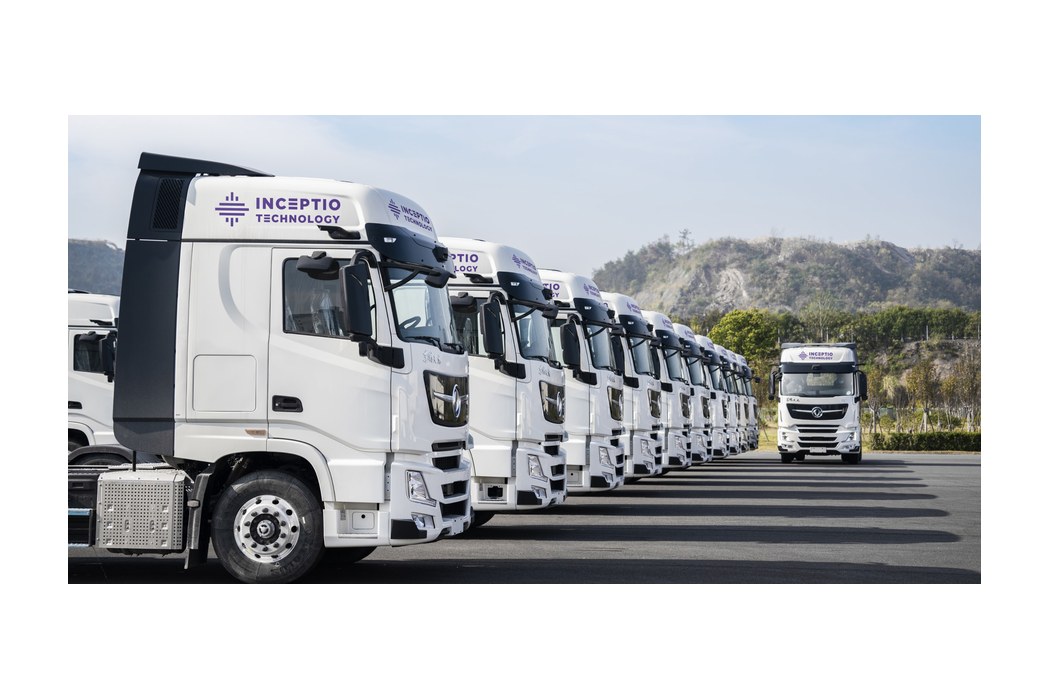
Inceptio Technology is a developer of full-stack autonomous driving systems for heavy-duty trucks, headquartered in Shanghai with an R&D center in Fremont/Santa Clara, California. Founded in 2018 by Julian Ma, it works with truck OEMs to mass-produce Level 3 highway-capable trucks and operates one of the largest real-world autonomous freight fleets in the world. Its proprietary XUANYUAN and T-NOA systems power more than 4,000 trucks that have logged over 400 million kilometers of commercial operation for customers including JD Logistics, Nestle, Budweiser and Deppon Express, as it charts a data-driven roadmap toward scalable Level 4 autonomy.
Desteia
Desteia is an AI-native platform for global trade that turns the messy, unstructured data of logistics - emails, chat messages, PDFs, customs filings - into a single validated source of truth. Using large language models to read documents and graph theory to model shipments as networks of locations and routes, Desteia gives supply chain operators end-to-end visibility across ocean, ground, and air, with particular depth on the roughly $850B U.S.-Mexico cross-border corridor. Founded in 2023 by former Tesla executive Francoise Lavertu Stevens and Stanford engineers Diego Solorzano and Austin Poore, the New York-based company raised an $8M seed round in early 2025.
Vendorflow
Vendorflow is a Los Angeles-based unified communications platform for trucking fleets, freight brokers, ports, and terminals. It consolidates voice, SMS, WhatsApp, and ELD in-cab messaging into a single shared inbox that integrates with TMS and ELD systems, so dispatch and operations teams can collaborate on driver conversations in one place - no app installs required for drivers.
Cargomatic
Cargomatic is a digital freight marketplace and technology platform that connects shippers with local and regional trucking capacity in real time. Founded in 2013 and headquartered in Long Beach, California, it specializes in drayage and short-haul freight - moving containers off ports and onto roads - alongside intermodal, full-truckload (FTL), less-than-truckload (LTL), and white-glove delivery. By pairing a carrier mobile app with smart routing and bundling software, Cargomatic helps fill empty truck miles, speed cargo off congested docks, and give shippers visibility into shipments that traditionally lived on paper and phone calls.

FleetWorks
FleetWorks is a San Francisco AI company rebuilding how freight gets matched and booked. Its voice and text AI agents handle the phone calls, texts, and emails that brokers and carriers trade to cover loads - work that has barely changed since the 1980s. Launched out of Y Combinator in 2023 by ex-Uber Freight and ex-Airbnb operators, FleetWorks now runs an 'always-on dispatcher' that connects with thousands of carriers daily and works with over 40 U.S. brokerages, including 15 of the top 100.

FourKites, Inc.
FourKites is a Chicago-based enterprise software company that tracks roughly 3.2 million shipments a day across road, rail, ocean, air and last mile. Founded in 2014 by Matt Elenjickal, it pioneered applying SaaS to GPS and ELD telematics to give the world's largest shippers real-time visibility into where their freight actually is. Today the company is reinventing itself around AI: an Intelligent Control Tower and a 'Digital Workforce' of named AI agents that don't just show what is happening in a supply chain but decide and act on it.

Shipwell
Shipwell is an Austin-based software company building an AI-integrated transportation management system (TMS) that unifies shipment planning, real-time visibility, automation, and settlement in one cloud platform. Founded in 2016 by Greg Price and Jason Traff, it helps shippers and logistics teams across food & beverage, manufacturing, and distribution move freight with less manual work. After selling its brokerage arm to CloudTrucks in 2024, Shipwell now operates as a pure-play SaaS provider and has been named a Visionary in the Gartner Magic Quadrant for TMS for five consecutive years.

SmartHop
SmartHop is a Miami-based trucking technology company that gives small fleets and owner-operators a business-in-a-box platform. It pairs AI-driven load recommendations and full-service dispatch with fintech tools - fuel cards, payments, and insurance - so independent truckers can compete with large carriers without drowning in paperwork.

TrueNorth
TrueNorth is a San Francisco software company building the operating system for trucking. Its AI dispatcher, Loadie, pulls freight from across the market and books loads for independent carriers and brokers - matching trucks to the most profitable freight, automating paperwork, and handling outreach. Backed by Sam Altman and Lachy Groom, the company wants to give solo truckers the economics and tooling of a large fleet.
Augment
Augment builds Augie, an AI teammate purpose-built for logistics. The San Francisco company automates the phone calls, emails, portal logins, and back-office workflows that bog down freight brokers, shippers, and carriers - and has raised $110M in under a year to scale it.
CloudTrucks
CloudTrucks is a San Francisco-based virtual trucking carrier that gives owner-operators and small fleets the software, payments, insurance, and load-booking tools to run their businesses like a modern enterprise without the back-office headaches.
Pallet
Pallet is a San Francisco AI startup building an 'AI workforce' for the physical economy. Its flagship product, CoPallet, automates back-office freight workflows - order entry, quoting, document parsing, portal updates - that have historically required armies of human operators, working inside systems like McLeod, Revenova, Turvo and even legacy AS400 stacks. In 2026 it added Atlas, a data-intelligence layer that surfaces hidden revenue opportunities across a supply chain network.
Kargo
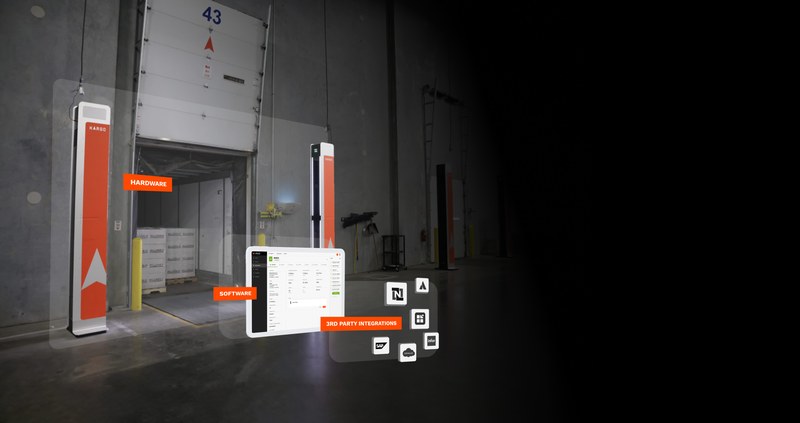
Kargo is a San Francisco-based AI company building computer vision systems for warehouse loading docks. Its Kargo Tower and Kargo Lift hardware capture freight as it moves, reading labels, flagging damage, and feeding accurate, real-time inventory data into enterprise systems.