factory-automation
(14)
The Machine That Makes Hydrogen Boring
EVOLOH began with a grand hydrogen promise. Its more interesting idea is smaller: redesign the stack, the factory and the power connection until an electrolyzer behaves like ordinary industrial equipment.
Plataine Wants the Factory to Make the Next Call - Before the Expensive Roll Expires
A roll of carbon fiber can expire, a tool can vanish and one late machine can scramble the week. Plataine built an industrial decision layer for exactly that mess - and its best evidence is measured in saved material, recovered hours and fewer wrong cuts.

The Tiny Steel Plate Behind MiTek’s $1.68 Billion Bet on Building Faster
MiTek began with a palm-sized connector that made wood trusses practical. Seventy years later, it is trying to fix construction’s bigger problem: too many people making expensive decisions too late.

Guidewheel Put a Fitbit on the Factory Floor - Then Found a Bigger Business Hiding in the Downtime
Factories do not need another grand digital-transformation promise. They need to know why Line 3 stopped at 2:17 p.m. Guidewheel built a business by making that answer fast, legible and useful on machines old enough to collect a pension.
Invio Automation Is Building the Factory Before the Factory Exists
The modern factory has a costly problem: buying a robot is easy, but making the whole line work is not. Invio Automation sells the planning, machinery, integration, and long-haul support that connect the whiteboard to the shop floor.
Flexco
A tiny steel joint can decide whether a mine, bakery, or parcel hub keeps moving. Flexco has spent 119 years turning that vulnerable seam - and the rest of the conveyor - into a global business built around uptime.

Athena Technology Solutions
Athena Technology Solutions makes the factory floor legible to the rest of the enterprise - stitching machines, manufacturing software and business systems into one working digital thread. Now the Fremont integrator is testing how far that hard-won context can carry agentic AI.
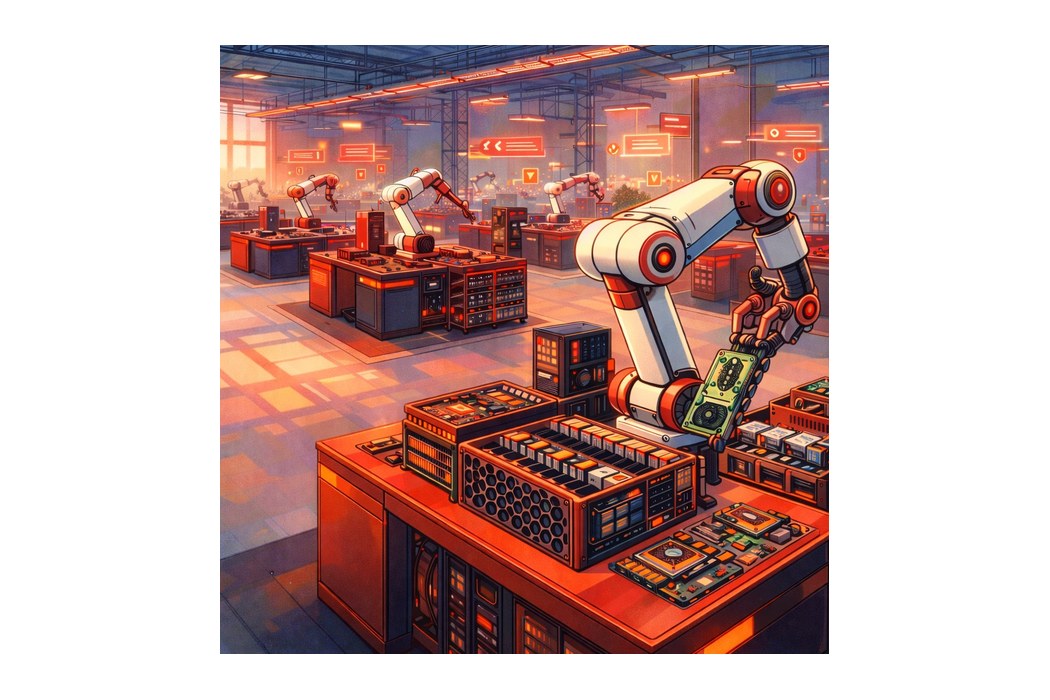
Industrial Next
Industrial Next builds AI-defined factories: robotic work cells powered by proprietary foundation models that connect vision, task context, and motion so a production line can be retooled in minutes instead of weeks - no programming required. Founded in 2021 by former Tesla autonomous-manufacturing leads Allen Pan and Lukas Pankau, the San Francisco company aims to bring Tesla-grade autonomous factory capabilities to automakers and electronics manufacturers.

Ati Motors
Ati Motors is an industrial robotics company building autonomous mobile robots (AMRs) that move material inside and around factories. Its Sherpa family of self-driving robots uses 3D lidar, high-precision mapping and AI - the same principles behind self-driving cars - to tug, lift and transport loads from about 500 kg to 4,600 kg without the magnetic tape or fixed guide-paths of older AGVs. Founded in Bengaluru in 2017 and now dual-headquartered with a North American base near Detroit, Ati has deployed robots at 50-70+ manufacturing plants worldwide - including Fortune 500 names such as Hyundai, Bosch, Forvia, Daimler and Airbus - logging over 500,000 autonomous kilometers. The company raised a $20M Series B in early 2025 to expand across North America and APAC.
Tacta Systems, Inc.
Tacta Systems is a Palo Alto robotics startup building 'Dextrous Intelligence' - a smart nervous system that combines proprietary software, hardware and AI to give robots human-level tactile skills and spatial awareness. Founded by serial hard-tech entrepreneur Andreas Bibl (whose previous company LuxVue was acquired by Apple), Tacta aims to let robots sense, adapt and manipulate the physical world with human-like precision and speed, automating factory work and grueling physical labor. The company emerged in 2025 with $75 million in seed and Series A funding.
Tristar AI
Tristar AI puts a pair of eyes on the factory floor that never blink. The Boston-based company builds AI-powered smart cameras and enterprise software that watch production lines in real time, recognize what human workers are doing, and flag defects or skipped steps the instant they happen - before a bad part ships or a machine goes down. Founded in 2022 by a team out of MIT, Harvard, and UT Austin, Tristar serves precision manufacturers in plastics, automotive, and chemicals, promising 95-99% defect-detection accuracy and deployment in about two weeks.

RIOS Intelligent Machines
RIOS Intelligent Machines was a Menlo Park robotics company building AI-powered dexterous robots for factories, warehouses, and supply chains. Founded in 2018 by former Xerox PARC engineers, RIOS pioneered haptic intelligence and tactile sensing for industrial robots, deploying systems across e-commerce, manufacturing, food processing, and wood products before archiving the company in 2026.
ANSCER Robotics
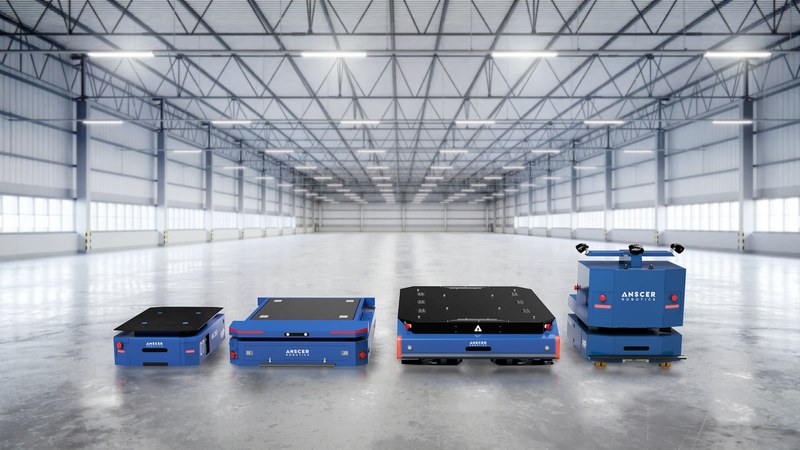
ANSCER Robotics is a Bengaluru-based industrial automation company that builds hybrid autonomous mobile robots (AMRs) blending the smart navigation of AMRs with the heavy-lift precision of automated guided vehicles. Its robots and fleet-management software move materials inside factories, warehouses and dock areas, sold partly on a Robots-as-a-Service model. After a $5.4M Series A in 2026 led by IAN Alpha Fund, the company is expanding from India and Southeast Asia into North America.

Overview AI
Overview AI builds AI vision sensors and edge-deployed software that catch manufacturing defects traditional rule-based vision systems miss. Founded by ex-Tesla engineers, the San Francisco company combines custom smart cameras, on-device deep learning, and fleet management software used by manufacturers including Toyota, Honda, Mitsubishi, Tyson, and Clorox.