dermatology
(17)
Canfield Scientific and the art of taking the same picture twice
A better camera is only the beginning. Canfield Scientific has built a business around making skin photographs repeatable enough to measure change - from a cosmetic consultation to a clinical trial.
The Dermatologist in the Camera Roll
A photograph can cross a county faster than a dermatologist. DirectDerm built a practice around that simple advantage, then learned that some answers still need a room, a biopsy and a doctor nearby.
The $375,000 clue to Lake Dermatology
At Lake of the Ozarks, Lake Dermatology & MedSpa brought medical and cosmetic skin care to the same address. Today, the Forefront practice there carries that combination forward.

ZO Skin Health puts the doctor in your daily routine
Zein Obagi’s skincare company sells a system of products, protocols and professional advice. Its premium prices make the case for that guidance worth examining.
Skin Analytics wants to shorten the skin cancer queue
Its AI can release selected patients from an urgent cancer pathway without a dermatologist reviewing their images. The harder achievement is making that decision work inside a real health service.
Bausch Health Built a $10 Billion Medicine Cabinet - Now It Has to Outrun a $20 Billion Hangover
Its products sit in pharmacies, dental offices, GI clinics and aesthetics practices across roughly 100 countries. The hard part is not selling medicine - it is turning a sprawling acquisition legacy into a focused healthcare company before debt, patents and price controls set the pace.
How Schweiger Turned the Dermatologist Wait Into a 160-Office Growth Machine
Eric Schweiger began with one Midtown office and a consumer-grade complaint: seeing a dermatologist took too long. Six messy integrations and at least $155 million of disclosed growth capital later, his group has become a coast-to-coast test of whether convenience and clinical care can scale together.

The Boston Biotech Betting That Cells Don't Have to Show Up to Heal You
Aegle Therapeutics skips the stem cell transplant and ships only the message the cell was trying to send - a cell-free vesicle therapy now in human trials for one of the cruelest skin diseases in medicine.
Sixteen Software Companies, One Front Desk
PracticeTek has spent five years buying the software that runs America's dentists, orthodontists, chiropractors and dermatologists. Now more than 40,000 practices log in through its brands - and most patients never learn its name.

TULA Made the Microbiome a Beauty-Aisle Business
A gastroenterologist turned the skin microbiome into a prestige-beauty proposition. Twelve years, thousands of retailer doors and one P&G acquisition later, TULA is testing whether “balance” can remain distinctive in a crowded skincare aisle.
Sun Pharma
Sun Pharma became India’s largest drugmaker by mastering generics. Now a portfolio of skin, eye and cancer medicines - and an audacious pending Organon deal - is changing what the company wants to be.

AVAVA, Inc.
AVAVA, Inc. is a Waltham, Massachusetts medical aesthetics company that builds energy-based laser platforms for skin renewal that work across all skin tones. Spun out of Boston-based Blossom Innovations and rooted in research from Massachusetts General Hospital's Wellman Center for Photomedicine, AVAVA's flagship MIRIA Skin Treatment System pairs patented Focal Point Technology with AI-driven skin visualization to deliver precise, high-energy intradermal treatment for conditions like melasma, hyperpigmentation, and acne scars with minimal downtime.
Krystal Biotech, Inc.
Krystal Biotech is a Pittsburgh-based commercial-stage biotechnology company that pioneered redosable, off-the-shelf gene therapy delivered directly to the body. Its lead product VYJUVEK became the first FDA-approved topical and redosable gene therapy in 2023, treating the rare skin disease dystrophic epidermolysis bullosa. Built on a proprietary HSV-1 vector platform (STAR-D), the company runs its own GMP manufacturing and is extending the same delivery technology into respiratory disease, oncology, ophthalmology and aesthetics.

DermBiont, Inc.
DermBiont is a Boston-based, clinical-stage biotechnology company developing first-in-class targeted topical therapeutics that treat the root cause of common skin diseases. Its lead programs are SM-020, a topical AKT kinase inhibitor for seborrheic keratoses, and SM-030, a topical PKC-beta inhibitor for melasma and other hyperpigmentation disorders, with earlier-stage work aimed at basal cell carcinoma and Gorlin syndrome. Founded in 2017 by dermatology-drug veteran Karl Beutner, the company has raised roughly $79M-plus across multiple rounds, including a $35.2M Series B led by Double Point Ventures in 2023.

Great Many
Great Many is a New York-founded hair growth company that pairs in-studio clinical treatments - PRP injections and FDA-cleared laser therapy - with a telehealth platform and a line of growth-focused hair care products. Started in 2024 by Heyday co-founder Michael Pollak and former Estee Lauder omnichannel VP Steve Klebanow, it treats hair loss as a health category rather than a taboo, building consultative studios (NYC, Atlanta, Washington DC) around scalp assessments, microscopic follicle imaging and clinician-led plans for both men and women.
Corganics
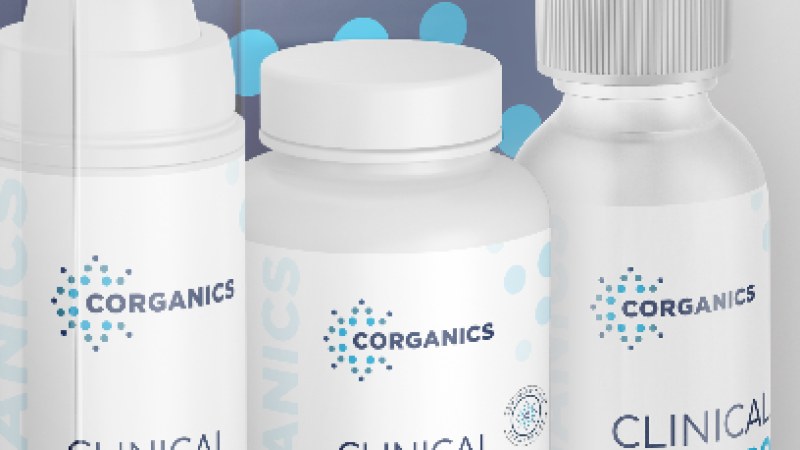
Corganics is a Dallas-based life sciences company that makes scientifically formulated, physician-advised clinical CBD therapies sold exclusively through licensed healthcare professionals. Its broad-spectrum, THC-free products use Advanced Lipid Technology (A.L.T.) to improve bioavailability and are manufactured in cGMP-compliant, NSF-certified facilities with third-party testing and IRB-approved data. Founded in 2020 by pharmaceutical executives Chad Collins and Reggie Gatewood, the company aims to make CBD a trusted, clinic-grade therapy rather than a retail gamble.
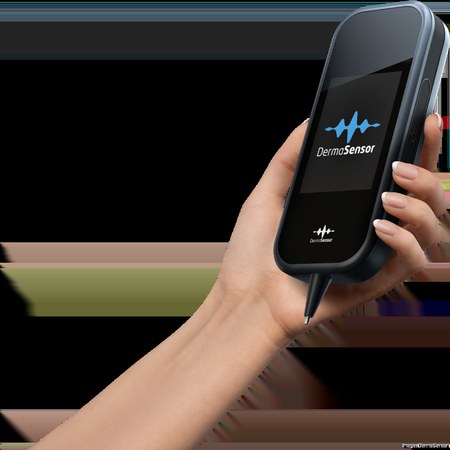
DermaSensor, Inc.
DermaSensor is a Miami-based medical device company that makes the first FDA-cleared, AI-powered handheld device for detecting all three common skin cancers - melanoma, basal cell carcinoma, and squamous cell carcinoma - at the point of care. Using elastic scattering spectroscopy and a machine learning algorithm trained on thousands of biopsy-confirmed lesions, the device gives primary care physicians a real-time, non-invasive read on whether a suspicious skin lesion warrants further evaluation, helping close the gap created by a shortage of dermatologists.