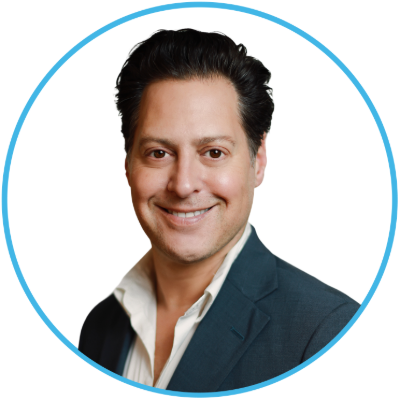
The breakthrough was not a molecule, a laser or a glossy jar of serum. It was Tuesday at 6:30 p.m. In 2010, dermatologist Eric Schweiger opened a Midtown Manhattan practice with one office manager and began hearing the same requests: Could patients come after work? On Saturday? Could they book without calling three times? The irritation was mundane, which made it valuable. Dermatology had a queue problem, and Schweiger decided the waiting experience belonged inside the definition of care.
That idea now sits beneath a privately held network advertising more than 160 locations across nine states. The group offers medical, cosmetic, surgical and pediatric dermatology, skin-cancer screening and treatment, allergy and asthma care, clinical trials, and a retail skin-care shop. In 2025 it reported more than 2.5 million patient visits and 36,000 Mohs surgeries. The scale looks national. The operating logic remains stubbornly local: put enough clinicians near enough patients that an appointment can happen in days.
The diagnosis was the wait
Schweiger’s customers are ordinary people with acne, eczema, psoriasis, rosacea, suspicious moles, hair loss, allergies or cosmetic goals. Some arrive worried about cancer. Others want Botox before a wedding. The network accepts most insurance plans for covered services and also sells self-pay cosmetic treatments. That mix matters. Medical dermatology brings recurring, insurance-funded demand; aesthetics adds cash-pay revenue; surgery adds specialized procedures; retail adds a smaller commerce layer.
The company’s difference is not that these services are rare. An independent dermatologist or hospital clinic can provide many of them. Schweiger packages breadth with convenience: online scheduling, extended hours, shared medical records, centralized billing and the ability to move among locations without starting from zero. The group says more than 90 percent of patients rate their experience four or five stars. Its promise is easier to explain than a clinical protocol: expert care, without the long wait.
The economics are similarly layered. Insurance reimbursements and patient payments support medically necessary visits and procedures. Cosmetic work is usually paid directly by the customer, making it less exposed to insurer fee schedules but more sensitive to discretionary spending. Mohs surgery and other specialist procedures depend on trained clinicians and referral flow. The online shop extends the relationship into products without becoming the center of the company. Put together, it is a portfolio of services sharing the same patient, address book and administrative spine. That diversity can smooth demand, but it also makes execution harder: a mole check, an allergy test and a laser treatment may live under one logo while requiring different skills, workflows and payment conversations.
There is an operational detail hiding behind that menu. Schweiger says its practices use one electronic medical-record and practice-management system. Central teams handle scheduling, billing, recruiting, marketing and other administration. For patients, that can mean continuity across offices. For doctors joining the group, the pitch is freedom from the paperwork that made practice ownership feel less like medicine and more like running a compliance department.
“We handle all administrative duties, so doctors can spend more time with patients and less time with paperwork.”Eric Schweiger, founder and CEO
Build some. Buy many. Connect everything.
The second office opened in Flatiron in 2012. From there, Schweiger used two growth engines. It built clinics from scratch in selected markets, and it acquired practices from dermatologists who wanted liquidity or relief from administration. The bargain is plain: an owner can preserve a clinical career while the platform absorbs the back office, installs shared systems and puts the practice under one brand.
Regional density creates a quieter advantage. Expensive lasers do not have to sit idle in every office. The group has described moving devices among nearby clinics, improving utilization without requiring each location to buy the same equipment. The same density supports advertising, recruiting, referrals and appointment coverage. A roll-up becomes more useful when the dots on the map are close enough to act like a network.
From office to operating system
Selected public snapshots, not annual reporting. Office totals change as practices open, join and rebrand.
The map widened in deliberate jumps. Allergy & Asthma Care of New York joined in 2023, turning a clinical adjacency into a new service line. United Skin Specialists added 10 offices in Illinois, Minnesota and Missouri in 2024. ClearlyDerm contributed five South Florida offices later that year. California Skin Institute joined in 2025, taking a business born in Midtown to the Pacific.
The cost of making the map
Growth required more than appointment software. LLR Partners led $35 million of equity financing in 2016. Triangle Capital supplied a $20 million credit facility in 2017, with room to expand. LNK Partners invested $100 million for a minority stake in 2018, while Eric Schweiger remained chief executive and earlier investors stayed involved. Crestline added a senior secured credit facility in 2019; its size was not disclosed.
The clearest acquisition price appears in California regulatory filings. The proposed California Skin Institute combination called for $60 million in cash plus preferred and common units in Schweiger’s parent valued at $51.5 million - $111.5 million of stated consideration. That figure describes one transaction, not the total cost of the network. Schweiger is private, and it does not publish a complete acquisition ledger or audited revenue.
What failed first
The first thing to wobble was integration. Schweiger has said the first half-dozen acquired practices did not join the system as smoothly as the company wanted. That admission is more useful than a victory lap. A clinic is not a spreadsheet row. It has habits, patient relationships, informal workflows, local leaders and a staff that did not wake up hoping to migrate software.
The response was not to abandon acquisitions. It was to get better at the human mechanics: communicate more frequently and transparently, anticipate surprises, clarify the central vision and screen for cultural fit. The company also standardized under one brand and one records system. In other words, the thesis survived, but the integration method changed. The practice count was never the whole product; the connective tissue was.
“Our first half dozen integrations did not go as smoothly as we would have liked.”Eric Schweiger on the early acquisition learning curve
The part worth stealing
Schweiger’s playbook is copyable, but not by copying dermatology. The portable idea is to find a fragmented service market where customers dislike waiting and providers dislike administration. Then centralize the work that does not need to remain local while protecting the judgment that does. For Schweiger, scheduling and billing can be shared; a skin-cancer diagnosis cannot be reduced to a call-center script.
- Listen for repeated inconvenience. Evening hours and online booking came from patient behavior, not a branding retreat.
- Build density before dots. Nearby locations can share equipment, referrals, staff and marketing.
- Sell relief to suppliers. The physician proposition is fewer administrative chores and more clinical time.
- Standardize the connective tissue. Records, billing and scheduling make separate offices function like one network.
- Treat integration as a product. Communication, migration and cultural fit deserve the same design attention as patient booking.
The newer research partnership with Obagi shows another benefit of scale. A Phase 4 study at the Hackensack location and real-world evaluations at selected sites can test how an injectable performs across routine practice. A national clinical network is not only a distribution channel; under the right protocols, it can become a learning system.
When the prescription stops working
There are conditions under which this model breaks. The following is analysis, not a forecast: access can deteriorate if acquisitions outrun clinician recruitment; a common brand can magnify one office’s mistakes; local doctors may resist rebranding or shared workflows; payer reimbursement may not support expanded capacity; and standardized administration can become bureaucracy if it stops serving clinicians.
- The acquisition pace exceeds the organization’s ability to integrate people and records.
- Provider autonomy and central consistency are treated as an either-or choice.
- Short waits are achieved by weakening continuity, supervision or clinical quality.
- A market lacks enough patients, clinicians or nearby sites to create regional density.
Where Schweiger fits
Schweiger sits between the neighborhood dermatologist and the hospital system, alongside private-equity-backed platforms such as Forefront Dermatology, Epiphany Dermatology and U.S. Dermatology Partners. Its consumer-facing brand is unusually central to the proposition. Acquired practices are not merely a federation hiding behind local names; the goal is a recognizable network with a repeatable experience.
Trusted clinicians, community relationships, medical judgment.
shared layer
Scheduling, records, billing, recruiting, capital and brand.
That position creates the central tension. Healthcare is personal, but access is operational. Scale can make equipment, appointments and expertise easier to reach; it can also make patients fear that medicine has become a chain. Schweiger’s wager is that the operating system can grow while the exam room still feels local. Its best evidence is the volume moving through the network. Its permanent assignment is proving that convenience remains care, not merely throughput.