A bottle of ZO Skin Health’s Peptide Facial Refining Concentrate costs $265. Its American product page tells shoppers to find a clinical professional to buy it. That small obstacle explains a great deal about the company: the person recommending the serum is part of what ZO is selling.
The brand occupies a busy intersection of beauty and dermatology. It develops cleansers, exfoliants, retinol treatments, serums and sunscreens, then arranges them into routines intended to address concerns including uneven pigmentation, visible aging, blemishes and redness. The proposition is appealingly orderly. A bathroom shelf full of unrelated purchases becomes a plan.
For a consumer, the question is whether that plan earns its price. For a clinic, it is whether skincare can extend the relationship beyond an appointment. For ZO, those questions meet in the same place: the daily habit of using a product, understanding what it is supposed to do and buying it again.
01The founder whose surname belongs to another brand
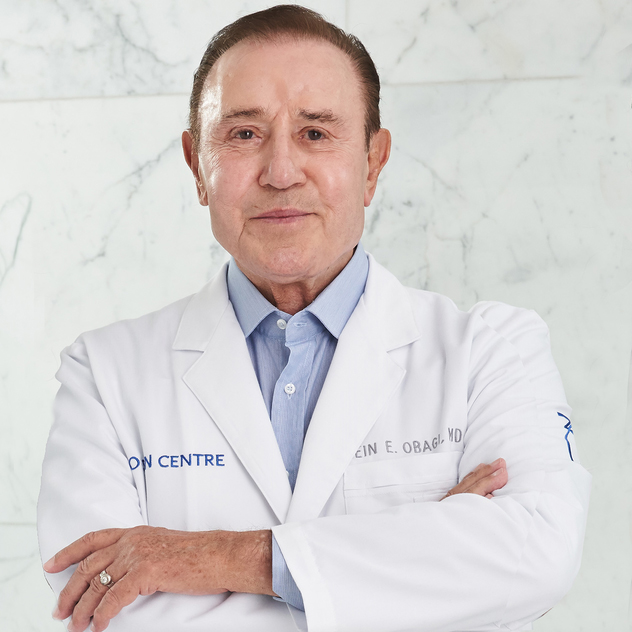
Dermatologist Zein Obagi founded ZO in 2007. He had already helped create the original Obagi skincare system, which makes the naming situation unusually confusing. ZO Skin Health and Obagi Medical are separate businesses. A familiar surname on another bottle does not make it the same company.
Obagi’s argument for the newer venture was as much about delivery as formulation. A 2016 advertisement described professional skincare distribution drifting away from physician control and presented ZO’s anti-diversion stance as an answer. The doctor wanted the relationship between product and practitioner to remain intact.
That history gives ZO a more specific identity than the broad promise of science-led beauty. Its founder’s expertise includes chemical peels, skin rejuvenation and treating different skin types. The company translates that clinical orientation into branded routines that other professionals can explain and supervise.
02The instructions are part of the product
ZO organizes its approach into three stages. Getting Skin Ready covers cleansing, exfoliation and toning. Prevent + Correct addresses particular concerns. Protect finishes with sun protection. A three-stage diagram can still involve several bottles; simplicity here means a defined sequence, rather than necessarily a short shopping list.
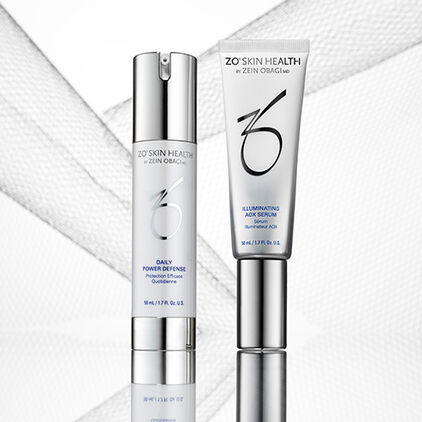
The range gives practitioners different tools within that sequence. Daily Power Defense is positioned around barrier support and environmental stress. Rozatrol addresses the appearance of redness. Retinol formulas target visible discoloration and texture. The newer peptide concentrate is marketed both for independent use and to complement the visible effects of neurotoxins and dermal fillers.
The professional connection also reaches the treatment room. Hydrafacial lists a ZO Brightalive booster for dark spots and uneven tone. That places the brand inside another company’s facial-treatment offering, alongside its home-care business. A patient can encounter ZO during a service before deciding whether to bring its products home.
Education helps make that assortment usable. ZO offers skincare information and access to specialists drawn from its education and training team. The commercial logic is straightforward: instructions can reduce uncertainty at the moment of purchase and give customers a reason to return for advice when their needs change.
Three stages. The number of products depends on the regimen.
03A premium routine has a replenishment bill
ZO’s current US listings put Daily Power Defense at $190 for 50 milliliters, alongside the $265, 30-milliliter peptide concentrate. Daily Mineral SunShade SPF 45 is listed at $56. These are September 2026 price snapshots, not a recommended bundle or a promise that every provider charges the same amount.
The useful calculation is the cost of the proposed routine over time. Different bottle sizes, usage rates and product roles make sticker prices imperfect comparisons. A customer considering several products can ask which steps address the main concern, how long each should last and which additions are optional. The first receipt only starts that conversation.
For the practice, the economic appeal is the interval between appointments. Home-care products create opportunities for repeat purchases while the patient is away from the treatment room. That is an interpretation of the model, rather than a claim about ZO’s margins. It explains why training a recommender and maintaining an authorized channel can matter as much commercially as designing the next bottle.
The business combines sales through professionals with authorized ecommerce. Selected high-potency products are reserved for the clinical network. ZO explicitly opposes unauthorized reselling and says it cannot guarantee products bought outside approved channels. Its US satisfaction guarantee also excludes unauthorized purchases.
This arrangement gives the clinic a commercial interest in the recommendation. It also gives the consumer a place to ask questions. Both can be true. The value depends on the quality of the explanation: why this formulation, why this sequence, and what would justify changing it? An expensive routine should come with answers that are more specific than the brand name.
Three products. Three price points.
04Read the number underneath the percentage
ZO publishes clinical summaries on its product pages. For Peptide Facial Refining Concentrate, it describes an independent, third-party study lasting 12 weeks with 49 women aged 47 to 72, representing Fitzpatrick skin types I through VI. Participants also used Gentle Cleanser and a broad-spectrum sunscreen. The company reports that 92 percent saw a reduction in the appearance of fine lines.
Those details help establish what the result means. It is an appearance-based finding in a defined group using a regimen. It should not be read as a 92 percent reduction in wrinkles, proof of equivalence to an injectable, or a prediction for every person who buys the serum.
The peptide study’s denominator and duration belong beside its results. Ages 47-72; cleanser and sunscreen also used.
Rozatrol’s page describes a separate 22-person study, assessed at two, four and eight weeks, with cleanser and sunscreen included in the protocol. Different products have different evidence. A favorable result for one formula does not certify every item carrying the same logo.
For a reader comparing brands, this suggests a useful order of questions: who participated, what else did they use, how long did the assessment last, and what was measured? A percentage can describe people noticing a change without describing the size of that change. Reading the protocol alongside the claim is a habit worth keeping, whatever name appears on the packaging.
The practical burden matters, too. ZO’s retinol education acknowledges redness, flaking and dryness, and discusses adjusting strength and frequency. This is one reason the professional advice belongs in the value calculation. A routine that the customer cannot tolerate or maintain has a problem that attractive packaging cannot solve. Persistent or severe irritation is a reason to stop and seek guidance, rather than treating discomfort as a scorecard.
05The less photogenic work behind the brand
A June 2026 sponsored profile in Beauty Independent describes an operational problem across the Obagis’ business journey: too many informal arrangements and too few controls. Samar Obagi, whose background is in engineering, is credited with introducing structure and accountability. The account also describes unsuccessful leadership hires and expansions followed by contractions.
This is the founders’ published account, not an audited chronology of ZO’s setbacks. Even with that qualification, it offers a concrete lesson: teaching a method and running an organization are different jobs. Clinical conviction can bring a business into existence; purchasing, people and decision-making still require systems.
Blackstone entered the story in October 2020, when its Tactical Opportunities funds acquired a majority stake. The stated ambition was further growth in physician-dispensed skincare. Former Johnson & Johnson consumer executive Colleen Goggins subsequently joined ZO’s board, adding experience from a much larger consumer-health business.
The company’s public culture signals mix that professional emphasis with less formal moments. In a 2026 employee fundraiser, colleagues could dunk or pie members of leadership, and ZO matched contributions supporting the Melanoma Research Alliance. It is a small, observable detail about company life. Even a business devoted to carefully managed skin occasionally lets a pie hit a face.
“Zein had the vision, but vision alone doesn’t survive. Someone has to build the structure that allows it to last.”
Samar Obagi In a sponsored Beauty Independent profile, June 2026
06The clinic brand learns to speak sunscreen
ZO competes with professional-skincare names including SkinCeuticals, SkinMedica and Obagi Medical. Physician relationships and scientific positioning are common currency in this market. ZO’s particular combination is a recognizable founder, a regimented product system and close attention to distribution. None of those features makes product-by-product comparison unnecessary.
Its 2026 sunscreen introductions show another priority: making the protective step easier to wear. Daily Mineral SunShade SPF 45 comes in six shades. The new Gel Sunscreen SPF 50 serves face and body. The mineral product’s US drug label identifies titanium dioxide and zinc oxide as its active sunscreen ingredients. Texture, tint and format give the company ways to compete within an everyday category.
In August 2026, ZO took a different approach to its rivals. It announced a joint social campaign with Supergoop!, EltaMD, Black Girl Sunscreen and Elizabeth Arden to challenge tanmaxxing and sunscreen misinformation. The planned content mixed myth-checking, habits and personal stories for a Gen Z audience.
The move is consistent with a company that depends on people following instructions after they leave the clinic. It also broadens the stage. Professional recommendation may begin a relationship, but the next competing message can arrive on a phone before the customer reaches home.
07What is worth borrowing
The transferable business lesson is to make the method teachable. Define where each product belongs, equip the person recommending it and keep the explanation available after purchase. ZO’s model suggests that the supporting service can be part of a product’s appeal, especially when consumers face a complicated choice.
That approach needs conditions to work: a budget that supports replenishment, access to useful advice, products that suit the user and a routine they will continue. People seeking a low-cost, minimal regimen may reasonably choose differently. A reader can borrow the discipline of asking what every step is for without buying the entire shelf.
ZO ultimately makes an unusually tangible bet on expertise. The formulas go home with the customer. The physician’s explanation has to travel with them - and remain useful when the bottle is half empty.