A skincare company that shows its work
Somewhere right now, a bottle of slightly oily liquid is being patted onto a chin with a cotton pad. The label says 2% BHA. The buyer probably read three paragraphs about salicylic acid before clicking "add to cart." That, in one small bathroom moment, is Paula's Choice - a company that treats skincare less like a fragrance and more like a clinical trial you happen to enjoy.
From its base at 605 5th Avenue South in Seattle, Paula's Choice sells fragrance-free, cruelty-free, research-backed products directly to skin-obsessed shoppers around the world. There are cleansers, serums, sunscreens and moisturizers, all organized not by mood or season but by skin concern. The brand reports roughly $300 million in net sales and a team near 750 people. In 2021, Unilever bought it in a deal widely reported at around $2 billion.
Not bad for a company whose founding pitch was, more or less, that most of the beauty industry was selling you very expensive disappointment.
Paula's Choice is one of the few companies that will recommend products other than its own. A recurring claim of the brand's consumer-advocate origins
The cosmetics counter had a credibility problem
Walk up to a cosmetics counter in the 1980s and you would be sold hope in a jar - lavishly packaged, heavily perfumed, and rarely accompanied by evidence. Paula Begoun, who had battled acne and eczema as a kid and trained in science before working as a makeup artist and esthetician, found this maddening. Products promised miracles. Ingredient lists told a quieter, less flattering story.
The tension was simple and stubborn: consumers were asked to trust marketing, not data. Begoun's entire career became an argument against that arrangement. As a consumer reporter at Seattle's KIRO-TV, she investigated beauty claims on air and earned a nickname that stuck - "The Cosmetics Cop." It was meant as a tease. She kept it as a job description.
She did not start a beauty brand. She started an audit, and the brand came later. On the logic of building products only after reviewing everyone else's
Bet the brand on transparency
Begoun's first book, self-published in 1985, carried the wonderfully blunt title Blue Eyeshadow Should Be Illegal. Her 1991 follow-up, Don't Go to the Cosmetics Counter Without Me, spawned nine editions and became a kind of consumer bible - her books have sold close to three million copies in eight languages. She had built an audience that trusted her precisely because she criticized everyone.
So the bet she made in 1995 was risky. After years of telling people what not to buy, she started making products of her own - and invited the same scrutiny she had aimed at everyone else. Fragrance came out of the formulas, on principle. Animal testing was off the table. The science had to be defensible, and the labels had to be readable by humans rather than chemists.
She began selling online the same year, an unusually early move for a beauty brand. The wager: that a small number of people who actually cared about ingredients would, eventually, become a large number.
Fragrance-free
Built into the formulas from day one - a formulation stance, not a passing trend.
Cruelty-free
No animal testing, a commitment baked into the brand's identity.
Jargon-free science
Ingredient lists and claims written to be read, understood and challenged.
The toner that wouldn't quit
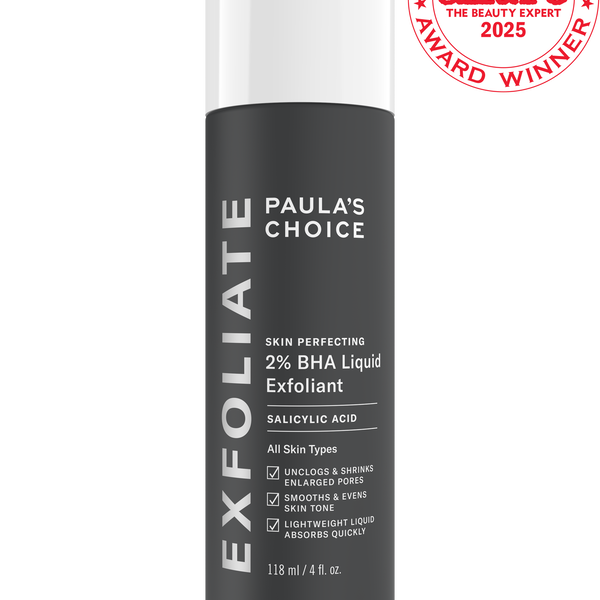
If you want to understand Paula's Choice, study one bottle. The Skin Perfecting 2% BHA Liquid Exfoliant launched in 2000 as one of the industry's early leave-on exfoliants. Two decades later it is still the company's number-one seller. The brand says it moves one unit roughly every seven seconds and more than 1.25 million units a year - figures based on 2021 global sales estimates.
The formula's whole personality is restraint. Salicylic acid works inside the pore lining, where blackheads and congestion begin, while a penetration-enhancing ingredient helps it get there fast. No perfume. No drama. It is, in the nicest possible way, a deeply unsexy product that people become quietly evangelical about.
That evangelism is the point. A brand can buy attention once; it cannot buy a customer who reorders the same bottle for a decade and texts a friend the link. The 2% BHA earns that kind of loyalty the slow way - by doing roughly what the label says it will, without a relaunch every spring. In an industry addicted to novelty, sticking with a 25-year-old formula is its own quiet act of defiance.
Around it sits a catalog that follows the same logic - a 10% Niacinamide Booster for pores and tone, a C15 vitamin C serum for brightness, plus the everyday cleansers, moisturizers and SPF that turn a hero product into a routine. And then there is Beautypedia, the review database Begoun launched in 2008, covering 45,000+ products from 300+ brands. It is a beauty company that runs a referee's whistle on the side.
A leave-on exfoliant launched in 2000 is still a best seller. Patience, it turns out, has a half-life measured in decades. On the 2% BHA Liquid Exfoliant's improbable longevity
Milestones, in roughly chronological order
The numbers cooperate
Skepticism is healthy, so here are the figures the brand and its acquirers have put on record. Paula's Choice was tracking past $300 million in net sales heading into 2021, with EBITDA reported near $100 million - the kind of margin that makes strategic buyers reach for their checkbooks. Unilever did, citing the brand's strength in prestige, science-led, direct-to-consumer skincare.
A brand built on a few big numbers
Bars scaled for illustration across different units (sales, profit, deal value, headcount) - read the labels, not the widths. Figures are public estimates and reports, not audited disclosures.
The other proof is harder to chart: a customer base of ingredient-literate shoppers who treat a $30 toner like a reliable old friend. That loyalty is what TA Associates bought into in 2016, grew internationally, and sold to Unilever five years later. Private equity tends to be unsentimental about brands; it backed this one because the math worked, not because the founder gave good radio.
And the math rested on something most beauty companies cannot fake - repeat purchase. A research-led routine is sticky by design. Once a customer trusts the cleanser, the serum and the SPF, the cost of switching is not money but the risk of breaking something that finally works. Paula's Choice spent 25 years lowering that trust barrier one honest label at a time, then watched the lifetime value compound.
Roughly $100 million in profit is a very persuasive way to end an argument about whether transparency sells. On the economics behind the Unilever deal
Honesty as a product feature
The mission has barely shifted since 1995: deliver research-backed, ingredient-transparent skincare that actually works, and refuse to hide behind perfume and promises. The vision behind it is bigger than any one bottle - a beauty industry where people buy based on proven ingredients and honest information rather than the prettiest claim on the box.
It is an unusual flex. Most brands sell aspiration. Paula's Choice sells the receipts. That is also why the brand keeps Beautypedia running competitors' products through the same wringer - the credibility of the critic is the moat. Lose the willingness to call out a weak formula, even your own, and you become just another counter.
Things that amuse and inform
- The founder's debut book was literally titled Blue Eyeshadow Should Be Illegal.
- "The Cosmetics Cop" nickname came from her years investigating beauty claims on Seattle TV.
- Beautypedia sometimes rates rival products higher than Paula's Choice's own.
- Fragrance-free is a formulation principle here, not a marketing pivot.
- The brand sold products online in 1995 - prehistoric, by e-commerce standards.
Back to the bathroom
"Clean beauty," "ingredient transparency," "evidence-based formulation" - these are now marketing categories with their own hashtags and aisle signage. Paula's Choice was making the argument before it had a name, which is either excellent timing or excellent patience. As the whole industry adopts the language of proof, the brand's challenge flips: when everyone claims transparency, the proof itself becomes the differentiator.
Inside Unilever, with deeper R&D and global reach, the test is whether a brand built on one woman's skepticism can scale that skepticism without diluting it. Customers who came for honesty will notice if the receipts get thinner.
So picture that bathroom again. The cotton pad, the slightly oily liquid, the three paragraphs read before purchase. Twenty-five years ago that buyer would have been handed a perfumed promise and a higher price. Today she reads the ingredient list first - and a Seattle company that decided honesty was a feature, not a liability, is a large part of why.
The cosmetics counter never apologized. It just quietly learned to talk like Paula. On an industry that adopted the critic's vocabulary