cx
(28)
Customer Feedback Software Split Into Four Very Different Bets
UserVoice, InMoment, Mopinion and Aurelius all promise to capture what customers think. They just disagree, completely, on what a company should do next.

Customer Feedback Software Has a Split Personality
Two Australian startups, Userback and Kapiche, sit at opposite ends of the same problem: one makes feedback easy to capture, the other makes it possible to understand. The gap between them is where most companies get stuck.

SurveySparrow Turned the Dreaded Survey Into a Conversation
Born from a founder's annoyance at a third HR reminder, SurveySparrow built the world's first chat survey. It now serves more than 100,000 companies across 149 countries.

When Feedback Meets the Cursor: InMoment and Contentsquare Team Up
InMoment brings the voice of the customer. Contentsquare shows the clicks that voice is reacting to. Their partnership stitches the two halves of a digital experience back together.

Four Customer Feedback Tools, Three Just Got Bought
airfocus, UserVoice, Mopinion and Contentsquare all promise to turn user gripes into product decisions. In the space of a year most of them stopped being independent companies - and that tells you where the whole category is heading.

Odigo Wants Europe's Call Centers to Stay in Europe
For nearly 40 years Odigo has quietly run the phone lines behind Air France, DHL and Allianz. Now the French CCaaS firm is betting that Europe's biggest brands would rather keep customer data on a sovereign cloud than hand it to Silicon Valley.

Vikas Bhambri Sells the Software Behind the Support Desk
For close to three decades he has sold the customer-experience software you never see - the CRM inside Kustomer, the contact-center stack that plugs into UJET, and now the AI agents at Rasa. Meet the go-to-market operator who turned other people's complaints into a career.

The Mobile SDK Is the Product Nobody Bothered to Rank
For an app-first business, the mobile SDK isn't a feature of your support stack — it is your support stack. So we ranked the ones that matter: UJET, Zendesk, Intercom, and Salesforce.

The Contact Center Is a Cost Center. Make It an Experience Center.
Every metric inside the contact center measures less — shorter calls, fewer tickets, cheaper interactions. That made sense while support was overhead. It stops making sense when support is the last human moment before a customer decides whether to stay.

Eight Contact Center Platforms Racing to Answer Your Angry Call
Sharpen, UJET, Cisco, Voiso, Gladly, Enghouse, Bright Pattern and Mitel are all chasing the same moment - the second you dial support. Here is who is winning, who is bleeding, and who is quietly betting the human on the other end is optional.

UJET and GoTo Are Racing to Own Your Next Support Call
One is a San Francisco AI-native wired straight into Google's agents. The other is a Boston software giant with millions of business customers and a contact center to sell them. They are both chasing the same ringing phone.

How Puzzel, Genesys, Vocalcom and UJET Are Rewiring Support
Four contact center vendors, four very different 2026 bets - a Nordic cloud pioneer, an industry-defining incumbent, a founder who bought his own company back, and a Google-backed challenger under new leadership. Here is who is wiring the next customer call.

The Contact Center Turned Into an AI Battleground in 2025
Talkdesk crashed the leaders' circle, Content Guru now stands alone as a challenger, Cisco slipped, and 8x8 vanished from the map. Gartner's 2025 CCaaS ranking is really a story about AI eating the call center.

UJET Wants to Kill the Call Center Mitel Helped Build
San Francisco's UJET calls itself CCaaS 3.0 and treats the phone as an app, not a switchboard. Ottawa's Mitel spent fifty years wiring the old way - now both are racing to work out what a human agent even does once the AI picks up first.

Plain and Gladly Are Both Trying to Kill the Support Ticket
Two startups, two very different customers, one shared enemy. Plain wants developers to forget the inbox; Gladly wants retailers to forget the case number. Here is what the end of the ticket actually looks like.

UJET vs Five9 and the Fight for the AI Contact Center
One is a billion-dollar public incumbent, the other a Google-backed challenger a fraction of its size. Both are betting the future of customer service is an AI agent, not a person in a headset.

Zoom and UJET Bet the Contact Center Belongs to AI Now
Two very different companies - a video giant and an AI-first upstart - are converging on the same idea: the future of customer service runs on agents that never sleep. Here is how the CCaaS race is reshaping who answers when you call.

Contact Center Software Is Learning to Answer the Phone Itself
Zendesk, TCN, Puzzel, Regal, UJET and Bright Pattern are chasing the same bet - that the next voice on your support line won't be human. Here is how six very different platforms are racing to get there.
Six Contact Center Platforms, Six Very Different Bets
Twilio, UJET, Cisco, Alvaria, CloudTalk and Gladly all promise to handle your customers - but each one was built for a very different company. Here is who each is really for.
Why Customer Support Software Is Having an Identity Crisis
SAP, ServiceNow, Gorgias, Kayako, Supportbench and Thena are all chasing the same promise - support that resolves itself. Here is who is actually building it, and who is just bolting AI onto an old inbox.
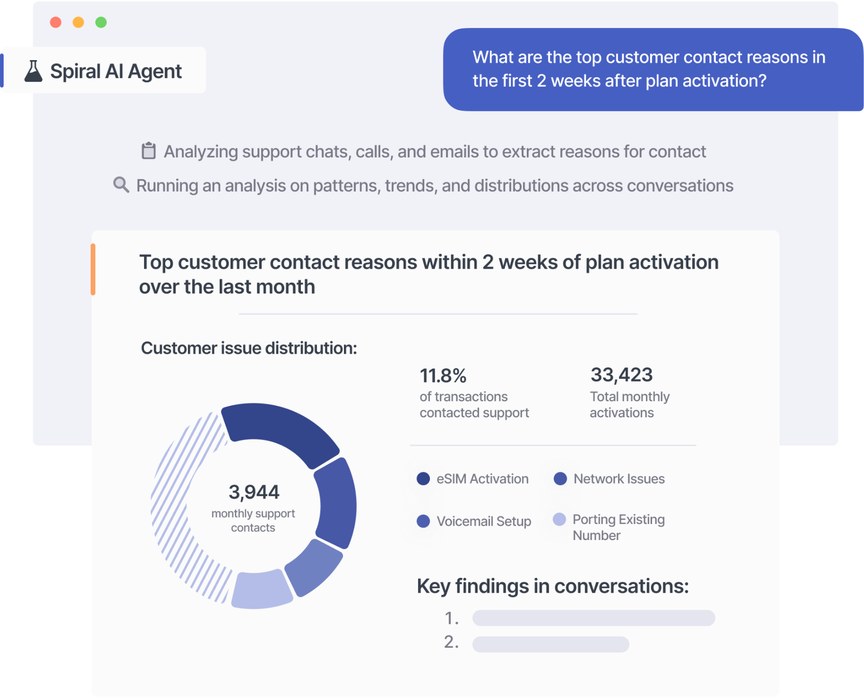
The 95% You Never Read
Most support teams hand-read roughly 5% of their conversations and make decisions on the other 95% by intuition. This story examines what actually changes operationally when a team reads 100% of conversations across voice, chat, email, surveys, social and reviews using Spiral by UJET: QA becomes real measurement instead of a scorecard exercise, emerging issues surface in days rather than quarters, and the contact-driver list turns into a product backlog. Turo's published three-month results anchor the case: average handle time down 28 seconds, CSAT up 5%, and improved SLA performance.

The Experience Center
A UJET brand film reframes the contact center as an 'experience center' - not a cost to minimize but the richest customer signal a company owns. The video walks through five moves (channel blending, mobile SDK and biometric auth, AI automation and routing, agent assist, and real-time CRM sync) that turn support from a ticket-closing utility into a loyalty and revenue engine.

Matt Clare
Filmed on the expo floor of CCW 2026, this CX Today conversation with UJET's Matt Clare cuts against the deafening tradeshow chorus of 'automate everything.' Instead of using AI to stop customers from reaching out, UJET's newly acquired Spiral analyzes 100% of customer conversations to explain WHY customers are calling, so companies can fix the underlying problem. Clare argues that people still trust people, that AI's real job is to superpower human agents rather than replace them, and that customers deserve choice in how they get help. The talk touches on UJET's brandable mobile and chat SDK, its analytics-to-action loop, and the emerging world of agentic experience orchestration.

The Quiet Redesign of Customer Service
Customer service is being rebuilt in the background, one conversation at a time. A wave of companies - Cognigy, Parloa, Cresta, UJET, Amazon Connect, Cisco's Webex Contact Center, 8x8 and Vonage - are turning the contact center from a cost you apologize for into software that answers the phone. This is the story of the quiet redesign: who is building it, what changed in 2025 and 2026, and why the hold music is finally getting shorter.

The Best Customer Service Doesn't Sound Like a Call Center
A field report on the quiet revolution in customer service: the shift away from the scripted, hold-music call center toward conversations that sound human. It maps the companies rebuilding support from the ground up - Genesys, NICE CXone, Five9, UJET, Talkdesk, and Bret Taylor's Sierra - and argues that in an age of AI agents, the winners are the ones who make talking to a company feel less like filing a ticket and more like getting help from someone who remembers you.

Shapewear, Roller Coasters, and Borrowed Cars Walk Into a Contact Center
Three companies that couldn't look less alike — SPANX in shapewear, Herschend in theme parks, and Turo in car sharing — turn out to share the same architecture underneath: a CRM-first, cloud-native contact center on UJET, no stored PII, deployment measured in weeks or hours, and one hard number each that moved. This profile examines the common pattern behind three very different customer-experience turnarounds.
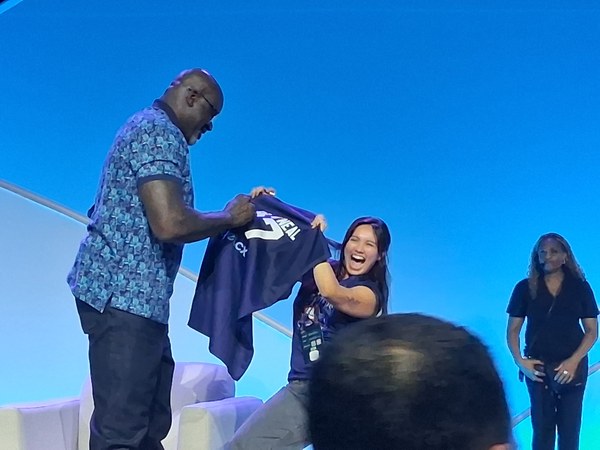
The Woman Who Brought a Dossier to a Basketball Game
At Customer Contact Week in Las Vegas, UJET showed up as the underdog with a basketball-themed booth, Jettie basketballs, and a Pop-a-Shot game. But behind the pipeline goals, the company's social media and community marketer, Vanya Hoffman, had one private, single-minded mission: meet Shaquille O'Neal. She documented the whole lead-up on LinkedIn as 'Operation Shaq' — complete with a laminated, spiral-bound 'Dossier,' a custom #37 'Dr. O'Neal' ujet.cx jersey, and relentless good humor. It worked. She got on stage, handed Shaq the jersey, and walked away with signed memorabilia and a story that outshined every booth on the floor.

The Underdog That Refused to Retrofit
UJET is a cloud-native, mobile-first, CRM-native contact-center-as-a-service (CCaaS) platform positioning itself as the modern 'Experience Center' alternative to legacy giants like Five9, NICE, Talkdesk, and Genesys. Built around enterprise-grade AI, a zero-PII-storage architecture, and two-month deployments, UJET has raised roughly $231M across five rounds at an estimated ~$500M valuation. This story sizes up where the underdog actually stands in a consolidating CCaaS market where every vendor is shouting the same AI promises.