civil-engineering
(14)
Before the concrete: VSCE’s other construction work
A bus depot needs somewhere to park the buses. It also needs a closed street, a public hearing, and people who can keep the paperwork moving. Oakland’s VSCE has made a business of connecting those jobs.
VILOR builds the way back
From a flood-wrecked station in Paiporta to the tunnels beneath Seville, the Valencia contractor has made public infrastructure its business. Its next challenge reaches from recycled asphalt to the security of construction data.
Cannon makes the places we take for granted work
A flooded street, an aging pier, a launch facility: Cannon builds its business around the engineering details that make places usable. After 50 years, the interesting story is still in the work.
The Company Under Canada’s Roofs Is Turning Membranes Into a Climate Data Business
SOPREMA spent decades making the layers nobody sees. Now the Drummondville manufacturer is making those layers legible - with local factories, trained installers, carbon data and a growing stack of services around the building envelope.

Whirrx Learned the Hard Part of Drone Surveying Isn’t Flying - It’s Earning the Engineer’s Trust
The Cedar Rapids company stopped selling the magic of flight and started selling what happens after landing: checked data, usable files and accuracy a surveyor can defend.
Core States Group Built a Quiet Machine for Making 1,000 Construction Projects Feel Like One
The West Chester firm turned the least glamorous part of construction - coordinating dozens of disciplines across hundreds of sites - into a growth engine for Fortune 500 clients. Its next test is whether $210 million of patient capital can scale that playbook without sanding off the local expertise that makes it work.

The Billion-Dollar Infrastructure Problem Vortex Fixes Without Digging Up the Street
Vortex built a one-roof business around an unglamorous civic bargain: renew the pipe, keep the city moving. Its mix of materials, machines, monitoring and field crews shows how infrastructure work is becoming a systems business.
Bentley Systems
Five brothers, one CAD engine, and four decades later the software running underneath much of the world's roads, rail, and water networks - now being rebuilt around digital twins and infrastructure AI.
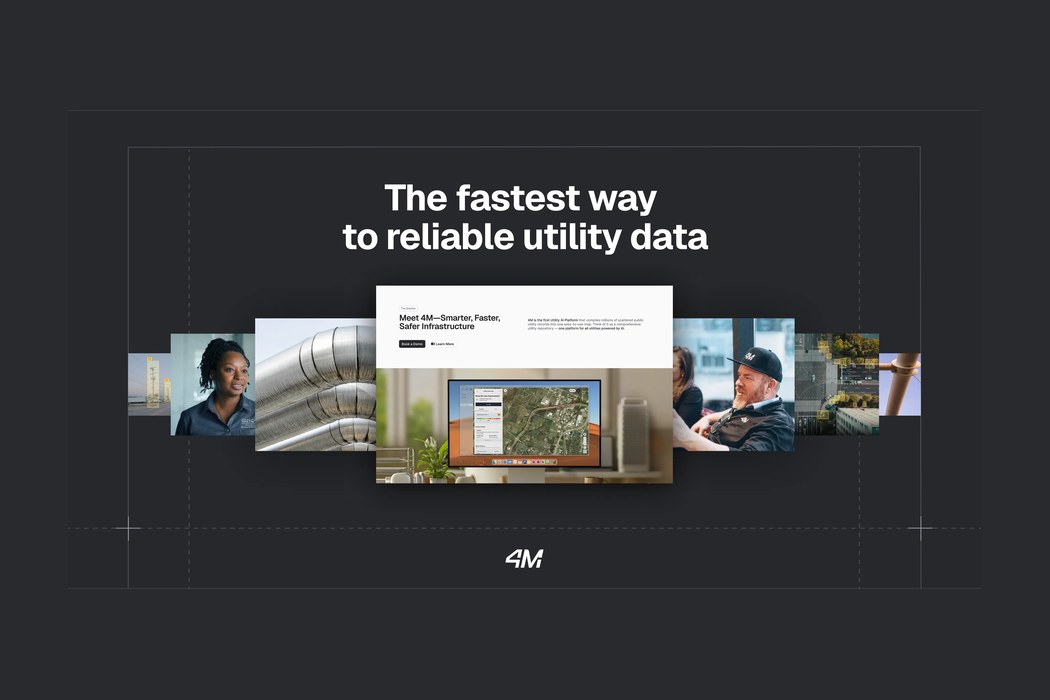
4M Analytics
4M Analytics is an AI-powered utility mapping company that compiles millions of scattered public utility records, satellite imagery, and legacy blueprints into a single continuously updated digital map of what lies above and below ground. Its Utility AI Platform gives civil engineers, contractors, and departments of transportation instant, verifiable subsurface data to plan safer, faster infrastructure projects and avoid costly excavation strikes.

OptiRTC (Opti)
Opti (OptiRTC, Inc.) is a Boston-area software company that makes stormwater infrastructure smart. Its cloud platform - built around a technique it calls Continuous Monitoring and Adaptive Control (CMAC) - links sensors, valves, and weather forecasts to actively move water in ponds, tanks, and detention systems before, during, and after storms. Spun out of engineering consultancy Geosyntec in 2014 and acquired by global infrastructure firm Aliaxis in 2022, Opti helps cities, utilities, developers, and engineers cut flooding, reduce combined-sewer overflows, and improve water quality with existing infrastructure rather than costly new construction.
Computers and Structures, Inc.
Computers and Structures, Inc. (CSI) is a Walnut Creek, California software company founded in 1975 that builds the analysis and design tools structural and earthquake engineers use to model buildings, bridges, dams, stadiums and towers. Its finite-element products - SAP2000, ETABS, CSiBridge, SAFE, PERFORM-3D and CSiCOL - are used by engineers in more than 160 countries and have helped shape landmark structures including the Burj Khalifa, Taipei 101 and One World Trade Center. Founded and still led by structural engineer Ashraf Habibullah, CSI grew out of the SAP and ETABS research programs developed at UC Berkeley.
Aren
Aren is a New York-based AI company that helps owners of bridges, tunnels, and other large civil infrastructure figure out what is quietly falling apart before it becomes a headline. Its platform ingests source-agnostic data - smartphone photos, drone video, laser scans, infrared, and sensors - and turns it into 3D digital twins that detect and quantify damage, track deterioration over time, and produce maintenance and capital-allocation plans. Founded by structural engineer Ali Khaloo out of Cornell Tech, Aren pairs computer vision and deep learning with decades of structural mechanics to give asset owners a quantitative, repeatable way to decide where to spend limited repair dollars.

CivilGrid
CivilGrid is a San Francisco construction-intelligence company that centralizes utility, environmental, geotechnical and land-rights data into a single collaborative platform - often called 'Google Maps for pre-construction.' Founded in 2021 by Wharton classmates Josh Mackanic and Brandon Cohen, it partners with utilities and agencies to pull current GIS datasets so engineers and construction teams can scope, plan and de-risk projects before anyone breaks ground, cutting pre-construction research time by up to 90%.
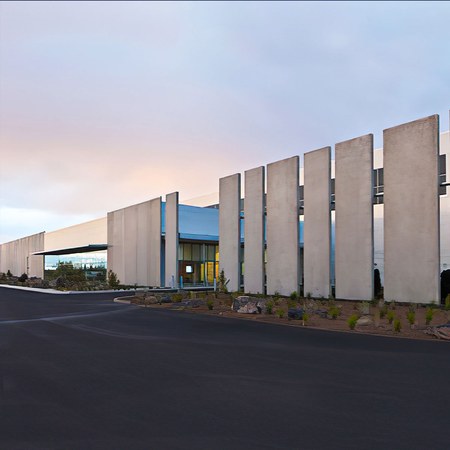
PASE (Peoples Associates Structural Engineers)
PASE (Peoples Associates Structural Engineers) is a San Jose-based structural and seismic engineering consultancy founded in 1990. Ranked among the largest engineering firms in Silicon Valley, PASE designs the bones of buildings that have to stay standing - hyperscale data centers for Meta and Vantage, multifamily and mixed-use communities, commercial and institutional projects, plus seismic retrofits and non-structural anchorage. With roughly 69 staff and 250+ years of combined experience across offices in California, Maryland and Croatia, the firm pairs heavy engineering rigor with a collaboration-first culture it calls 'The PASE Way.'