biopharma
(37)
The Company Selling Confidence Before a Medicine Can Be Sold
A drug can work perfectly and still fail to reach patients. OPEN Health built a global consultancy around the awkward middle - the evidence, access, education, and human judgment that turn a scientific result into a confident decision.
The Tiny Agency Behind the Footnotes
Kay Square Scientific turns clinical data into the papers, posters and expert conversations that medicine runs on. Its advantage is not size, but a small remote team with long memories, advanced degrees and an almost fussy respect for the footnote.
IDBS and the science of getting four weeks back
BioIVT says IDBS helped it deliver research data at least four weeks faster. The company’s bigger bet: better lab records can speed the journey from experiment to manufacturing - and give AI something trustworthy to work with.
Resolve Therapeutics Missed the Headline Endpoint - Then Built a Smarter Trial From the Miss
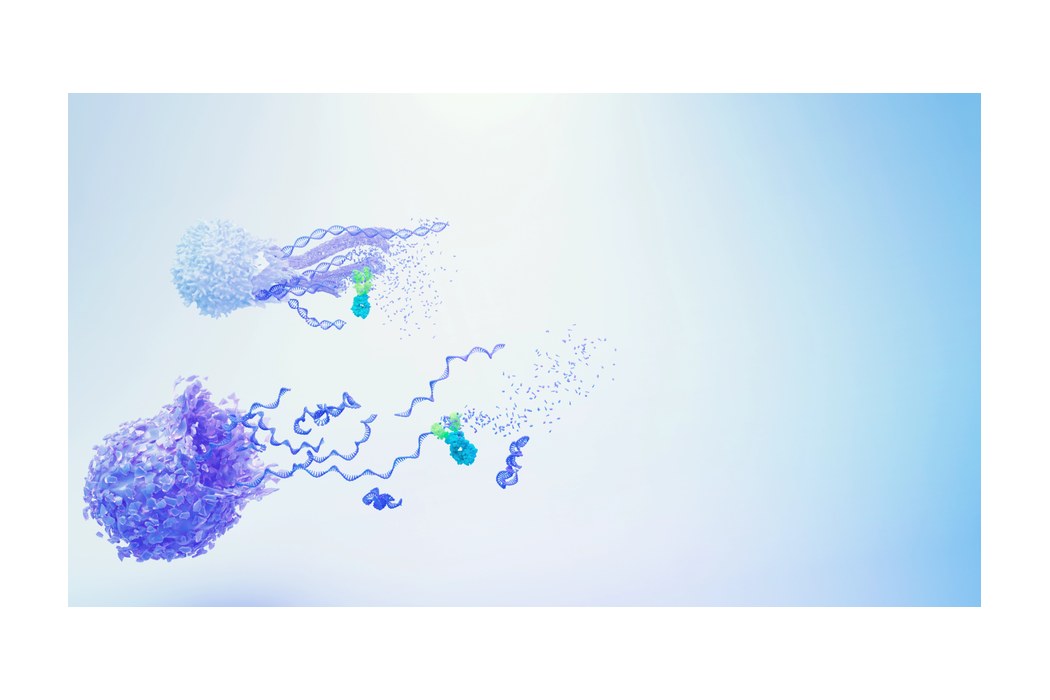
The tiny Miami biotech spent years testing a simple idea: digest inflammatory RNA instead of suppressing the immune system. Its first big readouts were messy - and the useful part was hiding inside the miss.
THREAD Moved the Clinical Trial to the Patient's Kitchen Table
For decades a clinical trial meant a patient driving to a site. THREAD bet the visit could come to them instead - and then bought four companies to prove it.
The COPD drug you breathe from a mist, not a puff
A three-person startup out of San Diego is betting that millions of COPD patients can't work an inhaler - and that a mist they can simply breathe will win a market the pharma giants keep buying up.
The Company Teaching Drug Trials to Stop Drowning in Their Own Data
A clinical trial can generate data from a hundred different sources. eClinical Solutions built the plumbing to make it all speak the same language - and now it is handing the busywork to AI agents.
Novartis Cut Away an Empire to Bet on Five Ways of Making Medicine
The Swiss giant spent years shedding businesses until only innovative medicines remained. Now its growth depends on turning five scientific platforms into treatments that health systems will pay for - and patients can actually reach.
The 176-Year-Old Startup That Sells Science by the Milligram
It began as a candy-flavored worm medicine in a Brooklyn brick house. Today Pfizer is racing to replace its Covid windfall with cancer drugs and weight-loss pills before the patents run out.
The 245-Year-Old Drugmaker Betting Its Next Act on Six Big Swings
Takeda began as a medicine shop in Osaka in 1781. Now a new CEO must turn a sprawling global portfolio, a $30 billion-plus revenue base and six late-stage programs into the company’s next generation of growth.

GSK
After spinning off toothpaste and painkillers, GSK placed a sharper bet on the immune system. Its next chapter is being written in vaccine vials, long-acting HIV medicine and a newly enlarged cancer pipeline.
Sanofi
The 53-year-old French drugmaker is narrowing its bets to immunology, vaccines and a faster pipeline. The wager is that better biology, selective dealmaking and factory-scale AI can turn scientific focus into repeatable growth.
Merck
KEYTRUDA made Merck an oncology powerhouse. Now the 135-year-old drugmaker is spending, partnering and inventing its way toward a future that cannot depend on one medicine.
UCB
UCB spent decades shedding its industrial past to become a specialist in the brain and immune system. Now five medicines, two ambitious acquisitions and a new Georgia factory are testing whether focus can scale.

Neurocrine Biosciences
One movement-disorder medicine turned a San Diego research shop into a multibillion-dollar biopharma. Now Neurocrine is spending that advantage on rare endocrine disease, psychiatry and the difficult biology between brain and body.
Respiree
Respiree is a Singapore-founded digital health company (an A*STAR spin-off) building clinically validated AI that pairs FDA-cleared cardio-respiratory wearable sensors with software to track lung and heart biomarkers over time. Its 1Bio platform helps hospitals, health systems and biopharma detect patient deterioration - such as COPD flare-ups and heart failure - days in advance, powering remote patient monitoring, clinical decision support and decentralized clinical trials across Asia-Pacific, Australia and the United States.
Castor
Castor is a health-technology company that builds a cloud-based eClinical platform for running clinical trials - from electronic data capture (EDC) and eConsent to eCOA/ePRO and real-world evidence. Founded in 2012 in Amsterdam by physician-researcher Dr. Derk Arts, Castor set out to replace clunky, expensive trial software with a self-service, researcher-friendly system. Today it supports more than 15,000 studies across 90+ countries and is used by leading CROs and biopharma companies, while pushing decentralized trials and practical AI (Castor Catalyst, built with Google Cloud) into mainstream research.

Courier Health
Courier Health is a New York City software company building the first patient relationship management (CRM) platform purpose-built for life sciences. Its AI-powered system connects fragmented data across biopharma commercial teams to orchestrate the patient journey - from education and enrollment through benefits, prior authorization, therapy initiation, and adherence - helping patients with chronic and rare diseases start and stay on treatment. The company raised a $50M Series B led by Oak HC/FT in April 2026.

Intelligencia AI
Intelligencia AI is a New York-based artificial intelligence company that helps pharmaceutical and biotech organizations predict the probability of technical and regulatory success (PTRS) for drug candidates. Its patented SaaS platform harmonizes more than 1.5 billion clinical and biological data points to score how likely a drug is to advance through clinical phases and win regulatory approval, with reported prospective accuracy above 80%. The company gives R&D, business development, and portfolio teams transparent, explainable AI to de-risk investment decisions in drug development.

Leal Health
Leal Health (formerly TrialJectory) is an AI-powered treatment decision-support platform that gives cancer patients and their oncologists an unbiased, single point of access to FDA-approved therapies and clinical trials matched to a patient's exact diagnosis. Founded in 2017 and headquartered in New York, the company built a patented, generative-AI engine that reads thousands of trials and treatment options, then matches patients in a roughly two-minute intake. It has facilitated millions of treatment matches across 22+ cancer types, is free for patients and clinicians, and earns revenue from biopharma partners and health plans. In February 2026 Leal Health was acquired by Nexus Precision Health.

NeuShen Therapeutics
NeuShen Therapeutics is a clinical-stage biotech developing novel small-molecule and gene-therapy treatments for central nervous system disorders such as schizophrenia, depression and epilepsy. Founded in 2021 by Joan Huaqiong Shen, MD, PhD, and headquartered in Shanghai with an R&D center in the Boston area, the company runs a pipeline led by NS-136, a selective M4 receptor positive allosteric modulator for schizophrenia, and NS-041, a highly selective KCNQ2/3 activator for epilepsy and depression.

Pathos AI
Pathos AI is an AI-driven biotech company building what it describes as one of the largest multimodal foundation models in oncology. By combining millions of clinical, molecular, and imaging records with proprietary AI, Pathos aims to identify the right patients for a given therapy, design smarter adaptive clinical trials, and de-risk cancer drug development. Founded in 2020 by Eric Lefkofsky and Ryan Fukushima and led since 2025 by CEO Iker Huerga, the company raised a $365 million Series D that valued it at roughly $1.6 billion.

AmMax Bio., Inc.
AmMax Bio is a clinical-stage biotechnology company in Redwood City, California, developing first-in-class cancer therapeutics built on a CSF1R-targeting antibody platform. Founded in 2020 by pharmaceutical veteran Larry Hsu, PhD, in partnership with Amgen, the company advances a pipeline that spans a monoclonal antibody for tenosynovial giant cell tumor (TGCT), a therapy for colorectal cancer minimal residual disease (in partnership with MD Anderson), and a lead antibody-drug conjugate, AMB-104, for acute myeloid leukemia. AmMax's strategy is to de-risk development by combining clinically validated antibodies with established linker-payload technology.

Auransa
Auransa is a clinical-stage, AI-native biopharmaceutical company in Palo Alto, California, that uses a proprietary machine-learning platform - the SMarTR Engine - to mine large, heterogeneous human disease datasets and discover novel cancer therapies without starting from a predefined drug target. Founded in 2014 by Pek Lum and Viwat Visuthikraisee, the company pairs each predicted compound with the patient subtypes most likely to respond, aiming to improve the odds of clinical success. Its lead program, AU-409, an RNA transcription modulator for advanced liver cancer, is in Phase 1 trials, with additional programs including heart-safe chemotherapy.

Mendra
Mendra is an AI-native biopharmaceutical company based in San Francisco that acquires, develops, and commercializes therapies for rare and ultra-rare diseases with high unmet need. Founded in 2025 and launched publicly in January 2026 with an $82 million Series A, the company is run by veterans of BioMarin, Palantir, and other rare disease programs. Rather than discovering compounds from scratch, Mendra systematically scans, scores, and acquires shelved or under-resourced rare disease assets from academia, small biotechs, and big pharma, then uses AI to accelerate patient identification, clinical trial enrollment, and global market access.
SmartLabs
SmartLabs is a Boston-based life-sciences company that sells laboratory infrastructure the way cloud providers sell servers: as-a-service. Its Managed Research Centers give biotech and pharma teams private, enterprise-grade R&D and manufacturing space - fully built, operated, and staffed - without the multi-year leases and capital buildouts that normally slow science down. Companies can move into a running lab in weeks, keep full control of their intellectual property, and scale space up or down as programs change.
Biotechnology Innovation Organization
The Biotechnology Innovation Organization (BIO) is the world's largest trade association for the biotech industry, representing more than 1,000 companies, research institutions and state and regional bio centers across the United States and 30-plus countries. Founded in 1993 and headquartered in Washington, D.C., BIO lobbies on drug pricing, intellectual property, regulation and biosecurity, and runs the BIO International Convention - the industry's flagship annual dealmaking and networking event. Led since 2024 by President and CEO John F. Crowley, a rare-disease entrepreneur whose own children have Pompe disease, BIO's stated mission is to advance a 'bio revolution' that cures patients, protects the climate and nourishes humanity.
K2bio
K2bio is a Houston-based preclinical contract research organization (CRO) built on assets acquired from Bellicum Pharmaceuticals, including a certified mouse vivarium. It pairs full-service GLP and non-GLP in vivo and in vitro research with flexible private and shared lab space near the Texas Medical Center, giving early-stage biotech and pharma teams big-company infrastructure on small-company budgets.

Theravance Biopharma US, LLC
Theravance Biopharma is a South San Francisco biopharmaceutical company built around a focused respiratory franchise. Its flagship product, YUPELRI (revefenacin), is the first and only once-daily nebulized long-acting muscarinic antagonist approved in the U.S. for COPD maintenance, commercialized with partner Viatris. Spun out of Innoviva in 2014 and trading on Nasdaq as TBPH, the company combines a profitable marketed product with high-value royalty assets - including a now-monetized stake in GSK's TRELEGY - and runs a lean, capital-disciplined model rather than chasing scale.
Verantos
Verantos is a Menlo Park healthcare technology company that turns messy, fragmented patient records - including the clinical notes most platforms ignore - into research-grade real-world evidence (RWE) at scale. Using AI applied to the complete patient record and a rigorous focus on measured accuracy, completeness, and traceability, Verantos helps pharmaceutical companies, regulators, and health systems generate evidence that can hold up to FDA-grade scrutiny across every therapeutic area.