Resolve Therapeutics is trying to turn a cleanup job into a medicine. The debris is cell-free RNA - loose genetic material released by damaged or dying cells and carried through the blood. In autoimmune diseases, Resolve argues, some of that RNA helps trigger interferons and the inflammatory cascade. Its lead drug, RSLV-132, is an enzyme engineered to circulate for weeks and chop the RNA into harmless pieces. The sales pitch is not that it muffles the immune system. It is that it removes one of the things making the immune system shout.
This is a deliciously easy mechanism to draw and a stubbornly hard one to prove in patients. Resolve has spent 16 years moving that idea from an academic concept into randomized trials. It got a big-pharma option deal, published four clinical papers, expanded from chronic autoimmunity into acute injury and stayed remarkably small. It also missed the primary endpoint in its lupus trial, then missed the day-71 primary endpoint in long COVID. The company worth studying is not the one described by either the glossy mechanism or the ugly headline alone. It is the company living in the space between them.
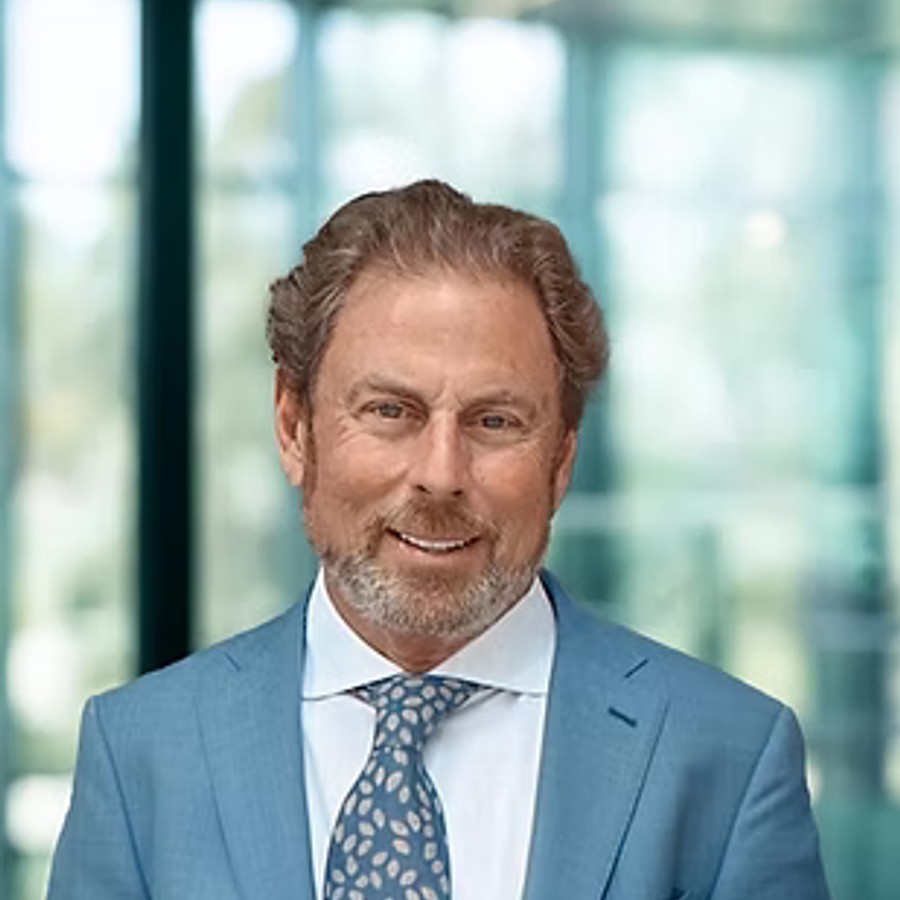
The molecule is a pair of kitchen tools
RSLV-132 combines human RNase1, the cutting tool, with an engineered piece of human IgG1 called an Fc domain, the handle that helps the molecule persist in circulation. The company reports a serum half-life of roughly three weeks. Unlike therapies that deplete B cells or block a cytokine pathway, the drug is designed to digest extracellular RNA upstream. In theory, a patient keeps the immune machinery needed to fight infection while losing some of the molecular litter that chronically activates it.
That final arrow contains the entire risk. A drug can engage its target beautifully and still fail to improve how a patient feels. Extracellular RNA may matter greatly in one person and only marginally in another. It may drive inflammation in blood while the important disease lives in a gland, skin lesion or brain compartment the enzyme cannot adequately influence. Resolve's trials have been a long exercise in finding the conditions under which the clean diagram survives contact with biology.
What it cost to ask the question
Resolve formed in 2010 around work from the University of Washington. Its early capital story was unusually lean. The company said it had taken the academic concept to a clinical candidate completing IND-enabling studies on less than $3 million. A $2 million Series A backed the first stretch. Debt and a $5.8 million Series B followed, bringing the supplied financing total to $8.9 million. The Series B proceeds were meant to push RSLV-132 into human lupus trials.
Then came the big headline. In 2013, Takeda paid $8 million to support early development and received an exclusive option to license the lead drug and related compounds after a Phase 1b/2a study. If Takeda exercised, Resolve could receive an option fee, royalties and up to $247 million in development milestones. The press called it a $255 million deal. The useful accounting lesson is less cinematic: $8 million was real at signing; the rest depended on clinical progress and an option. Resolve ultimately remained the company carrying RSLV-132 through mid-stage studies.
A milestone headline is not cash. A subgroup signal is not an approval. Resolve's story gets better when the nouns stay honest.The discipline behind the drama
The first thing that failed was translation
Safety did not break first. The early lupus study found RSLV-132 generally well tolerated and confirmed that the enzyme could raise RNase activity in plasma. The more consequential failure came in the larger Phase 2a lupus trial. Sixty-five patients with meaningful skin disease received RSLV-132 or placebo for six months. The primary test was change in the CLASI skin score. Placebo improved by 5.7 points; RSLV-132 improved by 6.2. That difference was not significant.
Underneath the average, patients who entered with more active systemic disease showed better responder rates on RSLV-132 than placebo. The same was true for a subgroup with higher baseline skin scores. Interesting, yes. Confirmatory, no. Subgroups discovered after a trial can point toward the next study, but they cannot retroactively rescue the first one.
What the lupus readout actually said
The primary CLASI comparison missed. The higher-disease-activity responder analysis was a clue for future selection, not proof of efficacy.
Long COVID delivered a rhyme. In 108 people with severe fatigue, six infusions did not produce a significant difference on the day-71 primary endpoint or secondary endpoints. A growing placebo response erased separation late in the study. Earlier time points showed improvements on several fatigue measures, and women responded more than men. Again: not a win, but an instruction.
What changed their mind
There was no single cinematic decision. The trial design tells the story. An earlier 30-person Sjögren's study had already shown clinically meaningful fatigue improvements across several measures, plus a cognitive-processing signal. The lupus results suggested that baseline disease burden mattered. The long-COVID results suggested sex and the timing of symptom measurement mattered. Resolve's next move kept the mechanism but tightened the human question.
The current confirmatory Phase 2 Sjögren's trial enrolls women, ages 18 to 75, who have had the disease for less than 10 years and report moderate-to-severe fatigue, dryness or pain. It asks whether patients feel better, not merely whether a laboratory marker moves. Participants receive a 45-minute infusion twice per month, with 13 site visits over six months, at 23 listed US sites. The company has indicated a third-quarter 2026 data window.
This is the strategic center of Resolve today. There are no commercial customers yet because there is no approved drug. Trial participants and investigators are its immediate users. If RSLV-132 advances, rheumatologists, infusion centers, health systems and payers become the buyers and gatekeepers. Until then, the business model is familiar clinical biotech: create intellectual property, prove a drug in focused trials, then find a larger partner capable of financing Phase 3, manufacturing and commercialization.
The part another founder can steal
Resolve's Takeda headline was $255 million. The immediate development payment was $8 million. Build from money in the bank.
The lupus and long-COVID papers preserve the failed endpoint and the informative signal. Credibility compounds more slowly than spin.
Resolve did not chase a brand-new target after every ambiguous result. It refined disease burden, sex and symptom selection.
Fatigue, pain and dryness are not decorative endpoints in Sjögren's. They are much of the daily burden and the current trial's point.
The lesson is not “believe through failure.” That is how expensive ideas become very expensive habits. The copyable move is narrower: decide in advance what evidence would justify another test, and make the next test more discriminating than the last. Resolve's confirmatory study now has to validate the earlier signal prospectively. If it does not, the subgroup story has run out of runway.
When the playbook will not work
It has a chance when...
- Extracellular RNA is an important upstream driver.
- The selected patient has measurable symptom burden.
- The enzyme reaches the relevant compartment.
- The endpoint is timed to the treatment effect.
It breaks when...
- RNA is a bystander rather than a cause.
- Broad enrollment dilutes biological responders.
- Placebo response swamps a modest benefit.
- Retrospective subgroups fail prospectively.
There is also competition from a very different direction. Approved and experimental autoimmune drugs target B cells, BAFF, type I interferon, FcRn and BTK. Companies such as GSK, AstraZeneca, Novartis and argenx can bring far larger trial and commercial organizations. Resolve's differentiation is upstream clearance without broad immunosuppression. That advantage matters only if it produces a patient benefit strong enough to outweigh intravenous dosing, development risk and the convenience of alternatives.
A second tool for messier debris
Resolve is also building RSLV-145, a preclinical Fc fusion that carries both RNase and DNase activity. The target is not only free RNA but DNA and neutrophil extracellular traps, sticky webs of nucleic acid and proteins. In ischemic stroke, Resolve hypothesizes that digesting NETs could make clots more responsive to tissue plasminogen activator, while clearing RNA could reduce injury after blood flow returns. The company is studying stroke models and patient clots, not treating stroke patients with the drug.
The platform has moved into polytrauma too. Resolve and Duke University School of Medicine began an observational study to map cell-free RNA after severe injury. In 2026, a collaboration with Institut Pasteur de Montevideo added REJOIN-seq, a method designed to repair and recover fragile RNA fragments that conventional sequencing can lose. Better identification could sharpen biomarkers and patient selection. It is research infrastructure, not yet clinical validation.
That is where Resolve fits in the market: a small clinical biotech trying to make extracellular nucleic acids into a druggable category. Its edge is a coherent mechanism, a published clinical record and the freedom to focus. Its weakness is the same scale that made the early capital story charming. One decisive Sjögren's result could reopen large-pharma interest. Another ambiguous result would leave a clever platform looking for an ever smaller island of responders.
For now, an honest description is also an interesting one. Resolve has not proved that digesting inflammatory RNA changes autoimmune disease. It has proved that the question can be asked safely in people, that some symptom signals repeat, and that a missed endpoint can improve the next protocol if a company lets the data edit the story.