The strange thing about a successful medicine is how many ways it can fail after it succeeds. A trial can show that a treatment works, yet a payer may still decide it is too expensive. A physician may see the data and remain unconvinced. A patient may receive a leaflet and understand none of it. Between the clean verdict of a clinical endpoint and the untidy reality of care sits a procession of committees, models, presentations, conversations, and choices. OPEN Health lives in that procession.
The company calls itself a science-to-decision partner. The phrase is corporate, but the job is concrete: help drugmakers work out what evidence they need, prove value to health systems, explain science to clinicians, and bring patients into decisions usually made about them. OPEN Health does not manufacture the molecule. It improves the odds that everybody around the molecule knows what to do next.
The fourth hurdle has a business model
Drug development has three familiar hurdles: quality, safety, and efficacy. Then comes the less photogenic fourth - access. Regulatory approval does not oblige an insurer or national health system to pay. Health technology assessment bodies want economic models, comparisons, quality-of-life measures, and a persuasive account of who benefits. OPEN Health's Evidence & Access teams build that case through health economics, outcomes research, real-world data, meta-analysis, pricing strategy, and reimbursement submissions.
Across the other side of the firm, medical writers turn trial results into publications. Strategists shape medical-affairs plans. Education teams design peer-to-peer programs for healthcare professionals. Patient specialists interview caregivers, use behavioral science, work with advocacy groups, and write support material in language a human being might willingly read. These are bespoke consulting engagements, sold by project or longer relationship. There is no public menu with a price beside “convince a skeptical HTA committee.”
“Healthcare doesn't fail for lack of science. It fails when science doesn't translate into confident decisions.”OPEN Health's operating thesis
Built by collecting the missing pieces
OPEN Health began in 2011 in Marlow, England. The first employee, Laura Leach, was hired to create a safe, collaborative office. The office had no dishwasher and no cleaning service, so “facilities” had a rather expansive definition. Four founders - David Rowley, Sandy Royden, Roger Selman, and Marcus Perry - were starting with ambition and without much infrastructure.
What followed was not the tidy invention story of a single product. It was an assembly story. In 2012, Succinct added medical communications while pH Associates and Harvey Walsh added real-world evidence and health informatics. Patient-focused agencies came together in 2013. A market-access division arrived in 2014. Choice Healthcare Solutions expanded the international footprint in 2016. Peloton Advantage strengthened the US and medical-affairs side in 2018. Pharmerit brought global scale in health economics and outcomes research in 2019. ARK added data-led creative work; Acsel Health later added commercial strategy and pricing.
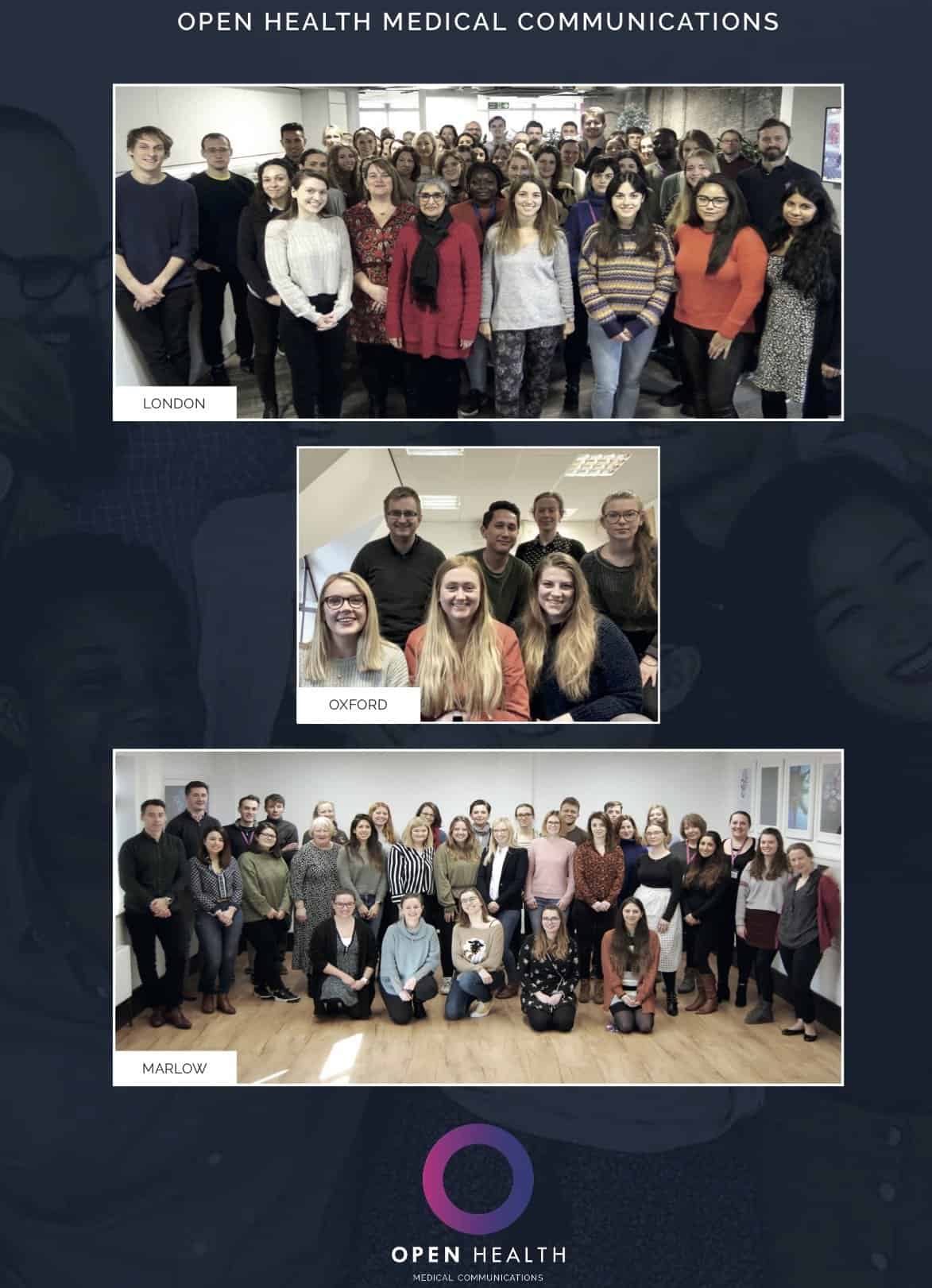
Four founders, one Marlow office, and a first employee doing rather more than her job description.
The Peloton merger creates a transatlantic medical-affairs platform backed by Amulet Capital.
Pharmerit makes HEOR and market access a global pillar rather than an adjacent service.
Astorg acquires the group in a transaction reported to value it at just under $1 billion.
An AI partnership and a scientist buyout fund push the company from agency work toward reusable capability.
Matthew D'Auria arrives as CEO with a brief to refine innovation and growth.
The logic was adjacency. A value model is more useful when its conclusions survive into the medical narrative. A patient insight is more useful when it changes the evidence plan. A publication strategy is more useful when it anticipates the question a payer will ask. Competitors such as Inizio, IPG Health, Publicis Health, Omnicom Health Group, and Avalere can offer scale or specialist depth. OPEN Health's particular wager is that the handoffs between disciplines are where expensive errors hide.
The reported valuation in Astorg's 2022 purchase. Individual acquisition prices and client fees remain undisclosed, which is normal for a private consultancy selling custom scopes.
Scale changes the pitch. In 2024 the company said its client base included 49 of the world's 50 largest pharmaceutical companies; its current site counts more than 200 pharma and biotech clients altogether. That reach gives a specialist in Rotterdam or London a route into a global brief, and gives a client access to expertise without assembling a new roster for every market. It also creates the ordinary risks of a large consultancy: layers, inconsistent teams, and a famous logo doing more work than the people assigned to the account. The relevant measure is therefore not how many services appear on the slide. It is whether a question discovered by the patient team can alter the evidence plan before both become polished, separate deliverables.
The moment the agency model looked old
By 2024, every healthcare agency had discovered artificial intelligence, often in a press release. OPEN Health waited. Steve Duryee, then its transformation chief, admitted that competitors had made the splashy announcements first. His sharper claim was that much of the market had little tangible evidence tied to real client problems.
The company chose an exclusive partnership with fusion, an AI and machine-learning specialist. The initial use cases were specific: mapping external experts, extracting congress and disease-area insights, tracking clinical trials, and improving internal productivity. Fusion supplied the technical frame; OPEN Health supplied the domain problem, scale, and access to clients. Duryee's diagnosis was blunt: “The classic agency model is coming to an end.”
That sentence explains what changed their mind. AI was not interesting as a novelty. It became interesting when the consultancy could wrap it around a defined decision and keep scientific accountability intact. The condition matters. A language model can accelerate a literature review; it cannot decide which uncertainty a payer will punish or which conclusion a patient will find credible. OPEN Health is betting on machines doing more of the gathering while experienced people remain responsible for judgment.
A fund that buys hours, not shares
The company's most copyable idea may have nothing to do with acquisitions. In 2024, its Scientific Office launched a “buyout fund.” Scientists could buy themselves out of normal client duties to pursue self-chosen research: new methods, manuscripts, and conference work. The first reported crop produced 12 presentations at two international conferences, including nine posters at ISPOR Europe. By 2026, OPEN Health said the expanded Scientific & Innovation Buyout Fund had backed more than 50 projects.
Professional-services firms face a recurring trap. The best expert is always needed on today's billable work, which means tomorrow's method never gets built. OPEN Health made curiosity schedulable. The principle is portable: protect a small, competitive pool of paid time; ask for work that becomes public or reusable; measure output rather than theatre.
What another operator can copy
- Organize around the decision. Start with the choice a customer must make, then assemble evidence and expertise backward from it.
- Acquire the handoff. Add a neighboring capability only when its absence causes the core work to lose value between teams.
- Fund non-billable curiosity. Give experts protected time with an explicit output: a method, paper, tool, or conference result.
- Make AI earn a verb. “Map,” “track,” “synthesize,” and “compare” are testable. “Transform” is usually not.
Where the model earns its keep
The integrated model is most useful when the science is complicated, the treatment is expensive, the audiences disagree, and evidence will keep changing after launch. Oncology, rare disease, neurology, immunology, and specialist medicines fit neatly. A biotech facing its first reimbursement process may also value one partner that can connect an economic model to a clinician narrative and a patient program.
It is less compelling for a narrow, isolated deliverable with a settled answer. A client that needs one excellent manuscript may prefer a small specialist. Integration can also become bureaucracy if teams merely share a logo. OPEN Health works only when information travels across its practices faster than it would travel across separate vendors. That is the unglamorous test beneath the confident language.
Matthew D'Auria, who became chief executive in 2025 after leading Omnicom's Healthcare Consultancy Group, describes the job as translating scientific complexity into clinical meaning. That is close, but OPEN Health's own history suggests a wider translation: from data into value, from value into access, from access into understanding, and from understanding into a decision someone is prepared to defend. The medicine may begin in a laboratory. The argument that carries it into the world is built in places like this.
Go deeper