bioinformatics
(37)
Loka stopped chasing a hit. It started building yours.
The Silicon Valley consultancy found its business in other people’s hard problems. Today, its work runs from investment proposals to drug discovery, with an unusually concrete test for AI: does it make it into use?
Delve Bio Built One Test for 68,000 Suspects - Now It Wants Doctors to Use It Before the Guessing Game
The UCSF spinout turned an academic pathogen-hunting assay into a 48-hour clinical service. Its next challenge is bigger than sequencing: persuading hospitals to order one broad test earlier, without pretending every strange read is the answer.

The Biotech Betting That Cancer Drugs Fail Because Nobody Looked at the Proteins
80% of cancer compounds that reach clinical trials fail. Yatiri Bio thinks the problem is that drug developers have been reading the wrong molecules - and it built a proteomics platform to prove it.

Shiru Built an "Amazon for Proteins" - and It Wants to Kill Palm Oil
A protein biochemist got tired of ingredient hunts that take 15 years. So she built a search engine for nature's proteins - and its first product is a fat that behaves like butter without the palm oil.

The $4.3 Billion Toll Road Beneath the Genome Era
Illumina put DNA sequencing on a repeatable industrial workflow. Now it is trying to turn the machines, chemistry and software already embedded in laboratories into an operating system for multiomic medicine.
Imagene Labs
Imagene Labs is a Singapore-based health-tech company that runs an enterprise-grade, cloud-based B2B genetic analytics platform. Using patented ancestry-based genetic risk analytics and ethnically-relevant reference datasets, it turns a simple saliva sample into DNA insights that fitness, beauty, nutrition and healthcare brands use to build personalized products and services. Its consumer-facing brand, Ori, packages these insights into fitness, skincare and nutrition DNA tests for the Asian market and beyond.

Biotia
Biotia is a New York-based health-tech company that fights infectious diseases by combining next-generation DNA sequencing with AI-driven software. Its metagenomic platform identifies bacteria, fungi, parasites and viruses - plus antimicrobial-resistance markers - from a single sample against a curated database of more than 16,000 microbial species. Spun out of the Jacobs Technion-Cornell Institute at Cornell Tech and operating a CLIA-certified lab in New York City, Biotia turns a single microbiome test into an actionable clinical report to help providers diagnose hard-to-detect infections and support pathogen surveillance from the hospital to outer space.

BostonGene
BostonGene is a Waltham, Massachusetts biotechnology company that applies AI-driven multiomics to cancer. Its Tumor Portrait platform integrates DNA and RNA sequencing with immune and tumor-microenvironment analysis into a single test, producing molecular profiles that help oncologists select therapies and help pharmaceutical partners design trials, identify biomarkers, and accelerate drug development. Founded in 2015 and led by CEO Andrew Feinberg, the company reached unicorn status in 2022.
Code Ocean
Code Ocean is a New York-based B2B SaaS platform that makes computational research reproducible, traceable and collaborative. Its flagship Compute Capsule bundles code, data and the exact software environment together so an analysis runs identically today or years from now. Used by pharma, biotech and leading research institutes, and integrated with journals like Nature and IEEE, Code Ocean is building a trusted virtual lab where both scientists and AI agents can run real analyses with full version control, lineage and compliance.
Embleema
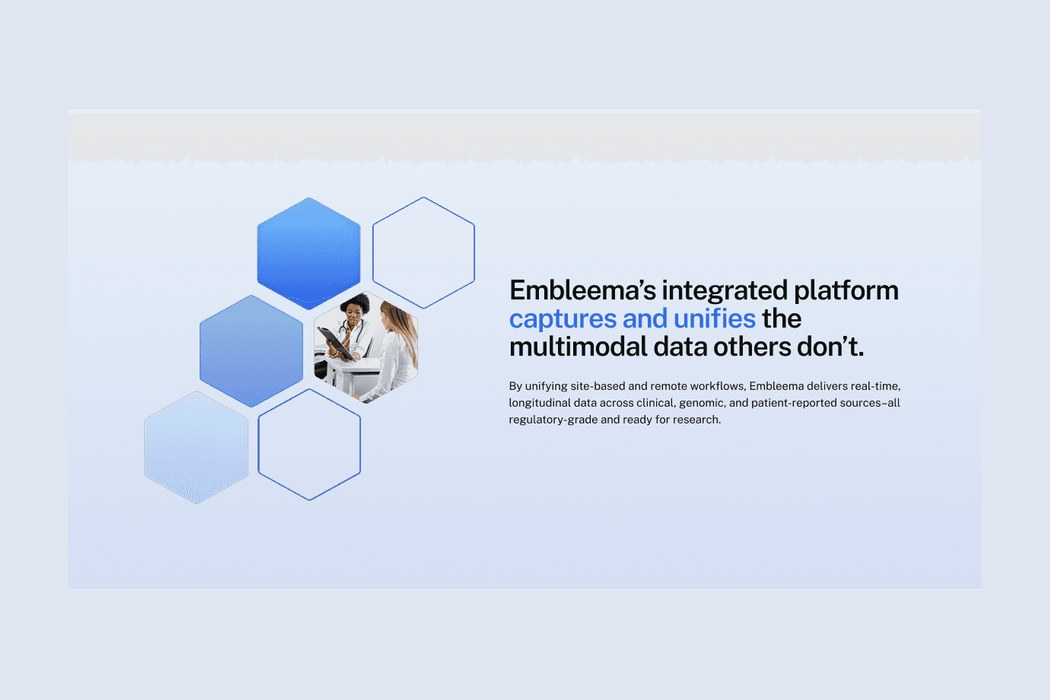
Embleema is a New York- and France-based healthcare technology company that builds a unified real-world data and evidence platform for clinical research. It aggregates clinical, genomic, and patient-reported data from electronic medical records, wearables, biospecimens, and patient apps into regulatory-grade datasets, and uses no-code protocol tools plus dynamic consent to help pharmaceutical sponsors, research sites, and patient groups run non-interventional and Phase IV studies faster and at lower cost. Founded in 2017 by Robert Chu, the company started with a patient-driven health blockchain and its analytics stack has been used by the FDA for genomic regulatory review.
Form Bio
Form Bio is an Austin-based computational life sciences company that builds AI-driven software to speed up the design, characterization, and manufacturing of genetic medicines, especially adeno-associated virus (AAV) cell and gene therapies. Spun out of Colossal Biosciences in 2022 with a $30M Series A, its platform lets scientists model billions of therapeutic vector designs in silico to improve efficacy, safety, and manufacturability before ever entering the lab, targeting the manufacturing bottleneck that drives the majority of FDA rejections in the field.
Omphalos Lifesciences Inc
Omphalos Lifesciences is a Dallas-based biotech software company building a programmable virtual cell platform. Founded by computational biologist Daehwan Kim - creator of the widely used HISAT and TopHat sequencing tools - the company created L++, a high-level programming language that lets biologists describe, simulate, and visualize living systems the way software engineers write code. Its Life Designer platform aims to accelerate drug discovery, precision medicine, and biomanufacturing by running experiments in silico before they hit the lab bench.
Plex Research
Plex Research is a Cambridge, Massachusetts company building an AI-powered scientific intelligence platform for drug discovery. Its proprietary focal graph technology stitches billions of minimally processed experimental data points from genomics, proteomics, chemical biology and clinical sources into a queryable biomedical knowledge graph, then pairs it with large language models so scientists get evidence-backed answers in seconds - every result traceable to the underlying experiments. Trusted by 40+ pharma and biotech teams, Plex helps researchers identify and evaluate drug targets, uncover hidden pharmacology, and, through its AutoPlex agent, run autonomous multi-step research campaigns.
Complete Genomics
Complete Genomics is a San Jose-based life-science technology company and the Americas arm of MGI. Founded in 2005 as a pioneer of affordable whole-human-genome sequencing, it develops and sells next-generation sequencing instruments, reagents, and analysis software built on its proprietary PCR-free DNBSEQ (DNA nanoball) technology. The company aims to drive down the cost of sequencing - from the landmark $5,000 genome to sub-$100 - and supplies researchers, clinical labs, and biotech companies with a full workflow spanning sample prep, library construction, sequencing, and data analysis.
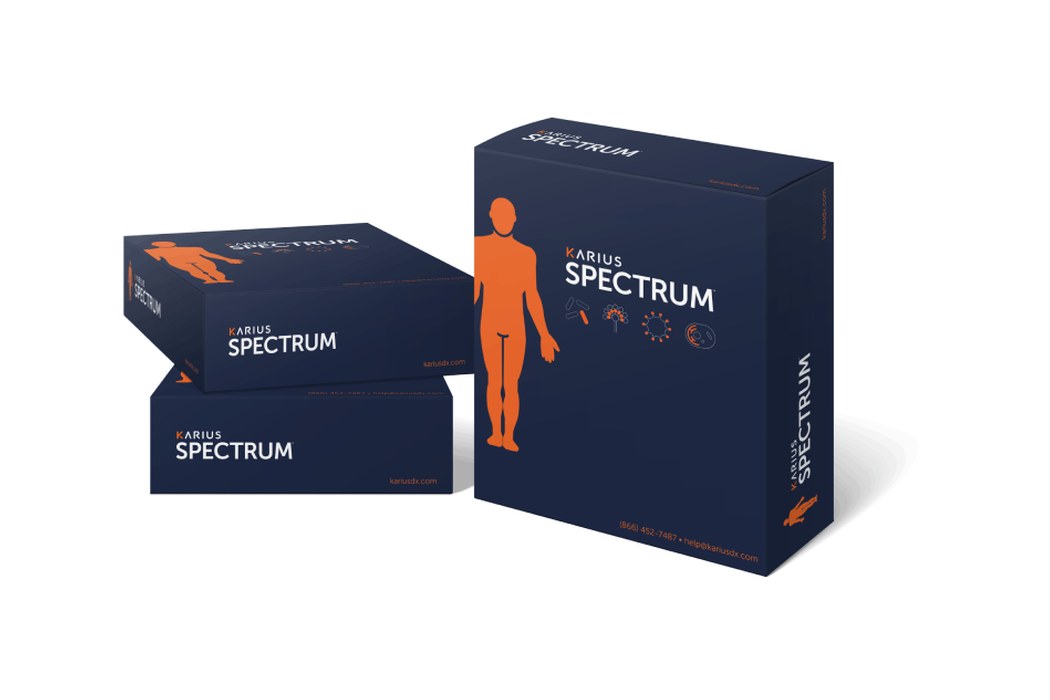
Karius
Karius is a Redwood City, California life-sciences company that turns a single blood draw into a broad infectious-disease diagnosis. Its flagship Karius Test uses microbial cell-free DNA (mcfDNA) sequencing, metagenomics and AI to detect more than 1,000 pathogens - bacteria, DNA viruses, fungi and parasites - often within a day of receiving a sample. Founded in 2014 out of Stephen Quake's lab at Stanford, the company aims to give clinicians a fast, non-invasive alternative to invasive biopsies and slow cultures, with a focus on the immunocompromised patients who need answers most urgently.

Allelica, Inc.
Allelica is a genomics software company building the tools that move polygenic risk scores (PRS) out of the research lab and into routine clinical care. Its cloud platform lets labs and health systems develop, validate, and apply PRS across multiple ancestries, and its clinical test AbsoluteDx combines rare-variant (monogenic) and genome-wide (polygenic) risk in a single report. The company's stated priority is equity - building risk scores that work for patients regardless of genetic ancestry - and its multi-ancestry coronary artery disease work was cited in the 2026 ACC/AHA cardiovascular prevention guidelines.

Cipherome, Inc.
Cipherome is a San Jose-based clinical genomics and bioinformatics company on a mission to find the drug that works for each individual. Its no-code platform COMPASS lets researchers transform, query, and analyze massive clinical and genomic datasets - like the 500,000-participant UK Biobank - without writing code, while its Xentinel platform uses explainable AI to predict and reduce adverse drug reactions. Backed by roughly $16-23M through a Series B, the 12-person team pairs Silicon Valley software with Seoul National University biomedical-informatics research.
Clear Labs
Clear Labs is a San Carlos, California genomics company that builds Clear Dx, a fully automated next-generation sequencing platform. It turns whole genome sequencing - normally a slow, expert-heavy lab process - into a push-button diagnostic used by food manufacturers and public health labs to detect pathogens like Salmonella and Listeria, characterize SARS-CoV-2 and TB, and identify bacteria and fungi from clinical specimens, often with next-day results.

CoA Nexus, Inc.
CoA Nexus, Inc. (formerly Srust, Inc.) is a Tokyo- and Menlo Park-based deep-tech HR startup that uses proprietary AI to read tens of millions of research papers and patents, visualize a scientist's real skills, and match R&D talent with companies - from university spinouts to large manufacturers. Its flagship platform, CoA Researcher, is billed as Japan's largest researcher-matching platform, supporting full-time roles and side work across biotech, chemistry, medical science and semiconductors. The company raised a roughly ¥300 million Series A in October 2025 to expand its global researcher database and go beyond the reach of conventional job ads.

Floré
Floré, built by San Diego biotech Sun Genomics, makes probiotics the slow way: you mail in a stool sample, an accredited lab reads the whole genome of your gut microbiome, and an algorithm trained on tens of thousands of prior formulations builds a supplement matched to the bacteria you actually carry. Founded in 2016 by former Illumina and LabCorp genomicist Sunny Jain, the company sells a subscription that re-tests and re-formulates over time, and has published peer-reviewed research pairing its precision synbiotics with gut and autism-spectrum outcomes.
TeselaGen Biotechnology
TeselaGen Biotechnology builds an AI-powered, cloud-based operating system for biological R&D. Spun out of the Department of Energy's Joint BioEnergy Institute and founded by Stanford and Berkeley scientists, its platform - organized around the Design-Build-Test-Learn cycle with DESIGN, BUILD, TEST and DISCOVER modules - lets researchers design DNA libraries, generate lab-robot assembly protocols, capture experimental data and apply machine learning to converge on better biological products faster. Customers span industrial biotech, biopharma and academia, including Amgen, LanzaTech, Twist Bioscience, Arzeda and Stanford.

MetaCell
MetaCell is a life-science software company staffed by scientists and software engineers who turn messy neuroscience and biology data - microscopy, MRI, EEG, electrophysiology, biologically accurate simulations - into usable, shareable, enterprise-grade online tools. Founded by the trio behind the OpenWorm project, MetaCell builds custom scientific software, cloud workspaces, and data pipelines for pharma companies and top research institutions including Johnson & Johnson, Pfizer, Biogen, Eisai, the Allen Institute, the Chan Zuckerberg Initiative, and universities like Princeton, Yale, and UCL.

Salt AI
Salt AI is a Los Angeles contextual-AI company building a visual platform that lets regulated enterprises - especially life sciences and healthcare teams - orchestrate many AI models into governed, auditable workflows that run inside their own infrastructure. Founded in 2023 by former Myspace CTO Aber Whitcomb and Jim Benedetto, Salt lets biochemists and clinicians drag, drop, and chain models like AlphaFold2 (which Salt runs 22x faster), ProteinMPNN, and Chroma without writing code, turning months of pipeline engineering into weeks while keeping every prompt, weight, and response logged for compliance.

Sentieon
Sentieon builds ultra-fast, highly accurate software for analyzing DNA and RNA sequencing data. Its pipelines - DNAseq, DNAscope, TNseq, and TNscope - replace the open-source GATK workflow with matching or better accuracy while running many times faster on ordinary CPUs, no specialized hardware required. Founded in 2014 and based in the Bay Area, the company has won top honors in multiple precisionFDA and DREAM challenges, and its tools are used by pharma, clinical labs, sequencing platform makers, and genomics researchers worldwide to turn raw reads into trustworthy variant calls quickly and cheaply.

Shennon Biotechnologies
Shennon Biotechnologies is a San Francisco biotech turning immune-cell target discovery from a months-long slog into a same-day job. Its proprietary TCELERATOR platform fuses ultra-high-throughput microfluidics with AI to functionally profile millions of single immune cells in hours, pinpointing the rare T and B cells that recognize cancer antigens. Founded in 2021 by physicist-turned-founder Li Sun, the company is building a pipeline of validated targets for solid tumors and autoimmune disease, backed by a $13M seed round led by DCVC.
T-Cypher Bio
T-Cypher Bio is an Oxford, UK biotechnology company building a pipeline of TCR (T cell receptor) therapeutics for solid tumours and immune-mediated diseases. Spun out of Orbit Discovery in 2021 on technology licensed from the University of Oxford, it pairs a high-throughput, functional bead-display platform with immunopeptidomics, AI and bioinformatics to deconvolute vast T cell repertoires, find disease-specific targets, and identify potent, target-specific TCRs.
ArkeaBio
ArkeaBio is a Boston climate-biotech company building the first vaccine that cuts methane emissions from cattle. The shot trains a cow's immune system to produce antibodies that travel to the rumen and suppress methanogens - the microbes that turn digestion into greenhouse gas. Livestock methane accounts for roughly 6% of global emissions, and ArkeaBio's pitch is blunt: a vaccine is the lowest-cost, most scalable way to attack that number. Backed by Breakthrough Energy Ventures and a roster of climate and ag investors, the company is moving from animal studies into full field trials, targeting a 20% methane reduction and a first product in market around 2028.

HelixNano
HelixNano is a Cambridge/Boston-based biotechnology company building what it calls the world's most advanced mRNA platform - combining synthetic biology and machine learning to make vaccines and therapies that augment the immune system. Founded in 2014 by sci-fi novelist and mathematician Hannu Rajaniemi and synthetic biologist Nikolai Eroshenko, the Y Combinator-backed startup has pursued variant-resistant COVID-19 vaccine candidates and machine-learning-designed personalized cancer vaccines built on 'precision neoantigens'.
LatchBio
LatchBio is a San Francisco company building an AI-native data platform for biology. It lets scientists store, analyze, and visualize data from 40+ lab kits and instruments without writing code or managing cloud infrastructure - turning raw sequencing and experimental output into reproducible, publication-ready results. Founded in 2021 by three Berkeley dropouts, it now serves thousands of scientists at biopharmas and research labs and is positioning itself as 'the AI agent for biology data analysis.'

NuCicer
NuCicer is a Davis, California agtech and food-tech company breeding a new generation of high-protein chickpeas. Spun out of UC Davis and built on the largest pool of chickpea genetic diversity on earth, the company uses predictive (precision) breeding and genomics to develop chickpea varieties with up to 75% more protein than conventional beans - alongside better flavor, lower fat, and higher fiber. NuCicer sells whole beans, functional flours, protein powders, and bespoke trait packages to food brands seeking minimally processed, sustainable plant-protein ingredients that out-compete soy and pea isolates on taste and texture.