Shiru Built an "Amazon for Proteins" - and It Wants to Kill Palm Oil
A protein biochemist got tired of ingredient hunts that take 15 years. So she built a search engine for nature's proteins - and its first product is a fat that behaves like butter without the palm oil.
Every packaged food you eat is a stack of decisions about ingredients, and most of those decisions were made slowly. Finding a new functional ingredient - a fat that stays solid, a protein that whips, a sweetener that does not crash your blood sugar - has historically taken food companies somewhere between 5 and 15 years. Jasmin Hume, a protein biochemist who spent her early career on the bench at the plant-based egg maker JUST, looked at that timeline and decided it was a software problem wearing a lab coat.
In 2019 she founded Shiru in Alameda, California, and pointed machine learning at a very old question: which of nature's proteins actually do useful things? Nature has already run the experiment across millions of years and millions of organisms. The bottleneck was never the raw material. It was the search. Shiru's bet is that if you can search proteins the way you search a database, you can compress a decade of guessing into a couple of months of testing.
The Core IdeaA search engine for nature's proteins
The engine is called Flourish. It reads natural protein sequences from plants, algae and microbes, predicts what a given protein is likely to do in a real product, and - just as important - predicts whether that protein can actually be produced at a workable cost. That second prediction is where a lot of good science dies. A molecule that performs beautifully in a beaker but cannot be expressed affordably is a museum piece, not an ingredient. Shiru narrows millions of candidates down to a shortlist worth putting in a fermentation tank.
Shiru says it found its first novel ingredient in roughly three months. That is the pitch in one number. The company describes what it does plainly: unlock natural, scalable proteins that improve how a product works while lowering its footprint. The implication for a food or cosmetics company is that they no longer need to build an in-house molecular biology team to go hunting. They can rent Shiru's.
The ProductOleoPro: a fat with a magic trick
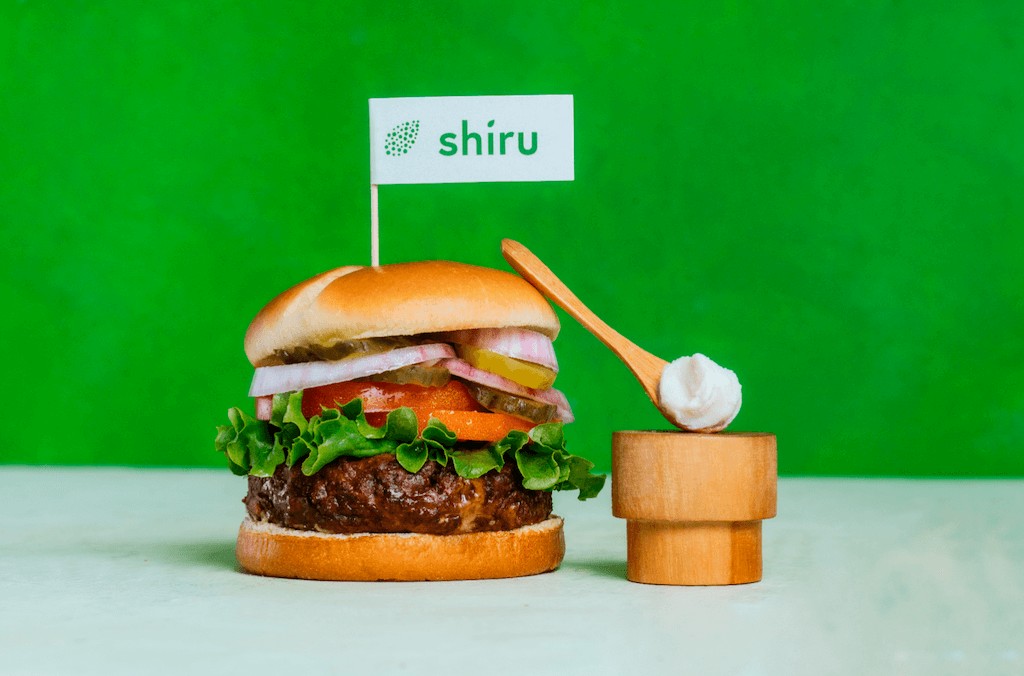
Ideas are cheap in food tech. Shiru's answer to the skeptics is a physical product you can fry. OleoPro, launched in 2023, is a protein-based structured fat - an oleogel that combines potato protein with unsaturated liquid oil and, through the way those proteins organize, stays solid at room temperature. It browns when you cook it. It carries the rich, coating mouthfeel that makes fatty food satisfying. And it does that with up to 90% less saturated fat than the palm oil, coconut oil and animal fat it is designed to replace.
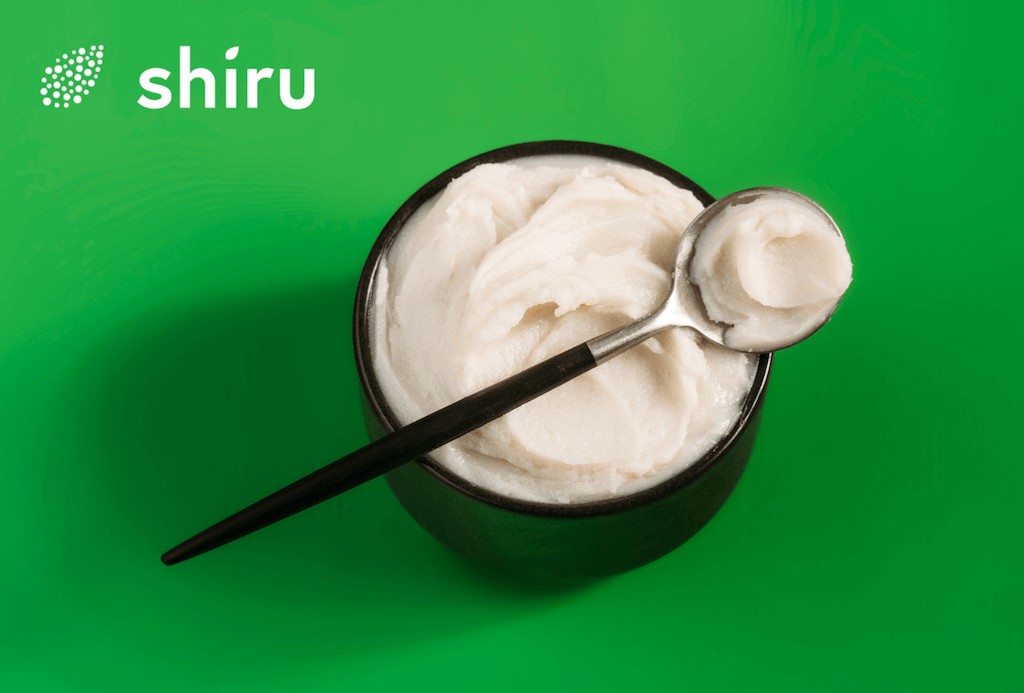
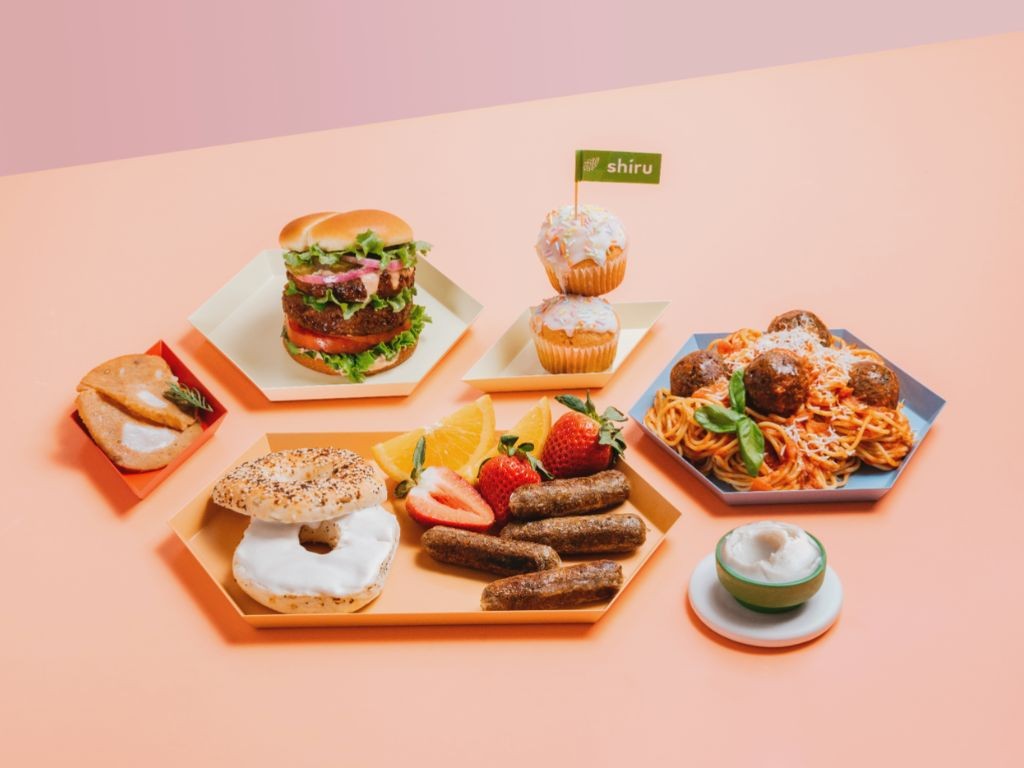
Palm oil is the villain here, and it is a big one. It hides in roughly half of packaged supermarket products and it is tied to deforestation on an industrial scale. Coconut oil and animal fat carry their own baggage. OleoPro's appeal is that it is a drop-in: it slots into plant-based meat, bakery, confectionery, coatings, sauces and dressings without asking the manufacturer to reinvent their line. In 2025 it reached commercial scale alongside uPro, a plant protein that adds texture.
The MarketplaceBuying a protein like you buy a book
In May 2024 Shiru opened the part of the business that gives it its nickname. ProteinDiscovery.ai is a searchable marketplace of more than 33 million molecules. A company can search by protein sequence, by the function they need, or by whether a protein has been successfully produced before. They can test candidates, and when one works, they can purchase the property rights. Hume calls it the "Amazon for proteins." TIME called it one of the Best Inventions of 2024.
The model matters more than the metaphor. Shiru is not just a lab-for-hire; it is trying to build the ingredient layer as a marketplace - discovery engine on top, a very large catalog underneath, and a licensing transaction in the middle. In a world obsessed with AI models, Shiru's durable advantage is arguably the catalog. The model narrows the search; the 33-million-molecule library is the thing competitors cannot simply download.
The MoneySmall team, patient capital
Shiru launched out of Y Combinator in 2019 with a seed round led by Lux Capital. In October 2021 it raised a $17 million Series A led by S2G Ventures. In November 2024 it added a $16 million Series B, again led by S2G, with CPT Capital, Lux Capital, Meach Cove Capital and Danone's venture arm Nourish Ventures joining. The through-line is a set of investors who show up round after round, which in deep tech usually signals conviction rather than hype.
The Series B money is pointed outward, not just deeper. Shiru has said it is extending its discovery work into flavor, skincare, agricultural biopesticides and advanced materials. It already has personal-care versions of its ingredients - a protein-based emollient and an emulsifying protein for skin and hair. In 2025 it went somewhere less expected, launching an alliance around natural GLP-1 activation, the biology behind the current wave of metabolic drugs. The common thread is not food. It is proteins, aimed at any industry that runs on ingredients.
The PartnersWho is actually buying
The customer list reads like a who's who of the ingredient world's back office. Griffith Foods partnered to bring alternative-protein products to market. Ajinomoto, one of the largest names in amino acids and umami, teamed up in 2024 to chase sweet proteins - sweetness without the metabolic cost. GreenLab signed on in 2025 to scale Shiru's proteins through a corn-based molecular-farming system, giving Shiru a second manufacturing road that runs alongside fermentation. Danone's Nourish Ventures is both an investor and a collaborator; OleoPro's public debut ran through a dish developed with them.
The FieldWhere Shiru fits
Shiru is not alone in aiming AI at food. Climax Foods uses machine learning for dairy alternatives; NotCo built its own platform, Giuseppe; Nuritas hunts bioactive peptides. On the fat side, Nourish Ingredients is chasing a similar structured-fat prize. What separates Shiru is the shape of the business. Most peers use AI to make a finished product. Shiru is building the discovery-and-marketplace layer beneath everyone else - closer to search-and-license than to selling a branded good. If that layer becomes standard infrastructure, the addressable market is larger than any single food category.
There are honest reasons it might not work. Fermentation costs have to keep falling for ingredients like OleoPro to win on price, not just virtue. A marketplace only matters if enough buyers show up and transact. And "we found a great protein" is a long way from "it cleared regulatory review and shipped at scale." Shiru's answer so far is to put real products on real production lines rather than argue in a deck - OleoPro and uPro at commercial scale, 30-plus agreements signed, a patent granted, and recognition from TIME, the World Economic Forum and C&EN's start-ups-to-watch list.
The tell is that Shiru keeps describing itself as a protein company that has barely started on proteins. For a 25-person team in Alameda, the ambition is almost comically broad: food, cosmetics, agriculture, materials, metabolic health - anything that can be improved by finding a better molecule than the one the industry settled for decades ago. Whether the marketplace becomes the ingredient world's default search bar is still an open question. What is no longer in question is that you can now, in a browser, look up a protein and buy it.