bay-area
(27)
The Printer That Learned to Build the Room
A Menlo Park color lab survived the digital revolution by becoming something harder to replace: the crew that turns a designer’s file into a place people can actually navigate, touch, and remember.

The Stone Group Sells the Feeling Before the Floor Plan
For more than three decades, this Pleasanton agency has worked a stubborn idea: buyers remember a life they can picture more readily than a list of features. Its homebuilding campaigns show what full-service really looks like - from naming and identity to the eblast that creates urgency.

Ground Floor Public Affairs knows who else needs to be in the room
A Giants event, a tech coalition, a development approval: Ground Floor Public Affairs works where a business plan meets the people who can help it happen. Its San Francisco story is about the practical value - and limits - of relationships.

Winter goes looking for the people missing from the meeting
A Bay Area consultancy takes transportation planning to farmers markets, classrooms, and neighborhood conversations. Its work makes a practical argument: who gets asked helps determine what gets built.
Garnett Sign Studio and the business of being found
A $146,875 parking-sign bid opens a window into Garnett Sign Studio: a Bay Area fabricator whose work connects graphic design, tactile lettering and the everyday task of getting people where they need to go.

Brick Design knows where a brand comes apart
A logo can survive the boardroom and still unravel in a sales deck. Brick Design’s work for Mood, Qwilt and Localytics shows why a brand needs more than a good first impression.

Marketing Designs sells the house. And the agent’s next listing.
A Bay Area agency turns property details into brochures, websites and neighborhood reports. Its real specialty is keeping the agent in the picture after the house is sold.
Troo Wear and the social life of a T-shirt
A screen printer, a box of tees, and a reason to show up. Christopher C. Lee’s Bay Area label reveals how clothing becomes a calling card for a creative community.
Oakland had the talent. BRIDGEGOOD built the first assignment.
A furniture-store meeting became a nonprofit design studio with a practical answer to a familiar problem: how do you get experience when nobody has hired you yet?
Golden Gate Sign Company sells the part of branding that needs a crane
A logo is easy to move on a screen. Golden Gate Sign Company handles the harder journey: through city approvals, into metal and light, and onto the buildings of the Bay Area.

Signs Unlimited knows the small print matters
A San Jose sign maker finds the real work in the details: color-matched brackets, replaceable menu prices, and the last few feet between a brand and its building.

Civic Edge Consulting and the art of making government make sense
A dozen program names can leave a resident wondering what to do. Civic Edge helps public agencies turn institutional complexity into clear messages, useful conversations, and events people can actually navigate.

Caterman sells lunch. The real order is peace of mind.
From office lunches to wedding buffets, the San Jose caterer sells a practical promise: food shaped around the guests, and someone else watching the clock.
Colorprint puts a quarter of its profits back into the neighborhood
The Burlingame printer says it has given more than $307,000 to local charities. Behind that number is a family experience, a quarterly promise, and the everyday business of getting ink onto paper and mail out the door.
Prima Printing puts a local name behind your logo
Business cards, branded bottles and the occasional awkward assignment: the San Carlos printer sells the help that turns an idea into something you can hand over.
AIGA San Francisco Gets Designers Into the Room
A portfolio can show what you know. AIGA San Francisco helps you meet the people who can challenge it - through critiques, studio visits, mentoring and a design community built over four decades.
Overstreet Associates makes the brand survive the real world
A Bay Area agency puts the same identity on a sandwich bag, a hotel sign and a screen. Its specialty is the patient work of making all those pieces belong together.

The Shark Tank Is Becoming a $500 Million Bet on Hockey's Next Generation
San Jose is rebuilding more than an NHL roster. With a generational young star, a lease through 2051 and a sweeping arena overhaul, the Sharks are trying to turn a hockey club into the Bay Area's most durable live-entertainment habit.
Peet's Coffee
The Berkeley roaster taught America to expect more from a cup. Sixty years later, its harder trick is carrying that craft from a hand-roasted batch to grocery aisles, subscriptions and airplane trays without turning it into mere nostalgia.

Firebrand Artisan Breads
Firebrand Artisan Breads is an Oakland-founded, Alameda-based wood-fired bakery that describes itself as a jobs program that happens to sell bread. Founded in 2008 by Matt Kreutz, it wholesales artisan breads and pastries to hundreds of Bay Area retailers - including Whole Foods - and runs a direct retail cafe. Its defining feature is an Open Hiring model that prioritizes people with high barriers to employment (formerly incarcerated, formerly homeless), paired with a perpetual purpose trust that locks the mission in permanently and shares profits with workers.

Millie
Millie is a San Francisco Bay Area maternity and women's health clinic built around a midwifery-led, tech-enabled model. Founded in 2022 by Anu Sharma after her own near-fatal birth experience, it pairs Certified Nurse Midwives and OB-GYN backup with a dedicated doula (a 'Millie Guide'), a proprietary app, remote monitoring, and virtual visits to cover pregnancy, postpartum, gynecology, and menopause. The company accepts most major insurance and has raised roughly $19 million to date, including a $12M Series A in February 2025 from an all-female roster of investors.

UMe Tea
UMe Tea is a California-based bubble tea chain founded in 2019 by former Silicon Valley engineer Jiachun 'Summer' Li. Built around fruit-forward, less-sugary recipes tuned to American palates, the brand pairs handcrafted drinks and snacks with viral marketing - most notably a surprise bunny plushie hidden in the bottom of its cups. Bootstrapped and profitable for its first four years, UMe grew to roughly 30 Bay Area stores before raising a $10M Series A led by Conductive Ventures in 2025 to fund team-building and regional expansion.

Park Padel
Park Padel is a San Francisco-based padel club operator building Northern California's home for the fast-growing racket sport. Founded in 2023 by Jessica Talbert, Neil Chainani, and Katie Lampert after they discovered padel while traveling in Europe, the company runs three clubs - outdoor courts with Bay views at Embarcadero Plaza, a flagship indoor facility at Oyster Point in South San Francisco, and a location in West Sacramento. Park Padel blends court reservations, coaching, leagues, and social events with an app-first booking experience and a community-first approach, aiming to open 100 courts across the US over the next few years.

Sail Internet
Sail Internet is a Santa Clara-based internet service provider that uses a hybrid of fiber and fixed-wireless technology to deliver high-speed, no-contract broadband to homes and businesses across the San Francisco Bay Area and Silicon Valley. Founded in 2015 by Stanford-trained broadband engineers, the company positions itself as a customer-first, net-neutral alternative to incumbent cable and telecom giants, reaching residences, multi-dwelling communities, and enterprises with gigabit-class connectivity that skips costly trench-and-dig infrastructure.

Del Grande Dealer Group
Del Grande Dealer Group (DGDG) is the largest family-owned automotive group in the San Francisco Bay Area. Founded in 1998 with a single dealership, it now operates a portfolio of franchised new- and used-car dealerships across Northern California, representing more than a dozen brands. DGDG pairs a high-volume retail operation with a culture obsession - it has been named a Bay Area Top Workplace for more than a decade - and a digital-first buying experience it markets as No Brainer Pricing and No Brainer Checkout.
La Clínica de La Raza
La Clínica de La Raza is one of the largest community-based primary health care providers in the San Francisco Bay Area. Founded in 1971 in Oakland's Fruitvale district by UC Berkeley students and community activists, it is a federally qualified health center (FQHC) delivering culturally appropriate medical, dental, behavioral health, vision, and pharmacy services to roughly 90,000 patients a year across more than 35 sites in Alameda, Contra Costa and Solano Counties - regardless of a patient's ability to pay.
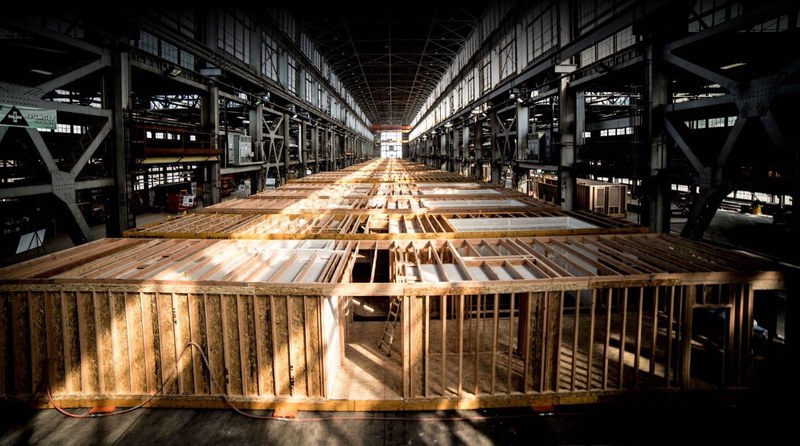
Factory OS
Factory OS is a Vallejo, California modular-housing manufacturer that builds wood-frame multifamily apartments inside a former Mare Island Navy shipyard. Co-founded in 2017 by affordable-housing veteran Rick Holliday and contractor Larry Pace, the company treats apartments like cars: rolling them down an assembly line with union labor, cutting build times by ~40% and costs by 20–40% compared with conventional construction.