Look closely at a barcode. It appears to be an exercise in perfect repetition: straight lines, disciplined spacing, a machine-readable promise that one package can be distinguished from another. Yet the printing process introduces tiny variations. To most people, those variations are noise. To Systech International, they can be evidence.
- Serialization gives each pack an identity; aggregation connects packs to cases and pallets.
- UniSecure uses existing print for authentication; UniTrace exchanges product-event data.
- The practical payoff is fewer unresolved packaging and data problems between production and delivery.
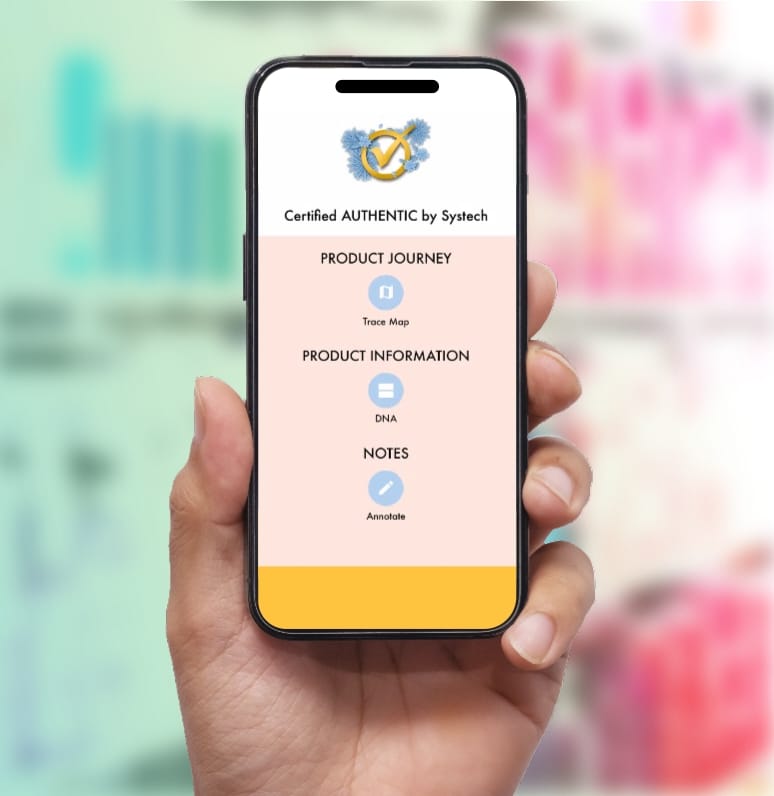
The Princeton company’s UniSecure technology analyzes microscopic differences in printed barcodes to create an e-Fingerprint for an individual package. A camera captures the print on the line; a digital record goes to the cloud; a smartphone app checks the package later. The familiar barcode acquires a second job. It carries information, and its physical appearance helps authenticate the thing carrying it.
A number is only the beginning
Systech’s business starts earlier than that phone scan. Its UniSeries software manages packaging execution and serialization, assigning identities and coordinating line operations. Aggregation records which individual packs belong inside which cases and pallets. UniTrace connects that information across trading partners through a cloud platform built around EPCIS, a standard for exchanging supply-chain events.
Those are different questions. Which item is this? Which case contains it? What happened to it? Is the package genuine? Treating them as separate questions explains why a readable serial number, by itself, cannot settle every authenticity dispute. A copied identifier may still be readable. The physical print offers another piece of evidence.
The buyers are manufacturers, contract manufacturers, packagers, distributors and other pharmaceutical trading partners. Systech also markets to medical-device, nutraceutical, cosmetics and consumer-goods businesses. Its expertise sits where enterprise data meets conveyor belts: software has to understand the package, and the package has to keep moving.
The trouble at the end of the batch
Consider Boehringer Ingelheim. In Systech’s account, three newly acquired manufacturing sites needed a replacement serialization system ready by July 2019. The incumbent setup completed aggregation at the end of each batch. That created reconciliation problems, including uncertainty about whether products were assigned to the correct cases, along with processing delays.
Systech changed when the relationship was recorded. Its system associated carton numbers with case serial numbers as packing happened. With equipment partners Ultimate Solutions and Inno4Life, it deployed across Puerto Rico and two French sites. The vendor reports that all three were validated and producing within six months. The important intervention was surprisingly plain: record the relationship while the physical event is occurring.
Nutra-Med’s problem was different. Repackaging meant taking products from existing lots and associating them with newly serialized finished goods. A major customer demanded electronic data transmission by a deadline; other vendors had failed to solve the connection problem, according to the case study. Systech configured the exchange, then turned lessons from initial connections into reusable templates. The bottleneck moved toward customers’ own readiness.
6 months.
Boehringer Ingelheim’s replacement rollout, as reported in Systech’s customer case study.
Leave the artwork alone
For an established medicine, changing packaging can be an expensive undertaking in work, approvals and disruption. UniSecure’s appeal is its use of what is already printed. In the Sharp packaging case study, demand for another security layer came from clients who already had serialization. Sharp deployed UniSecure in early 2018, adding authentication to its existing offering.
The operational test was speed. Systech reports an initial demonstrated minimum of 330 fingerprinted pieces per minute at Sharp, with subsequent upgrades reaching 1,200. Those are deployment claims, rather than a universal performance guarantee. Still, they reveal the right buying question: can the security system keep up with the actual packaging line?
UniSecure artAI takes a related but distinct approach. This cloud SaaS product uses machine vision and machine learning to analyze packaging artwork features. Systech positions it for authentication, packaging quality checks and forensic investigation, including products already in the market. It should not be confused with capturing an individual barcode’s print fingerprint on a production line.
The factory floor meets the cloud
Founded in 1985, with roots in advanced machine vision, Systech has accumulated experience in the unglamorous details of packaging. Robert DeJean is its founder. Dover acquired the business in 2020 and placed it within Markem-Imaje. In March 2024, Systech acquired Germany’s Pharmacontrol Electronic, extending its equipment range and European service operation.
The business combines enterprise software, cloud services, integrated hardware, implementation, training and maintenance. Its pitch is that fewer handoffs between vendors can make a complicated installation easier to operate. Buyers still need to scope cameras, equipment, integration, validation and ongoing support. The practical cost is the complete deployment and its upkeep, including time taken from production. Buyers should test the handoffs as carefully as the headline feature: a correct code still needs a correct record when it reaches the next trading partner.
There are alternatives. TraceLink sells pharmaceutical serialization and network services; OPTEL offers line equipment and track-and-trace software. Systech’s distinctive combination is packaging execution, enterprise traceability and non-additive authentication within one portfolio. That combination matters most when a buyer wants the same supplier involved from line inspection through a field investigation.
“We went all in with Systech.”Rick Seibert · Sharp
Quoted in Systech’s customer account
Make the evidence useful
On August 31, 2026, Systech launched TraceIQ, combining enterprise traceability with operational intelligence and AI-assisted investigations. The ambition is to help teams resolve exceptions and understand causes, rather than merely retain transaction histories. Systech Insight addresses another part of the same problem: using packaging-line performance and batch data to support operational decisions and audit preparation.
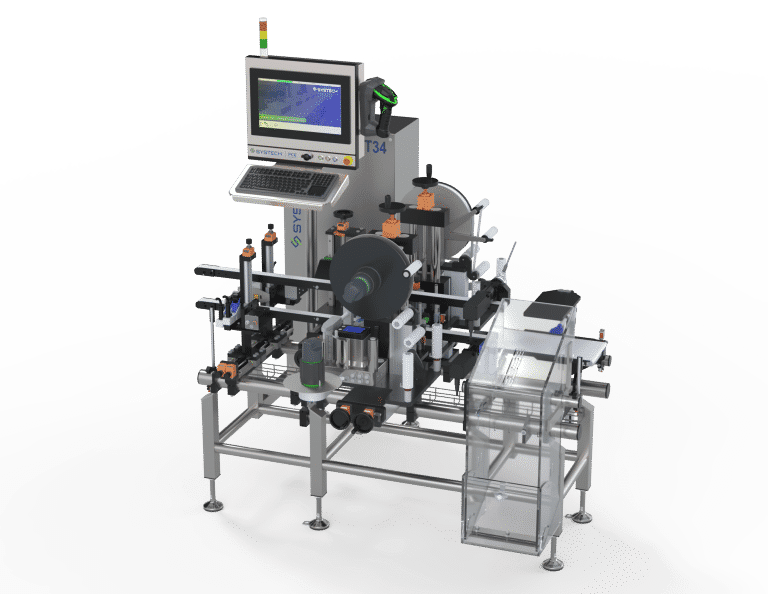
The hardware story continues alongside the software. September brought ST15S and ST16P stations combining serialization or aggregation with related packaging tasks. On October 15, Systech introduced ST33 and ST34 carton stations. The announced maximums are 600 cartons per minute for ST33 and 400 for ST34, which adds tamper-evident sealing. Product format and operating conditions matter.
There is a useful lesson here even for businesses that never buy Systech: standardize the event before scaling the system. In its Takeda case study, a Brazilian pilot helped establish confidence before a wider rollout using shared requirements and reusable integration modules. Copy the disciplined specification, test with real packs and real partner data, then repeat.
That approach depends on readable packaging, reliable capture and partners able to exchange usable records. Software cannot repair a missing physical event after the fact, and an authentication alert still requires someone to investigate. Systech’s most interesting idea begins with a small imperfection in ink. Making it useful takes a very organized operation.