Somewhere in a mid-market company, a paid-media dashboard is glowing green while the sales forecast glows red. Marketing celebrates leads. Sales calls them junk. The CRM has three definitions of “qualified,” and the chief executive is quietly wondering why every new tool requires another spreadsheet. Swivel has built its business around this particular corporate comedy. The Cincinnati consultancy argues that the problem is rarely a shortage of activity. It is the wiring between the activities.
Founded in 2018 by Simcha Kackley, Swivel sells a managed Revenue Operating System, or RevOS. It combines the work that companies commonly split among a go-to-market adviser, creative agency, demand-generation shop, outsourced business-development team, RevOps specialist and sales coach. Its customers are B2B service, technology and manufacturing businesses with something worth selling but no reliable way to turn market attention into qualified meetings and closed business.
The distinction matters. Swivel is not software, despite the operating-system label. It is a services company with a codified model, installed through a client's existing people and technology where those assets fit. Nor is it a conventional marketing agency hunting for a campaign brief. The company explicitly declines standalone websites, brochures and one-off campaigns. A beautiful site with no agreed ideal customer, no follow-up logic and no sales playbook is, in Swivel's view, expensive scenery.
01 / The original irritationWhat failed first
Before Swivel, Kackley spent years in B2B sales and marketing leadership. She kept seeing companies answer weak growth with more inputs: another rep, more ads, another tool. The first failure was usually the hand-off. Positioning did not inform campaigns. Campaign data did not shape outbound. Sales conversations did not reflect what buyers had already read. Useful signals arrived, then cooled in an inbox while each department optimized its own dashboard.
Her change of mind came through operating experience rather than a sudden slogan. After several leadership posts and years refining a connected method, Kackley says she helped one company grow 30 percent year over year without adding a salesperson. The lesson was deliciously inconvenient for the hiring plan: capacity was not the only lever. A better system could make the existing team more productive. In 2018, she turned that observation into Swivel.

02 / The machineWhat Swivel actually does
RevOS has four connected layers. The foundation defines the ideal customer profile, target segment, positioning, buyer journey, revenue plan and supporting stack. Demand generation creates and captures attention through content and paid channels. “Human-centric” business development uses intent signals, multichannel outreach and calling to turn that attention into conversations. Sales enablement gives reps the messages, first-meeting playbooks, battlecards, CRM workflows and reporting needed to move those conversations through the pipeline.
The practical difference is in the joins. An inbound lead can be automatically tested against the ideal-customer profile, routed on the verdict and followed by outreach that uses the same message as the ad or article that attracted it. Calling activity sits beside account and pipeline data. Marketing spend is judged on cost per qualified lead rather than the cheaper and more flattering cost per lead. Sales and marketing finally argue over the same number.
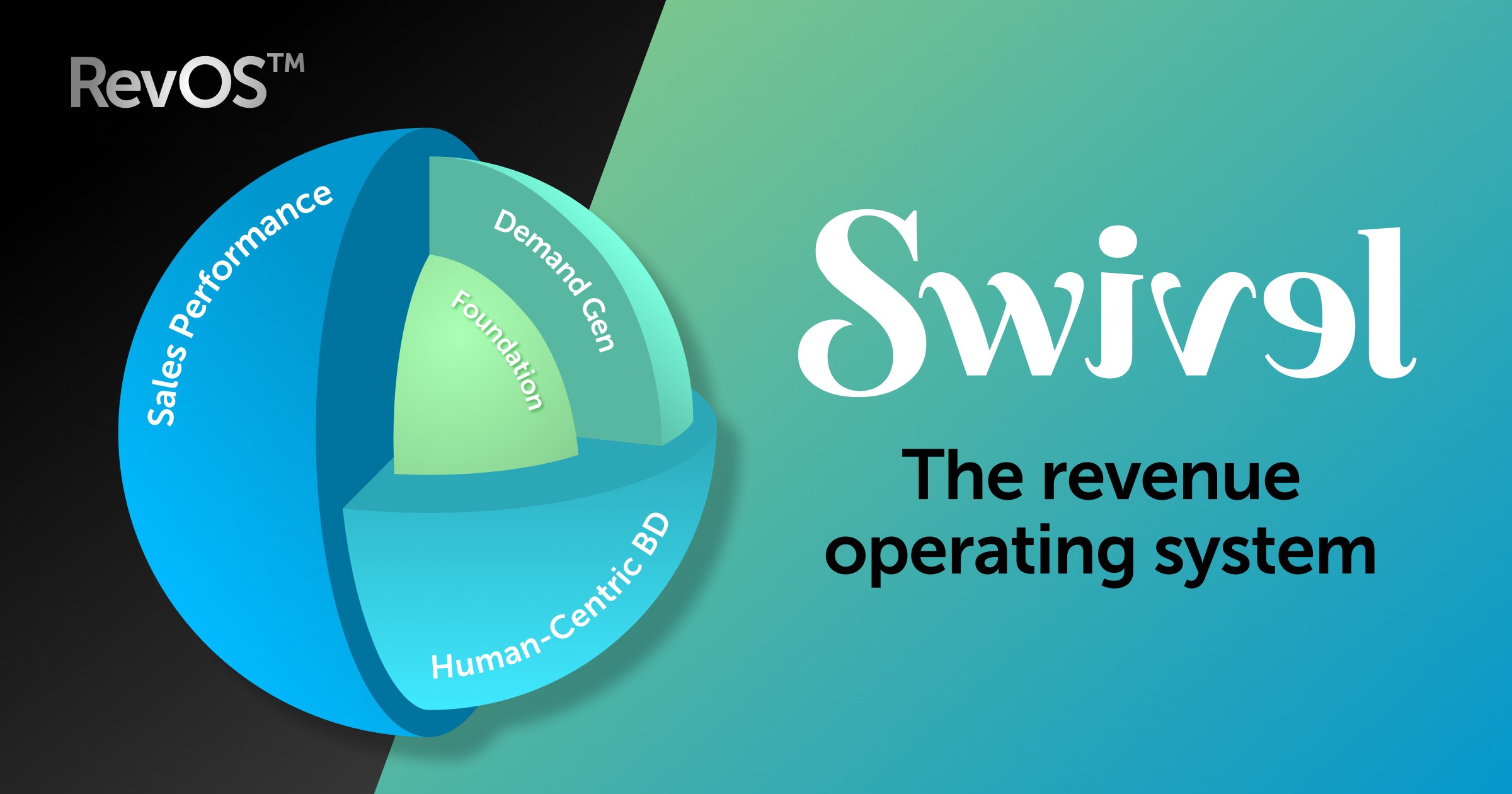
Swivel begins narrowly, with one niche or segment. That creates a controlled learning loop: a defined audience, coherent message, measurable demand and a sales process built for the same buyer. Once the motion works, it can be replicated into another segment. This is the opposite of the common launch strategy in which six audiences receive nine messages and nobody can tell which combination produced the meeting.
03 / The receiptWhat happened for customers
The proof is presented through customer results, and it should be read as company-reported case-study data. For school-bus technology company Transportant, Swivel reports more than $6.5 million in pipeline over 12 months, 162 new opportunities and a 10.1-times return. One million dollars of that pipeline arrived during what had normally been a slow summer season. The engagement covered strategy, digital assets, advertising, outreach and sales enablement rather than a single campaign.
For education-technology company Abre, Swivel says it helped reposition the offer from an IT tool to an enterprise platform, clarify the ideal buyer and build demand for C-suite and superintendent audiences. Reported pipeline rose from roughly $1 million to more than $8 million in under a year. Other published examples include 50 meetings for precision manufacturer Dysinger, with half of its top accounts taking a meeting, and $143 million in pipeline reported for Conger Construction across a six-month program.
What changed was not simply the volume of marketing. The clients got a shared definition of the target, joined-up execution and instrumentation that connected activity to opportunity. That is Swivel's competitive wedge. Kalungi, Directive and Refine Labs offer formidable marketing specializations. RevPartners and other HubSpot shops can engineer RevOps. Fractional executives advise; BDR vendors prospect; sales coaches train. Swivel occupies the messy space across all of them and asks to be accountable for the complete motion.
04 / The billHow the business works
Swivel is privately held and sells tailored, full-system engagements. Its pricing page does not operate like a restaurant menu. Prospective customers receive a custom 12-month projection covering meetings, pipeline and revenue, then a RevOS package built around that target. The firm can plug into an existing marketing and sales team or run the motion for a company with little internal capacity. Either way, the client needs salespeople available to take and close the meetings.
That packaging answers the cost question indirectly but honestly: the purchase is meant to replace or coordinate several budget lines, not compete with a single freelance deliverable. The relevant comparison is the combined cost of strategy, content, paid media, business development, CRM operations, creative production and sales enablement - plus the management time spent refereeing them. A company seeking only a new website will find the offer excessive by design.
05 / The theftWhat a reader can copy
You do not need to hire Swivel to borrow its clearest operating ideas. The most useful ones are constraints, not tricks. They reduce the number of places where a plausible excuse can hide.
- Choose one segment. Make the buyer narrow enough that messaging, channels and qualification can be tested together.
- Write one machine-checkable ICP. If marketing and sales cannot apply the same rule, “qualified” is only a mood.
- Measure CPQL, not CPL. Cheap strangers are not a bargain when sales refuses to call them.
- Join signals to action. Decide who follows up, with what message, and within what time before launching demand.
- Instrument the hand-offs. Put ad spend, outreach, calls, opportunities and closed revenue in one reporting chain.
- Equip the first meeting. Capture discovery questions, objections, proof and next steps from the best reps.
A seventh rule sits underneath the rest: resist adding headcount until the system can feed it. A new representative entering a vague market with cold lists, inconsistent messaging and no enablement does not solve the problem. The hire gives the problem a salary. Swivel's order of operations is to build the meeting engine, then scale the humans who operate it.
06 / The catchWhen the swivel will not work
A connected revenue system can amplify a good offer; it cannot politely invent one. Swivel says it looks for businesses with strong products or services, enthusiastic customers, collaborative teams and executive leaders willing to engage for about an hour each week. That selectivity is not decorative. The method depends on customer evidence for positioning, internal access for process design and management authority to change hand-offs.
Useful conditions
A validated offer, customer proof, a definable B2B segment, sales capacity, shared data and leadership willing to make operating changes.
Poor conditions
A search for one-off creative work, no product-market fit, no owner for incoming meetings, political resistance to shared metrics or zero executive time.
It may also be the wrong model for a company whose only problem is genuinely narrow - a clean CRM needing a technical repair, a mature revenue team wanting one specialist channel, or a brand seeking a single campaign. Full-funnel ownership carries coordination benefits, but it also concentrates dependency in one partner. Companies need clear data access, documented processes and ownership of their underlying technology so the operating knowledge does not vanish if the engagement ends.
Swivel's idea is compelling because it makes a boring fact impossible to ignore: buyers experience one company, even when the company organizes itself as seven departments and four agencies. The funnel does not care who owns the budget. The buyer does not care which dashboard got the click. Revenue arrives only when the pieces behave as one journey. Swivel has turned that demand for coherence into a consultancy, a framework and, quite deliberately, a refusal to sell the orphaned pieces.