A hand-painted shoe is a pleasingly specific thing to sell. Someone has to choose the colors, do the work and persuade another person to wear it. Swati Mittal ran a business doing just that. Then there was the less decorative part: getting the product to the person who wanted it. Her experience in ecommerce brought her close to the costs of poorly managed shipping. The problem would outlast the shoes.
Mittal went on to co-found Bigship and serve as its CEO. The shift carries a certain entrepreneurial logic. A merchant encounters a problem often enough to start looking at the problem itself as a business. Plenty of founders have a slide describing their customer. Mittal had been one.
That gives her career a useful starting point. Before the carrier partnerships, international expansion and management responsibilities came the experience of trying to make a product business work. The order was only part of the job. A business had to keep working after the confirmation message arrived. What happened afterward could undo it.
The shoes came first
The Handcraft, which she ran from 2014 to 2020, specialized in hand-painted shoes. Her earlier work included customer service at The Mall Cafe in Hounslow. These were businesses with people at the other end of a transaction, an inconvenient detail that can disappear when entrepreneurship gets reduced to a collection of financial nouns.
A shoe seller has to think about an individual buyer. A shipping business has to accommodate many sellers, each with a different product and a similar desire to know what is happening. Moving between those perspectives helps explain Mittal’s repeated attention to making logistics understandable.
Her stated ambition at Bigship included merchants with limited technical experience. The intended user could be someone from a rural area, trying to complete a practical task rather than master another piece of software. That is a demanding customer to design for. An interface cannot borrow the expertise its user has never had.
“Your best teacher is your own experience.”Swati Mittal
An MBA, with room for a detour
Her academic route began at Manav Rachna International University, where she studied biotechnology engineering, and continued at Cardiff University with an MBA. She attended Cardiff in 2012-2013 and describes herself as a scholarship student. Her LinkedIn profile also lists a silver medal for innovation and research at the Intel Embedded Challenge in 2012.
Mittal’s own account of changing direction is cheerfully unceremonious. On her startup mentoring profile, she describes becoming bored with engineering, turning toward an MBA, making shoes and then entering logistics. The scholarship gets an enthusiastic aside. It is a more entertaining career introduction than a solemn declaration that every step was planned.
The same profile offers prospective founders a reality check. She says some ideas are built out of aspiration even when the market does not need them. Her proposed contribution is criticism that might save a founder money. There is a recognizable preference here for asking awkward questions while the answers are still affordable.
It also places the shoe business in a less sentimental frame. A first venture can be an education without becoming a triumph in retrospect. Mittal publicly acknowledges an unsuccessful startup in her mentoring introduction. That admission leaves room for what happened next to involve learning.
- EngineeringManav Rachna
- MBACardiff University
- The HandcraftHand-painted shoes
- BigshipShipping aggregation
A company built in the hills
Bigship’s co-founders include Ankkit Jain and Amit Jain. The company was incorporated in March 2021. Mittal has since spoken about building it from Dehradun, giving the story a geographical center beyond the usual large-city shorthand for Indian entrepreneurship.
In a public exchange with Vikrant Agarwal in May 2025, she described hard work, late nights and continuous learning. She emphasized steady execution and the possibility of building something meaningful without a big-city address or large amounts of money. Her account puts the accumulation of working days ahead of a single dramatic breakthrough.
There is an everyday implication in that description of place. A company needs people who will do the work where the work is. Building from Dehradun meant that the team’s experience, recruitment and relationships were part of the business itself. An office location becomes consequential through the people who turn up there.
In September 2024, Mittal shared an invitation to speak at IMS Unison University’s entrepreneurship cell. Her brief comment connected the company’s journey with the city of hills. For students considering a business, the example had a local address as well as a founder at the microphone.
The potter and the paperwork
When Mittal described her ambition for international logistics, she chose a merchant making pots in a village in Bihar and imagined that person shipping to the United States, with cash on delivery. It was a concrete way to describe a large commercial ambition. The seller had a product, a location and a possible customer overseas.
Her concern was the fear created by paperwork and the sense of having less control over a cross-border shipment. Those are useful details because they locate the difficulty before a parcel even moves. A merchant may be capable of making something people want while finding the process of exporting it intimidating.
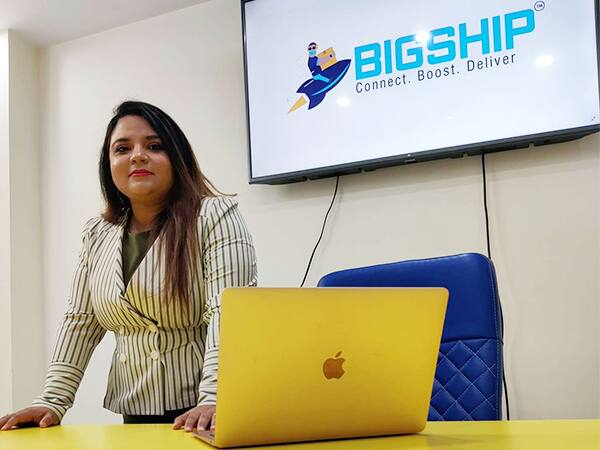
In October 2023, Bigship announced an international carrier aggregation platform. Its stated features included several carrier integrations, tracking, documentation support and pricing choices. The service brought the international proposition into a single system for businesses arranging shipments. These were the company’s announced capabilities, rather than a promise that every journey would go smoothly.
The village potter remains the more revealing explanation of her goal. It asks whether the system makes sense to the person with the least spare time to decode it. There is a considerable distance between offering a service and making a new customer comfortable enough to use it.
The people who answer
Mittal repeatedly paired technology with customer support when discussing Bigship. In an early account of its operations, she described a two-hour turnaround for replies to client inquiries. The distinction between a reply and a resolution matters: the commitment concerned answering, while shipments could still involve several parties and further work.
For someone waiting on an order, knowing that a question has reached another human being can be part of the service. The software may organize the information; a person still has to understand why this particular shipment matters to this particular business.
That emphasis also appeared in her approach to colleagues. She argued against excessive layers between employees and the CEO. A concern becomes harder to act on when every person passing it upward has to make it suitable for the next desk. Accessible management offers a shorter route for information.
Her public reflections on employees put names to that idea. In her HumansOfSwati posts, she remembers Shristi Negi, a social media colleague, and Kavita Joshi Kuniyal, whose development she describes with pride. Negi has publicly thanked Mittal for believing in her, appreciating her work and offering guidance. These are personal accounts of working relationships, carrying the warmth and perspective of the people involved.
A client in the audience
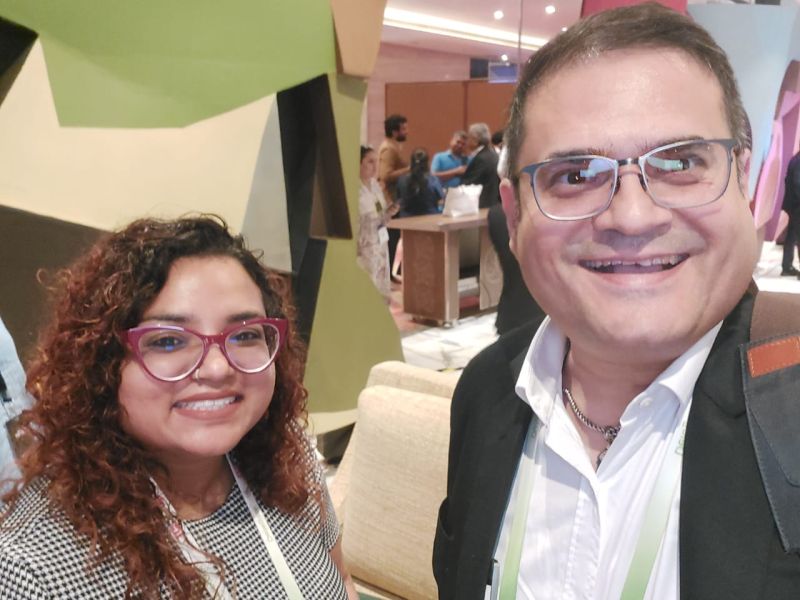
At the World Business Angels Investment Forum week in 2023, Mittal described hearing AgriVijay’s Vimal Panjwani speak about Bigship. She thanked him publicly and said his words gave the team encouragement. Panjwani, in turn, acknowledged Bigship’s role as a partner in AgriVijay’s work.
It is a small scene with a different texture from a company milestone. The founder was speaking at a forum and encountered a customer’s account of the service. A business built to help other businesses gets some of its meaning from those encounters. Someone on the receiving end recognizes the work.
The relationship also broadens the picture beyond online storefronts. AgriVijay works with farmers and rural households around renewable energy. Its presence in Mittal’s account shows why a logistics company’s customer conversations can travel into businesses very different from its own.
What travels beyond a title
In a July 2026 public post, Mittal described a recording as her final keynote as Bigship’s founder and CEO. She reflected on sharing a stage with Swati Bhargava and hearing Aanchal Jain speak. Her account returned to client meetings, product discussions and conversations with small businesses.
She also said that, following her removal from the company, material featuring her had disappeared, and that team members had encouraged her to preserve copies. This is Mittal’s account of her departure and its aftermath. The recording became, for her, a way to retain a piece of the work.
“Never sell if you cannot genuinely make the client’s life easier.”Swati Mittal, recalling her instruction to the sales team
The instruction she recalled giving salespeople offers a practical way to read the whole career. It connects the person making shoes with the person managing shipping: understand whether what you offer helps the buyer do something that matters to them.
A hand-painted shoe and a courier platform have little in common on a product shelf. In Mittal’s working life, they belong to the same sequence. Make something. Try to sell it. Discover what gets in the way. Pay attention long enough, and the troublesome part may become the next business.
Follow the conversation
Explore Mittal’s work, interviews and public reflections.