The second sale is where ecommerce gets interesting. The first sale is the cheerful part: a photograph, a cart, a payment and a confirmation ping. Then comes the physical world. A label must match a parcel. A pickup has to arrive. One courier may be quick in Jaipur and patchy in a distant pin code. A cash-on-delivery payment must find its way back to the merchant. If the buyer is not home, somebody has to react before the parcel turns around.
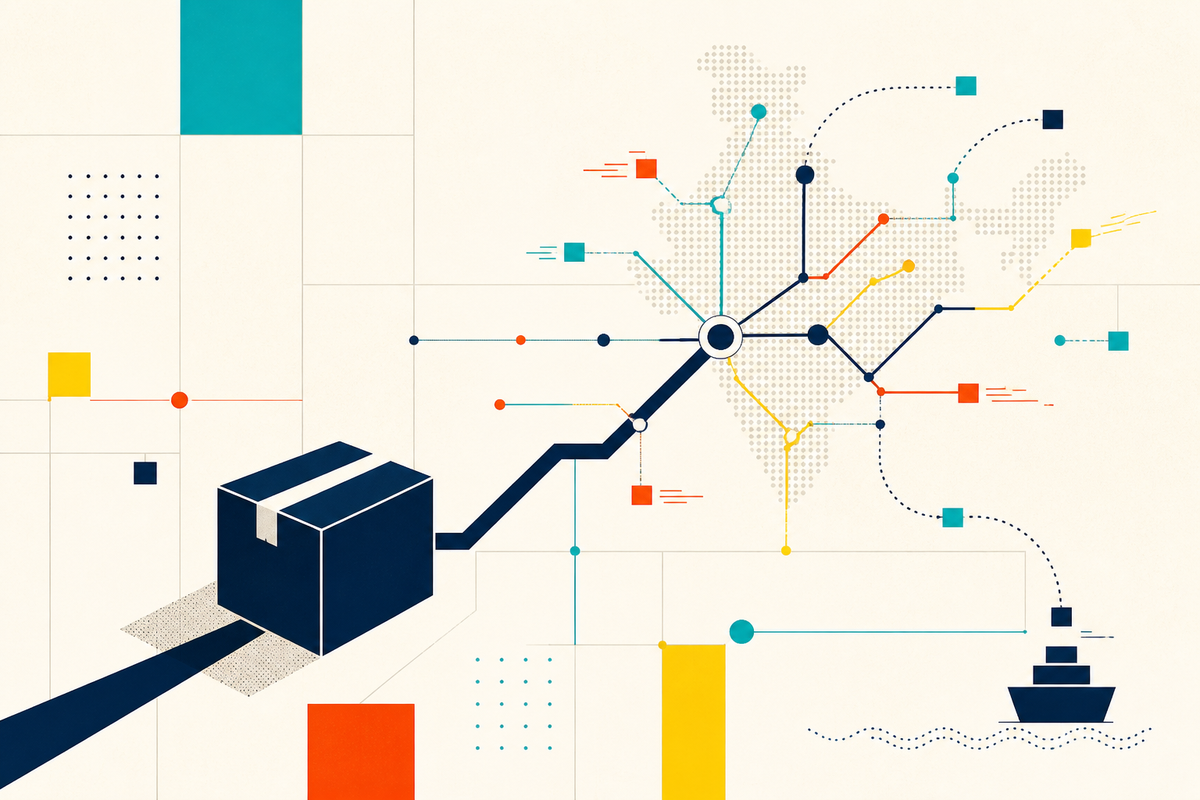
Bigship lives inside that untidy sequence. The privately held New Delhi company connects merchants to a roster of courier and freight providers, then gives them one panel for selecting, booking and watching those providers. It is not primarily a truck fleet. It is an orchestration layer - software, negotiated access and people positioned between seller and carrier.
Founded in 2021 by Ankkit Jain, Amit Jain and Swati Mittal, Bigship began with a plain mission: make shipping easier for businesses. The company says its network now reaches more than 29,000 Indian pin codes and over 190 countries, serving at least 75,000 businesses. Public company profiles put its team above 300 people. The numbers are Bigship's own, but the shape of the ambition is easy to see: give a small seller some of the logistics leverage of a much larger retailer.
The software behind the handoff
A merchant can bring in an order manually, upload many at once or sync an online store. Bigship shows eligible courier services and rates, creates the label, schedules pickup and keeps the shipment visible as it moves. Its Shopify app, launched in June 2026, brings products, orders, inventory, fulfillment and tracking into the same loop. Bigship also promotes integrations with WooCommerce and APIs for sellers with their own systems.
The product becomes more revealing when something goes wrong. In Indian ecommerce, a non-delivery report, or NDR, might mean the address was unclear, the customer was unavailable or the delivery attempt failed for another reason. Wait too long and the order can become RTO - return to origin - forcing the seller to absorb a round trip without keeping the sale. Bigship's NDR workflow surfaces the exception and supports a quick response. Buyer notifications can go out through WhatsApp, email and SMS, while branded tracking pages keep the merchant's name in view.
This is also where the seller's customer experience gets made, usually without anyone calling it product design. A late tracking message can trigger a support ticket. A generic courier page can make a young brand disappear at the most anxious moment in the purchase. A fast address correction can preserve both the order and the relationship. Bigship's branded communication and shared tracking view address that small but consequential gap. The merchant is still responsible for the promise, even when a third party is carrying the box. Giving seller and buyer the same current status reduces the number of people guessing where it went.
Import
Sync a store or upload orders in bulk.
Choose
Compare eligible carriers and rates.
Dispatch
Print labels and schedule pickup.
Intervene
Track, notify and act on failed delivery.
Cash on delivery adds another piece. Bigship manages COD collections and remittance records, advertising early payment options because inventory does not wait politely for a courier settlement cycle. Returns, reverse pickups, stock monitoring, shipping reports and multi-user access round out the less photogenic parts of the dashboard. Those are not decorative features. They are the daily bookkeeping of moving goods.
“The valuable layer is not another vehicle. It is a better decision about which vehicle should carry this order, plus a faster response when the plan fails.”YesPress analysis
One name, several kinds of shipment
Courier aggregation can sound like a narrow parcel business. Bigship has deliberately widened the frame. The regular ecommerce service covers B2C, D2C and marketplace orders. Hyperlocal service addresses same-day and, in Delhi NCR, three-hour delivery. Heavy Shipment covers bulk freight, multiple pickup locations and insurance choices, including less-than-truckload and full-truckload needs. The international arm handles documents, samples, parcels, air cargo and ocean cargo, with help around customs paperwork and regulated shipments.
That range matters to customers whose orders do not remain tidy. A D2C nutrition brand can begin with lightweight domestic parcels and later send heavier cartons to distributors. A manufacturer may need B2B freight and sample shipments abroad. A smartwatch dealer faces special documentation because lithium batteries are regulated as dangerous goods for air transport. Bigship has described helping such a dealer find appropriate couriers and paperwork after repeated international-order cancellations.
The customers therefore span social sellers shipping occasionally, local shop owners, high-volume ecommerce operations, retailers, wholesalers and manufacturers. The common problem is not simply distance. It is fragmentation. Without an aggregator, a merchant may negotiate several courier accounts, learn several dashboards and reconcile several versions of tracking truth. Bigship bundles those relationships into one operational surface.
How the machine gets paid
Bigship uses a fee-for-service model. Merchants load a prepaid wallet or operate under contracted billing, then purchase shipments at the rates presented for an order. The company aggregates carrier capacity and wraps it with software, support and account management. Its Shopify listing offers a free software plan while noting that shipping charges are billed separately. In other words, the dashboard is a distribution channel for transportation services as much as it is a SaaS product.
The model benefits from density without requiring every seller to be large. Combined volume can unlock carrier choices and economics that a tiny merchant would struggle to negotiate alone. The merchant, in return, accepts Bigship as another counterparty in the chain. That makes transparent rate calculations, wallet records, weight reconciliation and claims handling central to trust. In logistics, billing is not back-office scenery. It is part of whether the shipment felt successful.
That hybrid explains the dedicated account manager, a conspicuously human feature in a company that talks about AI. When a pickup is missed or a claim drags on, a recommendation engine cannot walk into a carrier depot. Bigship positions named support as part of the product, including seller meetings under the Vyapar Setu banner. The first event was held in Delhi, followed by a Jaipur edition in May 2026 built around logistics, ecommerce, exports and business networking.
Where value accumulates
Conceptual map, not a financial measure. The aggregator's usefulness rises when access, routine work and real-world exceptions are handled together.
The aggregator's bargain
Bigship competes with Shiprocket, NimbusPost, Shipyaari, Shypmax and other Indian shipping platforms, as well as the option of contracting directly with Delhivery, Xpressbees or another carrier. Its differentiation is breadth: parcel and heavy freight, domestic and international, software automation and account management. Its CORE recommendation engine is meant to use shipment characteristics and performance data to suggest a better courier rather than defaulting to the same provider every time.
The bargain has limits. An aggregator can compare options, automate handoffs and escalate problems, but the physical pickup and delivery still depend on partner networks. Public seller discussions about the category frequently mention missed pickups, weight disputes, delayed claims and uneven last-mile service. Some specifically criticize Bigship; others make the same complaints about its rivals. The pattern is a reminder that a neat dashboard sits atop roads, depots and independent delivery teams that remain stubbornly analog.
For a small merchant, direct courier contracts may bring more control but require enough volume and operational attention to justify them. Aggregation is most attractive earlier, when choice and convenience outweigh the benefits of going direct. Larger merchants often adopt a hybrid: direct relationships for core lanes, aggregators for reach, overflow or troublesome pin codes. Bigship fits in that middle layer - broad enough to reduce setup work, flexible enough to keep the seller from depending on one carrier.
A practical kind of AI
The company's use of AI is modestly framed around courier recommendations, shipment predictions and reducing RTO. That is healthier than pretending a chatbot can deliver a parcel. The meaningful question is whether Bigship's data can improve a specific choice: which carrier is likely to deliver this package, to this pin code, at this price and within this time window? Every completed or failed shipment becomes another observation for that decision.
The company itself is in a transition. Swati Mittal, who served as founder and CEO, has described a final keynote in that role. In early 2026 Bigship appointed Siddharth Sharan as chief executive, bringing more than 25 years in sales, strategy and business leadership. The founders remain visible while the organization adds a more formal operating layer. Recent public posts emphasize collaboration, shared responsibility and faster execution; others show rewards events, a carrom tournament, health camps and office expansions.
The next test is less about adding another badge to the carrier carousel than making delivery performance more predictable. Bigship has expanded from New Delhi into operational hubs including Dehradun, Noida, Gurugram and Mumbai. It has a newly public Shopify app and a seller community large enough to produce useful route data. If the company can turn that scale into better recommendations and quicker exception handling, the dashboard becomes more than a convenient place to buy postage.
That is Bigship's place in the market: not the road, not the warehouse and not the online storefront, but the connective tissue among them. It makes the many small decisions after checkout visible to a merchant who has other things to do. The cardboard box remains stubbornly ordinary. The system around it is the product.
Keep exploring