Before an investor meeting, Suzie Welsh Devine had an extra decision to make: whether to wear her wedding ring. Would someone look at it and decide she was simply waiting to have children? She had a business to explain. Apparently, her hand might be making a presentation of its own.
She described that calculation in 2018, after launching BINTO in 2016. There were customers by then, a product, numbers to discuss. Yet she was still encountering doubts about whether someone with her professional background understood business. Getting into the room had supplied another set of questions.
It is an unusually revealing detail in a founder story. Investment tends to arrive in the telling as a number. Here it also arrives as a wardrobe decision, an exercise in anticipating strangers, a small private negotiation before the public one begins.
Devine is now BINTO’s CEO and co-founder, based in Philadelphia. Her story includes the familiar ingredients of entrepreneurship: savings, a pitch, investors, expansion. Follow it further and the subject becomes judgment. When should she listen? When should she disregard advice? Which responsibilities should stay close, and which should leave the building?
The first cheque was hers
She had grown up seeing both parents in leadership roles and her father working as an entrepreneur. Business was already a possibility she could picture. It took longer to make it something she would actually do.
The idea for BINTO stayed with her for about a year before she pursued it. She was working while completing a master’s degree at the University of Pennsylvania, building on an undergraduate degree from the University of Virginia. A Wharton entrepreneurship program gave the idea a business plan and, eventually, an audience.
The program ended with a pitch. An angel investor came out of that experience. So did a measure of confidence. Within roughly two weeks, she finished her master’s and left her job. A long period of considering the possibility had become a short period of making consequential decisions.
Her own opening investment was $20,000, saved so she could leave work and begin. Early money also came from friends, family and angels; Ben Franklin Technology Partners became an institutional investor. The personal savings matter because they make the gamble concrete. She had accumulated something useful and chose to put it at risk.
A pitch is a peculiar bridge between preparation and action. For months, an idea can remain available for improvement, safely unfinished. Then someone asks whether they can invest. Devine’s experience suggests how much confidence can depend on having something outside your own head respond.
An education with no graduation day
Finishing university did not finish the learning. Devine was frank about her gaps: business, Excel, financial models. There is a refreshing lack of ceremony in the list. It sounds like the work waiting on a laptop after everyone has stopped congratulating you.
Her description of her response was equally direct: “You either sink or swim and I like to swim!” Confidence, in that formulation, is permission to learn unfamiliar things. It does not require pretending they were familiar all along.
She also had to become a more discriminating customer of expertise. Early on, she assumed people offering startup services and advice would bring the same standard of competence she expected of herself. Some advice proved poor. She learned to work out what she needed before deciding who could provide it.
“Learn how to filter the white noise.”
Suzie Welsh Devine
The financial reality was equally plain. In 2018, she said she had never paid herself and was teaching at Villanova University as a second job. Owning a company had not made its bank account interchangeable with her own. The founder title came with another timetable.
She was also learning how to choose investors. Her friend and fellow founder Kim Ramirez encouraged her to think of fundraising as assembling a team. Who belonged in which position? Whose abilities would help the company? A willing cheque deserved consideration alongside the person attached to it.
That advice asks for patience precisely when patience may be expensive. A young company wants money; its founder also has to imagine working with the person providing it. Devine’s early account leaves both pressures visible. The romance of being chosen gives way to the responsibility of choosing.
The unromantic business of getting a box out the door
By 2019, BINTO had retail partnerships with Anthropologie and Urban Outfitters. For a business launched in 2016, those names marked a move beyond the first pitch and first customers. A shelf introduces a company to people its founder will never meet.
Retail visibility also gives a founder another job: making sure the organization behind the name can keep up with the audience in front of it. An attractive package is one promise. Dispatching it correctly is another, repeated every time someone orders.
In March 2025, Devine announced that BINTO was outsourcing fulfillment and operations for the first time. The company had spent years running its own fulfillment center. Her explanation concerned shipping reliability, errors and the work her team needed room to do.
The new arrangement included a machine that photographed packets to check for mistakes. She described a 48-hour dispatch window after a kit renewed. These were announced improvements, with the emphasis on what customers should experience. A camera in a facility was part of the founder story now.
- BeforeRun the fulfillment center
- ChangeBring in a fulfillment partner
- AimMake room for product and customer work
Later that year, she wrote about the importance of keeping critical functions close to customers. Read alongside the fulfillment announcement, that concern leaves an interesting management question open: how does a founder gain capacity without becoming distant from the people buying?
Her published reflections favour profitability before growth, testing assumptions and pausing before responding. They do not establish a simple formula for every decision. They show an operator revisiting where attention belongs. Growing a business supplies plenty of occasions to discover that a previous answer has expired.
A corner of her own
In 2025, Devine began publishing Suzie’s Corner, a newsletter with room for founder reflections and family stories. The name had already enjoyed a working life. It belonged to her grandmother’s antique business.
There is something pleasing about a founder borrowing a name from a business that dealt in things with histories. A newsletter is often introduced with the urgency of something entirely new. This one came with an inheritance: a familiar phrase, a family connection, a place to begin.
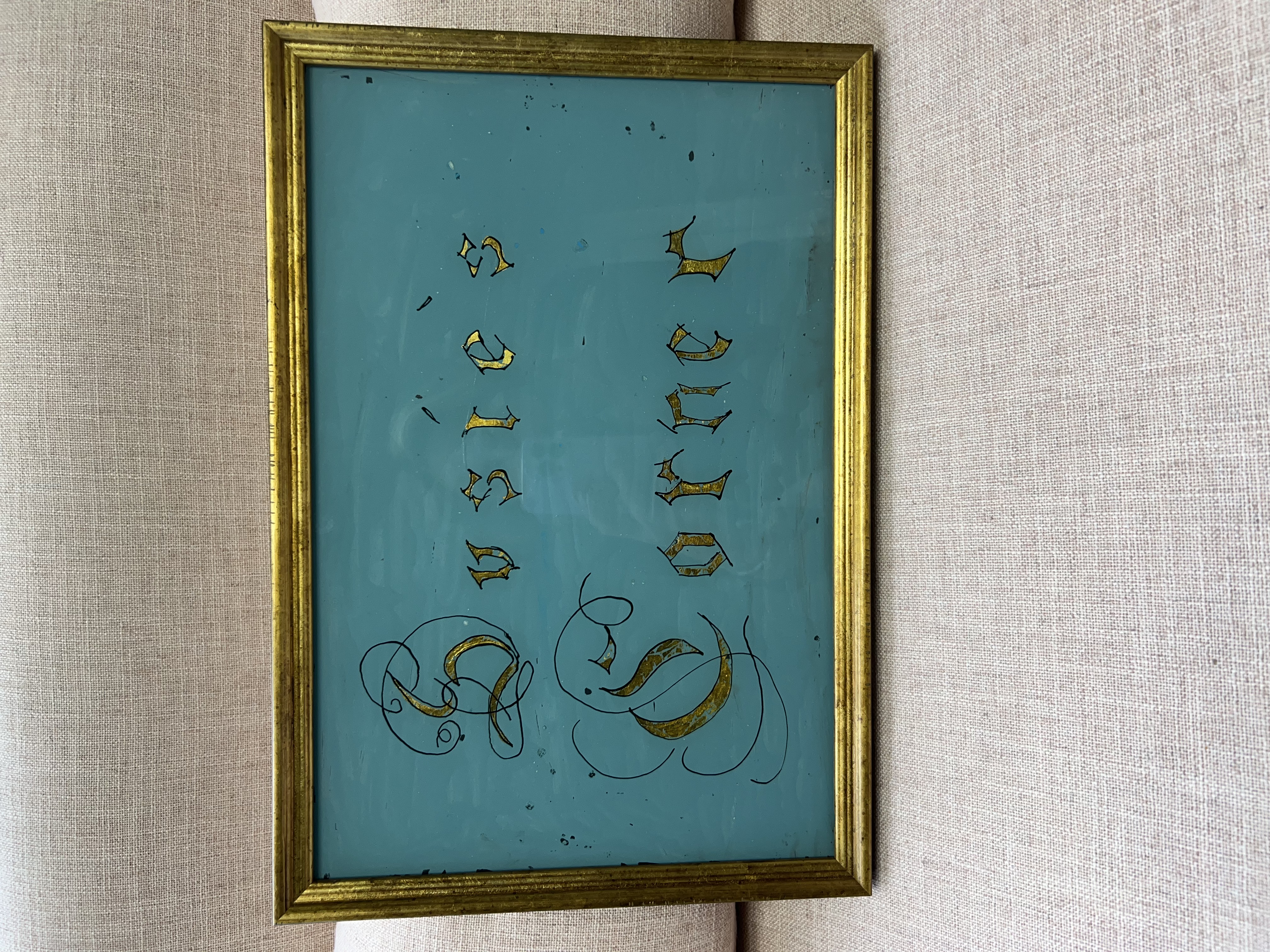
Her stated goal included developing her own public voice while navigating motherhood. The company had occupied years of her professional life. Writing in her own name made room for the decisions and domestic negotiations that a company announcement usually edits out.
There is a quieter register to her public descriptions of a working day, too. In a routine she shared in 2023, she described making breakfast and lunch before heading to the office, where coffee or Earl Grey tea finally arrived. At the end of a long day, she liked some silence and time with her cat. These are ordinary pleasures, which may be why they belong in the picture. A founder still has to decide what to eat before leaving the house.
Her work has also brought recognition from other entrepreneurs: she appears among the Entreprenista 100’s 2024 winners. An award listing supplies a public milestone. The routine supplies the hours around it. Put them beside each other and the title becomes easier to imagine as a job someone does, with a morning on one side and a homecoming on the other.
The family connection also sits comfortably beside her taste in imagined company. Asked whom she would like to meet for a private breakfast or lunch, she chose Ina Garten and Martha Stewart. She admired their intelligence, business sense and influence. One suspects the catering would take care of itself.
Her working life has had its share of overlapping events. In the early BINTO period, she and her husband moved in together, bought a house and married. She later described learning to close the laptop and pay attention to the people nearby. A company can generate work indefinitely. An evening has less accommodating dimensions.

Four trips, one week
By December 2025, she was writing about another scheduling decision: going out again. With two young boys and a company to run, she had spent a long stretch declining invitations. There would be time later, she thought, when work settled and the children were older.
Then came a week with four trips to New York. The visits brought meetings with founders, investors and possible collaborators. She described new relationships continuing through messages afterward, and speaking opportunities leading to further invitations. Going required coordination with her husband and accepting that some evenings would be spent away.
Her account includes a filter for invitations: the people she might meet, the chance to tell the company’s story, what she could learn, whether relationships could actually develop there. She was trying to put a reason behind each addition to the calendar. Ambition still had to arrange transport.
That is where Devine’s founder story becomes particularly recognizable. The first savings investment offers a clear figure. The later investments arrive in smaller units: an evening, a journey, the time to learn a spreadsheet, the restraint to wait before answering.
In 2018, she called BINTO her “plan A-Z.” Years later, the commitment remains visible in changing methods: a new operating arrangement, a newsletter with an old family name, another invitation accepted. The price of betting on herself has kept changing. She has kept making the decision.