Sam Whitaker had already built a company when he began wondering whether he could build another. That is an awkward qualification for a repeat founder. The résumé says experience; the question in his own account says, what if experience was only good timing wearing a respectable jacket? In his own account of starting Mural Health, Whitaker allowed room for luck alongside skill and effort. He had a previous product to point to. He still had to find out whether he could do it again.
Greenphire came first. Mural Health followed in 2022, with Jason Dong and Shawn Milochik as co-founders. The business brought Whitaker back to payments, a territory he knew from the inside. The twist was that he would now build a competitor to a product he had helped create. A founder usually gets to blame the previous generation of software on somebody else. Whitaker had rather less room for that luxury.
The interesting part of a second beginning is the mixture of familiarity and exposure. You know whom to call. You also know enough to understand how much can go wrong. A past success can open a conversation, but it cannot answer every question inside it. The new company needs its own reasons to exist. For Whitaker, returning meant putting an earlier body of work back on the table and asking what he would build differently today.
His admission of doubt makes the story easier to believe. It gives the reader a founder with something at stake beyond a polished biography. There is no need to invent a dramatic night of decision or a decisive view from an office window. A second venture already supplies the tension: the evidence of the first company is public, while the outcome of the next one is still being made.
“I was not sure I could do it again.”
Sam Whitaker, on starting Mural Health
A philosophy degree meets the payment desk
Whitaker graduated from the University of Pennsylvania in 2002, having studied philosophy. Investment banking came next, followed by work at Ecount, a financial technology startup outside Philadelphia. The combination is a pleasingly untidy preparation for entrepreneurship. Philosophy asks why a proposition should be accepted. Payments eventually require somebody to tell you where the money went. Neither occupation rewards a permanently vague answer.
His explanation for leaving banking was straightforward: it did not suit his personality. That small piece of self-knowledge matters more than an elaborate origin myth. A career can change because a person discovers that the work and the worker are a poor match. Ecount put him closer to the practical machinery of payments. Greenphire, launched in 2008, gave him a company of his own.
There is a temptation to make the degree explain everything that followed. The public record supports a more modest connection. Whitaker liked abstract problems, then worked in finance and product development. Those are the ingredients. Whether philosophy made him a founder is a question better left open. What we can see is a career that moved between examining an idea, understanding a transaction, and turning a proposed improvement into a business.
The move from finance to product also changes the unit of attention. In a financial model, a transaction can occupy one cell. In a product, it occupies somebody’s afternoon. A payment must arrive in a form that can actually be used. An interface must make sense to a person who has other things to do. These are ordinary demands, which is precisely why companies have to take them seriously.
A long first act, without a tidy victory lap
Greenphire’s ownership history supplies the dates behind the first act. The company received a growth investment from Riverside in 2015. Whitaker subsequently handed leadership to Jim Murphy and left the business in early 2016. Thoma Bravo acquired Greenphire in 2021. The later transaction belongs to the company’s history, including the management team that continued building after Whitaker’s departure. A founder’s story gets more accurate when it leaves room for the people who carried the work forward.
In a 2023 Founding Philly interview, Whitaker described a business that had reached a value above $1 billion after raising $2.2 million from investors. Those figures are his account of Greenphire’s capital efficiency. They are company figures, with company meanings. They tell us something about the relationship between outside funding and the value eventually attached to the business. They do not tell us what was in his personal bank account.
The elapsed time is equally revealing: the story unfolded over thirteen years. That is long enough for a new idea to become familiar, for a founder to leave, and for other executives to make consequential decisions. The usual compressed startup biography rushes from founding to sale with barely a pause for lunch. Greenphire’s history asks for a slower reading. Ownership changed. Leadership changed. The company kept developing.
Whitaker’s next move therefore came with an unusual kind of reference point. He could see a product category he had helped establish, while approaching it again as a challenger. That position carries both knowledge and embarrassment. You know why the old decisions were made. You also have to explain why new decisions deserve a customer’s attention. The second company cannot survive on the first company’s reputation alone.
- 2008Greenphire launches
- 2016Whitaker leaves Greenphire
- 2022Mural Health launches
- 2023$8M seed round announced
- 2026Local payment capabilities expand
Three founders, and a product with more to do
Mural Health’s public launch announcement, dated November 12, 2022, named Dong and Milochik alongside Whitaker. The founding team matters to this profile because the second act was a shared undertaking. Dong brought an investment background; Milochik was a technical collaborator Whitaker had worked with before. A new company could draw on existing relationships while still having to build a new product and a new organization.
The platform was called Mural Link. Its launch design included payment choice, messaging, transportation, and feedback. Whitaker also committed the product to charging no participant fees and retaining checks as an option for people slower to adopt digital tools. These are decisions about how a service behaves. The decision to preserve a familiar payment method is particularly telling: a designer can be enthusiastic about new technology without requiring every user to share the enthusiasm.
A check is an unfashionable object in a technology launch. It is also a useful reminder that the customer’s habits do not disappear when a founder publishes an announcement. The elegance of a system is partly measured by what it asks people to change. Offering a choice places some of the complexity inside the business, where the team must manage it, rather than automatically passing it to the person waiting for money.
That gives the second venture a broader business question. When payments bring a person into an application, what else should become easier there? Communication and feedback create further obligations for the product team. A message needs an answer. A complaint needs somewhere to go. Adding features can make a presentation richer; making those features useful is the less photogenic work that follows.
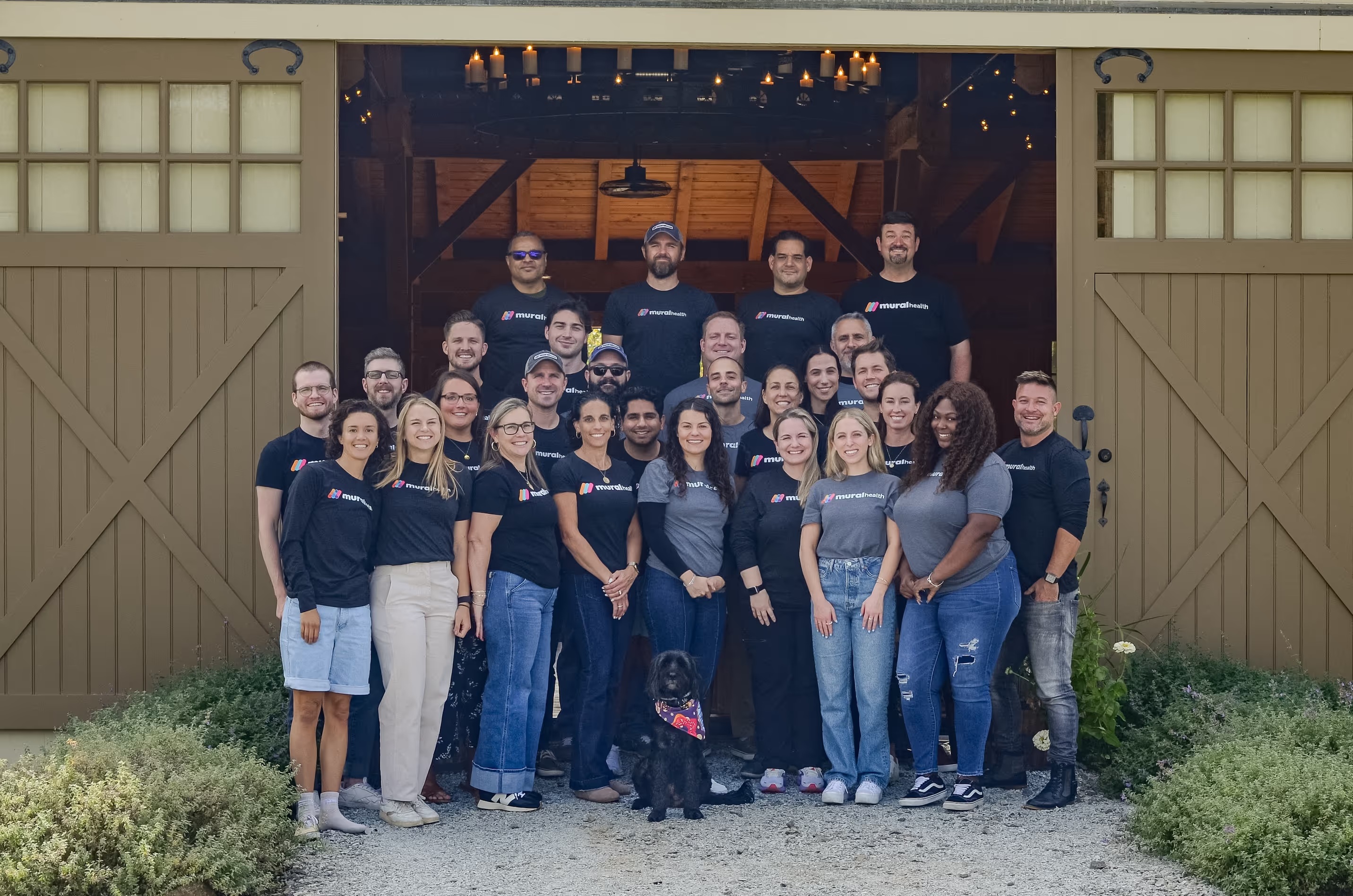
The new company gets its own evidence
On September 19, 2023, Mural Health announced an $8 million seed round led by Bessemer Venture Partners. Virtue VC, Operator Partners, Arkitect Ventures, Correlation Ventures, and Project Mayhem Ventures also participated. The round established a new set of financial commitments around the company. For Whitaker, the second venture was now a business with outside backers and expectations of its own.
Funding is an event rather than a final verdict. It gives a company resources and gives its founders responsibilities. It can help turn a proposed product into an organization capable of serving customers. It also creates the familiar problem of deciding which work deserves attention first. A team cannot ship its entire ambition at once, however handsome the ambition looks on a slide.
A March 2025 partnership announcement with ICON provided another concrete development. The agreement covered use of Mural Link’s payment and management capabilities. By February 2026, Mural Health was announcing expanded local payment options across international markets, including mobile wallets and local bank transfers. The business was extending the original payment-choice idea into places with different financial habits and infrastructure.
That progression is easier to grasp through an ordinary transaction than through an enormous market forecast. A person receiving money wants a method they recognize. A company sending money wants a process it can administer. Operating internationally means solving both sides again in different settings. Familiarity for the recipient may require considerable work behind the screen. The product succeeds only when those hidden arrangements produce a usable result.
Still willing to explain the machinery
Whitaker’s public writing reaches beyond product announcements. In 2025, he published LinkedIn articles about private equity strategies, leveraged buyouts, and the Greenphire-Suvoda merger. The topics return him to the financial machinery behind companies: ownership, incentives, and the ways investors seek returns. His career has given him reasons to care about what happens both inside an application and above it on an ownership chart.
There is a useful distinction between understanding a transaction and explaining one. The first can be a private advantage. The second makes the argument available for other people to examine. Publishing a prediction attaches a name and a date to it. Writing about a former company’s next chapter also puts the author in a complicated position: he has relevant experience, and readers can assess his perspective with that connection in mind.
His exchanges with colleagues offer a lighter glimpse. When Dong publicly reflected on hearing Whitaker describe their founding story, Whitaker replied, “Awwww, shucks. Ditto.” The response is small, but it earns its place beside the financing numbers. Founding a business involves people who later get to tell the story together. Sometimes the appropriate public answer to a generous colleague is four words and a little embarrassment.
Whitaker is based in the Philadelphia suburbs, where he lives with his wife and three children. His working story remains close to that region even as Mural Health operates internationally. By 2026, company announcements were identifying him as founder and CEO. The first venture provides history; the new one continues to accumulate decisions. The appeal of starting over is that experience finally gets another assignment. It still has to show its work.