On the window of vybe’s West Philadelphia clinic, the proposition fits into four words: “Walk in. Feel better.” The building is substantial, the awning practical. There is no elaborate explanation of how to become a patient. That small piece of street-level communication gets at a large question: how much work should someone have to do before a clinician can help?
- 18 urgent care centers across Greater Philadelphia following the July 2026 Liberty acquisition.
- Walk-ins and appointments for everyday illness, injury, testing and physicals.
- A published $145 self-pay clinician visit, with additional charges for some services.
vybe occupies the awkward interval between a problem that can wait for a routine appointment and one that belongs in an emergency department. The company treats non-life-threatening conditions, welcomes children and older adults, and opens seven days a week. Its product is medical care. A substantial part of its appeal is making that care easier to reach.
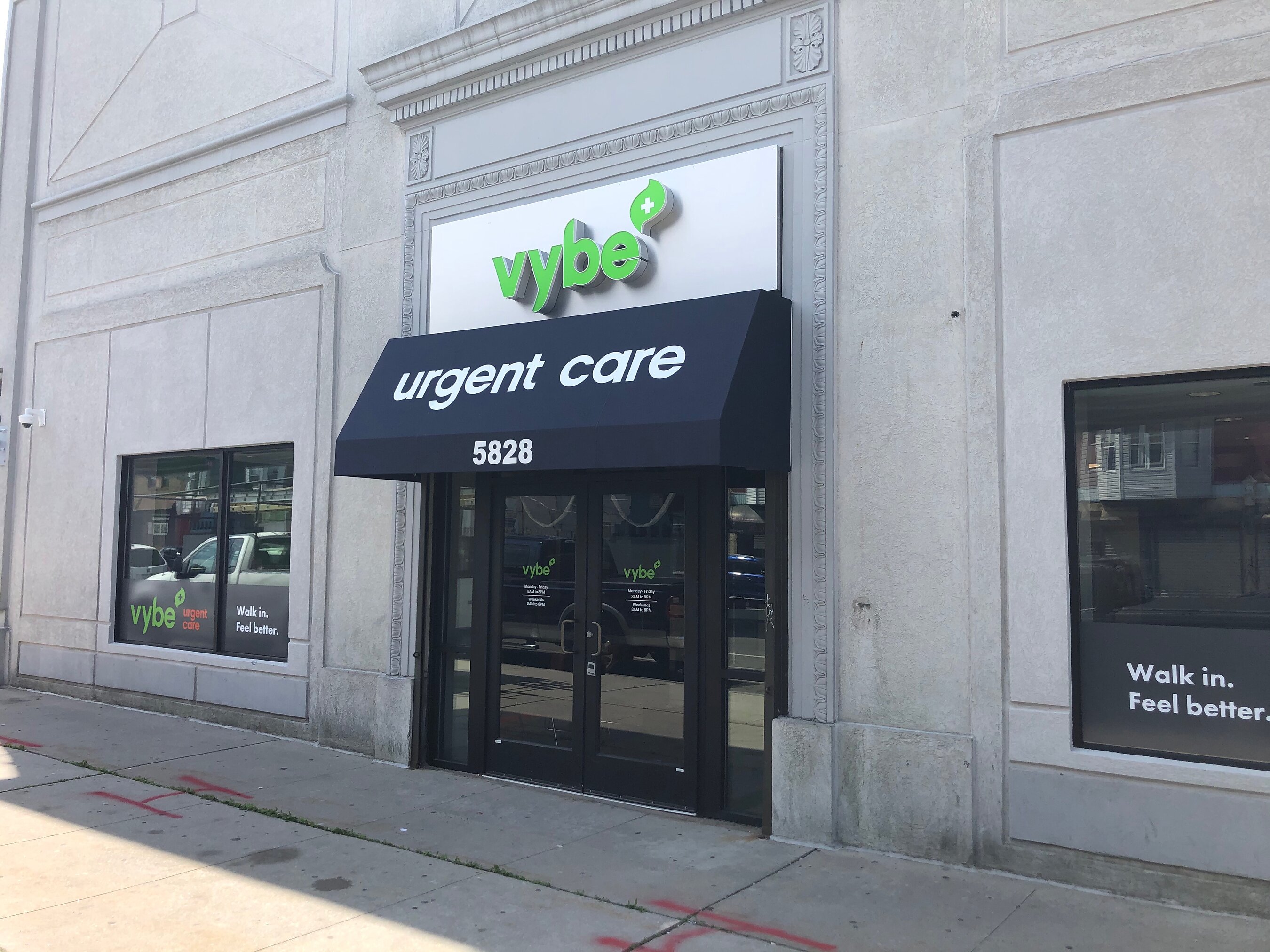
A different name for the first five minutes
In January 2017, On Demand Urgent Care announced that it was becoming vybe. It also announced two new Philadelphia centers, joining Roxborough and Port Richmond. The rebrand described lobby decor, tablet check-in and a warmer atmosphere. These sound like minor details until you consider the customer: someone already having an unpleasant day.
Peter Hotz, the founder and chief executive, had previously led Take Care Health Systems, Walgreens’ healthcare division. He brought experience operating healthcare businesses to a company whose name deliberately referred to a feeling. In 2018, he told The Philadelphia Inquirer that the name was meant to evoke the positive experience of entering a clinic.
A cheerful waiting room cannot establish clinical quality. But a confusing arrival can make an anxious person more anxious. vybe’s positioning gives those first minutes commercial importance. The promise begins with how a visit works: finding a location, registering, understanding what happens next. The medicine still has to follow.
Four doors become eighteen
In May 2018, NewSpring Health Capital and Philadelphia College of Osteopathic Medicine co-led an investment in the four-center business. The announced purpose was to expand its geographic footprint and services. The school brought another asset: clinical training opportunities for osteopathic and physician assistant students.
That pairing makes operational sense. Opening more clinics requires capital; keeping them useful requires clinicians. A medical-school relationship connects expansion with the development of future providers. It also says something about where vybe fits: an independent regional operator with institutional partners, building density around Philadelphia.
Brookhaven became its sixteenth location in 2025. In July 2026, vybe acquired Liberty Urgent Care’s Horsham and Hatfield centers, taking the network to eighteen. The deal also brought Liberty founder Erik Soiferman into vybe as vice president of occupational medicine services. Expansion added expertise as well as addresses.
The company announced growth-oriented debt financing from Live Oak Bank alongside the acquisition. Its intended uses included further acquisitions and new centers. For the patient, financing is backstage machinery. It determines whether the convenient clinic exists in the first place.
The price of getting through the door
The self-pay menu provides a more concrete way to examine the promise. A clinician visit to evaluate and manage symptoms is listed at $145, including specified in-office tests and certain minor treatments. An X-ray adds $100 per body part and requires a clinician visit. Outside laboratory companies and medical-equipment providers can bill separately.
An illustration using published rates, not a bundled offer. Additional services can change the total.
So “affordable” needs an object. Affordable compared with which alternative, under which insurance plan, for which services? vybe accepts major insurance, Medicare and Pennsylvania Medicaid, with exclusions. Insured patients face their own copays and deductibles. Published prices help make a decision; they do not make every visit cost the same.
The services are deliberately ordinary: illness and injury treatment, vaccinations, screenings, physicals and minor procedures. Employers are customers too. Pre-employment exams, drug screens, workplace-injury care and return-to-work communication connect the clinics to another recurring need. A business can need healthcare access as urgently as an individual.
When the front door moved home
The pandemic tested a business built around walking through doors. In an interview about the early COVID period, Hotz described virtual care as a project originally planned for later in the year. Patients were being asked to stay home. Insurers and Medicare were clarifying reimbursement and loosening barriers to remote care. The timetable changed.
vybe accelerated its launch. Hotz said virtual visits soon exceeded the volume at any one physical center. The new service was seeing both people concerned about COVID symptoms and people with everyday medical needs who wanted to avoid leaving home. The access problem persisted; the useful route to the clinician had changed.
“Making great healthcare easy for all”vybe’s stated purpose
The transferable lesson is precise: watch the obstacle that stands between a customer and the service. Then change the route when circumstances change. Here, patient behavior and payment rules made an earlier launch practical. The timing depended on both.

The limits of the open door
vybe competes with other walk-in clinics for convenience and trust. Primary care practices and emergency departments remain different parts of the medical system. Urgent care cannot promise the longitudinal relationship of a regular physician, and life-threatening emergencies require emergency treatment.
Even the practical details have boundaries. For X-rays, vybe requires its own clinician’s evaluation and may send a patient to a nearby center with same-day availability. Eighteen locations create options, rather than identical availability everywhere. That distinction matters when a person is deciding where to go.
In April 2026, the company said it was approaching two million cumulative patient visits. Those are visits, not two million distinct people. Behind the milestone sits a modest, repeatable job: someone needs help, finds a clinic and gets seen. The interesting business question is how reliably a company can make that sequence feel ordinary.