Peter Hotz has spent his career in healthcare, but he explains his part in it with a joke at his own expense: he can barely put on a Band-Aid. The line is funny because it makes a clean division of labor. The clinicians do the healing. Hotz builds the business around them, clears obstacles, finds capital, chooses locations and worries about what happens to a person before and after the important conversation in the room.
That distinction has taken him from spreadsheets to storefronts. He began as an economics graduate and consultant, absorbed in numbers, metrics and business plans. By his early thirties, the work had moved closer to actual practices. He became involved with businesses that owned and operated physician and physical-therapy offices. Finance gave way to marketing, business development and strategy. What had been an industry became, in his telling, a passion: making the commercial machinery work well enough for skilled people to do their jobs.
It is an operator's calling, which is to say a life spent noticing all the unromantic things on which the romantic ideal depends. The sign. The lease. The staffing plan. The bill. The minute at reception when uncertainty either increases or begins to recede.
“I can barely put a Band-Aid on.”Peter Hotz, on the useful limits of his role
The education of a retail operator
Hotz founded Atlantic Health Group in the mid-1990s, then led Continuum Health Management Solutions for nearly a decade. The worksite-care business eventually served roughly 400 employer clients, including companies such as Disney, BMW, Goldman Sachs and U.S. Steel. These were not merely accounts. They were windows into how large organizations thought about their people and their promises.
Disney left an especially durable impression. Its employees were “cast members,” and their own experience at work was expected to echo into the experience they created for guests. The lesson traveled. A service is never confined to the moment it is delivered. The lighting, the language, the handoff and the mood of the person providing it all arrive together.
When the worksite business became part of Walgreens, Hotz got a much larger classroom. He spent about six years inside an enterprise with thousands of stores and a quarter-million employees at the time, watching a famous retailer decide how seriously it wished to become a healthcare company. The questions were strategic and occasionally existential. What belonged in a pharmacy? How should a familiar retail footprint be used? What changed when customers took more responsibility for navigating their own care?
By 2010, Hotz was providing leadership across Take Care Health Systems. He ultimately served as a Walgreens group vice president and president of the healthcare operation. The scale was national, but the lesson that survived was intimate: people judge an institution through a sequence of small encounters.
Founded Atlantic Health Group and entered the occupational-care business as an entrepreneur.
Led Continuum Health Management Solutions through the growth of employer-based care.
Held senior leadership roles at Walgreens and Take Care Health Systems.
Returned to operating with a new Philadelphia urgent-care company.
Opened the sixteenth vybe center and received an EY regional entrepreneurship award.
The year that looked like a pause
After Walgreens, a one-year noncompete gave Hotz something executives rarely receive: sanctioned idleness with a deadline. He used it to study what came next. Philadelphia presented a contradiction. The region could claim globally known institutions, yet everyday access varied sharply from one neighborhood to another. The suburbs had attracted plenty of convenient-care options. Parts of the city had not.
Hotz did not fall in love with urgent care as a category. He worked backward from the problem. The model was understood by insurers, legible to investors and capable of being repeated. A repeatable business could open in more neighborhoods. In 2016, he combined his new operation with two existing On Demand Urgent Care centers in Roxborough and Port Richmond. He had raised $4.7 million from private investors and told the local business press that Philadelphia could support 12 to 15 locations.
There was confidence in the projection and restraint in the positioning. He spoke about warmth, compassion and transparency rather than reinvention. People entering an urgent-care center, he observed, would rather not be there. The company could at least remove mystery, explain the next step and make an unwelcome errand feel less institutional.
A promise hiding in the waiting room
The company that emerged was named vybe, lowercase and bright, with orange and green in place of the category's familiar gray. Hotz described the urgent-care field as a sea of sameness. Every operator claimed speed, quality, access and affordability. The opening lay elsewhere: the patient experience.
The team mapped that experience from “pre-contemplation,” when someone first wonders whether to go, through entry, service and follow-up. The original positioning was “feel better as soon as you walk in.” It is a clever promise because it begins before the central service can. It is also dangerous. A sunny room cannot rescue a chaotic check-in. Cheerful paint becomes an insult if nobody explains the delay.
Hotz understood the problem. The physical setting, he said, merely set the stage. The staff and their interactions made the lasting difference. The remark separates branding from decoration. A brand promise is a debt the operation must repay, encounter after encounter.
The network gets real: selected location counts
Capital made the promise harder to keep and more possible to spread. In 2018, with four locations, vybe closed a growth-equity round co-led by NewSpring Health Capital and the Philadelphia College of Osteopathic Medicine. The relationship offered money, operating judgment and a clinical affiliation that could help develop future providers. It also brought the permanent tension of a service business: expansion creates access, but expansion can thin the culture that made the first sites work.
Hotz has remained unusually plain about that trade. Investors, in his account, helped vybe scale from four centers to 16 without dictating how care should be delivered. He wanted a local relationship more than an anonymous chain. His chosen comparison was Wawa, the Philadelphia-area convenience-store institution whose regulars speak possessively of “my Wawa.” The ambition was not to make a clinic resemble a convenience store. It was to earn that degree of familiarity and trust.
“Within healthcare, we want to have that same kind of brand connection.”Peter Hotz on the Wawa test
The sixteenth door
The numbers eventually caught up with the old forecast. vybe announced its sixteenth Greater Philadelphia center in Brookhaven in May 2025. Two years earlier, the company had reported its millionth cumulative visit. By its tenth anniversary in 2026, it said that total was approaching two million. The locations stretched through Philadelphia and into Bucks, Delaware and Montgomery counties.
Those figures make a tidy growth story. The untidy truth is that each new door adds another place where the first five minutes can go wrong. A site must feel local without freelancing. A staff must be efficient without becoming mechanical. An investor-backed company must count what can be counted while respecting what cannot.
This is where Hotz's long apprenticeship becomes more useful than any founder mythology. He has worked in startups and inside a national corporation. He has sat across from executives at major employers, served on boards, advised younger companies and managed businesses large enough to make abstractions tempting. He founded 5 Cap Ventures around five kinds of capital, only one of them financial. The others were strategic, social and network, human, and leadership. It is a list made by someone who has seen money arrive before the rest of the organization is ready.
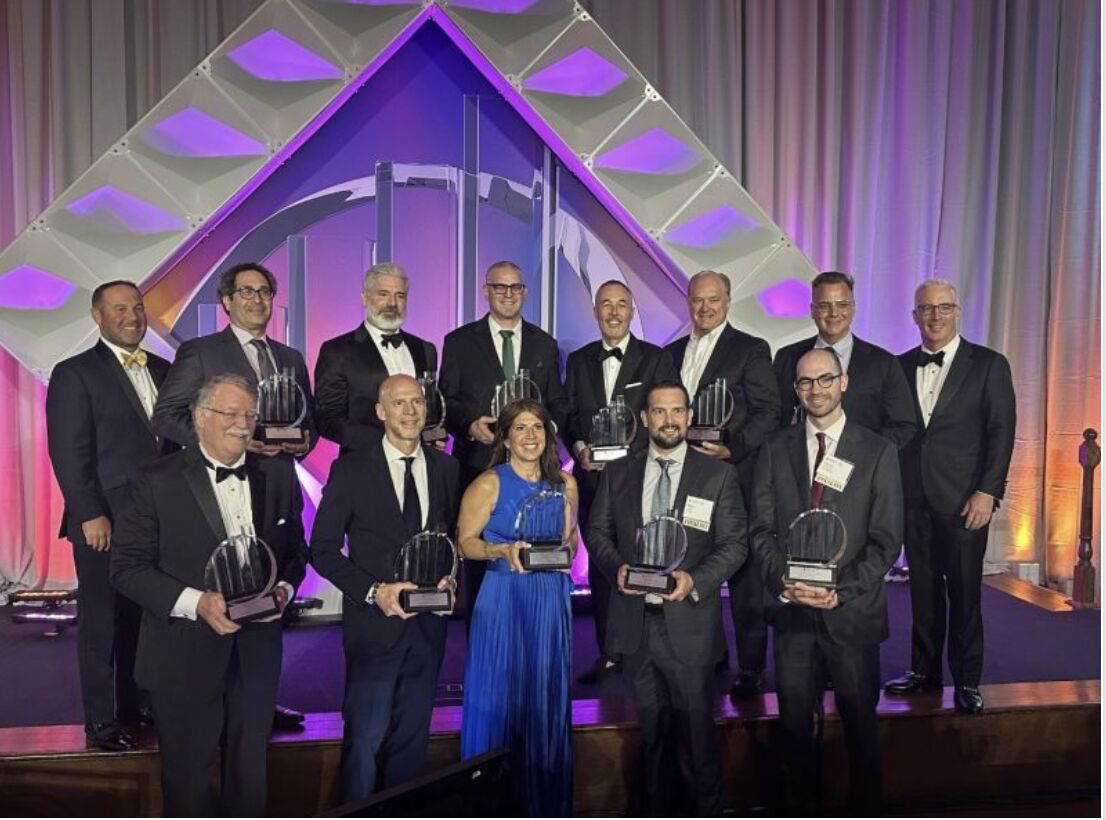
In June 2025, EY named Hotz one of its Greater Philadelphia Entrepreneur Of The Year award winners. In the group photograph, he is easy to find: the gray-haired executive in the back row without a necktie. A commenter congratulated him for bringing a “California vibe” to formal Philadelphia. Hotz used his own post to redirect the honor toward the vybe team and nine years of their work.
The joke and the credit-sharing both fit. The brand has always offered a little informality in a category that can feel rigid. Yet the ease is supported by serious operating discipline. Hotz now also sits on the board of CareATC, returning in another form to the employer-based model that shaped much of his earlier career. Mentor, investor, director and chief executive are not separate identities so much as variations on the same role: organize people and resources around a useful promise.
What scale cannot automate
Hotz's career can be read as a long argument for management as a form of hospitality. It begins with respect for expertise he does not claim to possess. It continues through careful attention to the environment in which that expertise reaches people. And it ends, if the work is done well, with a business sound enough to repeat the encounter tomorrow.
The visible artifacts are lively: the name, the colors, the storefronts and the award photograph with one open collar. The real work is quieter. It is the mapped journey. It is a location chosen because a neighborhood was overlooked. It is a promise translated into staffing, systems and explanations. It is the recognition that “feel better as soon as you walk in” must still be true an hour later.
Sixteen locations prove that a format can travel. They do not, by themselves, prove that a feeling can. That is the sharper test Hotz designed for his company, perhaps accidentally, when he placed the promise at the door. The first five minutes are small enough to overlook. They are also where the whole enterprise introduces itself.