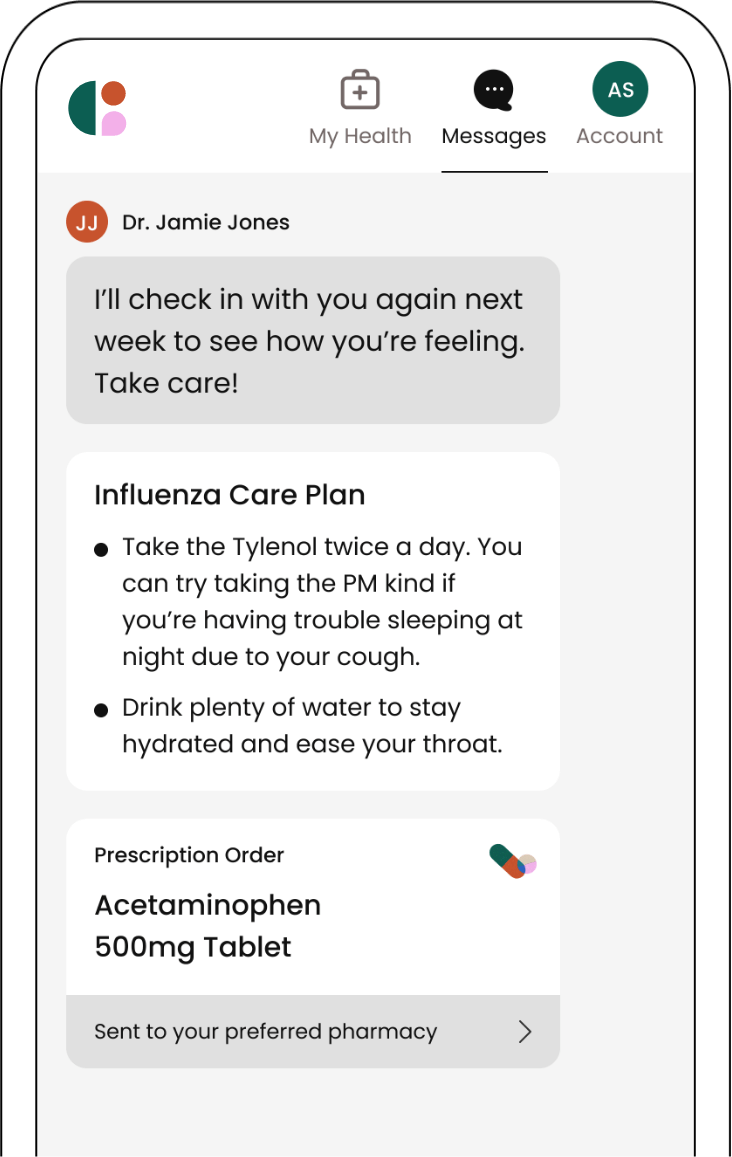
A person with a stubborn cough does not need a keynote about artificial intelligence. They need to know whether the cough matters, whether they can keep working, and what to do tonight. The ordinary route can involve a search engine, an appointment queue, a form that asks the same questions twice, and perhaps a bill that arrives long after the cough has gone. Curai Health's wager is that this journey can begin with a text message - and that the hard work can happen out of sight.
- Curai offers text-first virtual primary and urgent care with licensed clinicians.
- Its AI gathers context and supports clinical work; providers make the diagnosis and treatment decisions.
- Patients can use Curai directly or through partners such as Tufts Medicine, Priority Health and Rightway.
- The revealing lesson: a useful clinic needs sound workflows, not merely a clever chatbot.
The acquisition that came with a headache
Curai was founded in 2017 by Neal Khosla, Xavier Amatriain and Neil Hunt, a trio with experience in machine learning and consumer software. Their first question was grand: could software stretch scarce medical expertise far enough to make good care affordable? The answer began in a decidedly unglamorous place. In 2018, Curai acquired First Opinion, a service where patients could already talk to a care team by chat. It had users, a working product and an existing habit: people asking health questions in plain language.
It also had an old web stack, an Objective-C iPhone app and infrastructure that Curai's engineers later described as vulnerable to downtime. Curai faced a choice: move the acquired users onto its young platform or repair the product people already used. It chose the repair. The team moved the stack to cloud infrastructure and rebuilt the front ends with React and React Native. The migration was not spotless - an engineering account describes lost Redis data during the move - but it left Curai with a sturdier service. Less than a week after the port, the previous hosting provider had an outage of nearly 12 hours.
That episode is a compact description of healthcare technology. A new algorithm can be impressive in a demo. A patient whose message disappears during a migration has no reason to be impressed.

A clinic is more than a reply
Today Curai's service covers routine primary and urgent care: questions about symptoms, treatment plans, prescriptions, lab orders, referrals and follow-ups. Its care team can respond at any hour, while the availability of a particular doctor varies by state and schedule. Some needs remain stubbornly physical. A text thread cannot listen to a chest or perform a procedure. Curai's model depends on recognizing that boundary and directing people to in-person care when needed.
For clinicians, the product is a workspace as much as an app. AI can help gather a history, suggest a next question, organize notes and surface medical information. The patient sees a conversation; the clinician sees a structured picture forming behind it. Curai's current legal terms are explicit about the line of responsibility: licensed providers make diagnosis and treatment decisions, and clinical AI output is reviewed. That line matters more than the familiar promise that an algorithm will save time. It says who is accountable when the case turns out to be complicated.
Describe a concern in text, answer follow-up questions, and stay in the same conversation for care planning.
Review the context, decide what the symptoms mean, and prescribe, order, refer or escalate as appropriate.
“One of the biggest things we’ve learned over the past three years has been the value of workflows over technology.”Neal Khosla, on Curai's model in 2020
The price of an easy entrance
Curai initially sold care directly to consumers, then used a $27.5 million Series B in 2020 to push into partnerships with payers, employers and public-sector organizations. That shift solves a distribution problem. A patient may never search for a new clinic app. They will open the health plan app they already have, or the portal where their test results arrive. Curai can become the care service behind that familiar door.
The examples are concrete. Tufts Medicine connected Curai to its MyTuftsMed portal for patients in Massachusetts and New Hampshire; a patient can be routed to text-based virtual care and then back into Tufts' in-person network if necessary. Rightway put Curai urgent care inside its member app, with Rightway nurses coordinating the practical aftermath - prescriptions, imaging and referrals. Priority Health sponsored free virtual visits for uninsured adults in Michigan, a program launched in 2024 and extended into 2025. These are different customers buying the same underlying proposition: more timely clinical capacity without building a text-first clinic from scratch.
What did it cost the patient? The answer depends on the door. Curai's general FAQ lists a $29 monthly membership, and some employers subsidize access. A newer patient page advertises free access to its health assistant and clinician connection. Priority Health's Michigan program made eligible visits free for its specified period, but prescriptions, labs and care beyond the virtual visit could still cost money. Partner contract prices are private. “Affordable care” is easiest to say at the front desk; the full bill is a more exacting test.
The useful ambition is narrower than the slogan
Curai's founders talked about medical expertise for everyone on the planet. The operating business, for now, is a US virtual clinic and a set of integrations with American care organizations. That is still a large task. The company works in a crowded space, alongside video telehealth, nurse lines, in-person primary care, Teladoc and One Medical. Its distinction is the combination of text as the default interface, care that can unfold asynchronously, and AI placed inside a clinician's workflow. A video visit still asks patient and doctor to arrive at the same moment. A thread lets the work move in smaller pieces, though urgent problems still require prompt escalation.
The company has also treated research as part of its product culture. A 2024 Curai research update listed 21 peer-reviewed papers on medical language and decision support. Cofounder Amatriain has described the early data problem: without credible medical knowledge and clinical records, a promising AI system would have little to learn from. Partnerships with institutions such as Massachusetts General Hospital, Vanderbilt and Stanford helped the team begin. By 2022, he was writing about the company he had not expected to build: a nationwide care operation, its own clinician software and a distributed team. He stepped back from the CTO role that year, remaining an adviser and board member.
What another care team can borrow
- Start with a problem patients already bring to you in their own words.
- Give clinicians a better workspace before promising an autonomous doctor.
- Make the handoff to labs, pharmacies and in-person care part of the product.
The model has clear limits. Text is well suited to many routine questions and follow-ups, but it is a poor substitute for an exam when the body itself must be checked. AI support needs careful review, and the speed advantage can vanish if referrals and records do not connect. Curai's Rula partnership, which gives its patients a path to mental health providers, is a small recognition of that truth: good primary care is measured partly by knowing where the conversation should go next.
There is a quiet irony in Curai's history. A company launched around artificial intelligence became more interesting when it learned how much depended on unromantic things: a reliable server, a readable patient history, a clinician with time to think, a referral that actually lands. The patient with the cough may never see any of it. Ideally, they simply get a useful answer, and someone checks back tomorrow.
Explore Curai