A laser printer is an unlikely family heirloom for a staffing company. Yet the machine John H. Chuang and his college friends bought in 1986 explains more about his career than a polished list of executive appointments. It cost $5,000. It made attractive pages. And it brought customers close enough for the founders to hear what they needed next.
Chuang was at Harvard with Mia Wenjen and Steve Kapner. The three taught themselves desktop publishing, using Macintosh computers and PageMaker to produce a political magazine. They also won work typesetting the Harvard Business School student newspaper. There was money to be made helping people put words on paper without the laborious production process that had come before.
Their business, Laser Designs, offered access to computers and printing in Harvard Square. The equipment was valuable because relatively few people had it. The more interesting scarcity emerged when local businesses acquired Macs of their own. Having a machine on the desk did not mean someone in the office knew how to use it. Customers began asking for help. A printing customer could become a staffing customer without changing the problem very much.
- 1986Laser Designs
Desktop publishing - 1988MacTemps
Macintosh staffing - 1999Aquent
Work and creative services
An education with a payroll attached
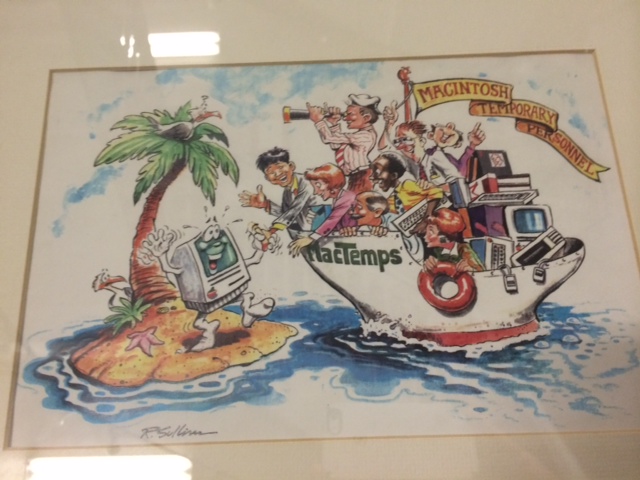
The founders followed those requests into temporary staffing for Macintosh users. The name MacTemps practically explained the service before a salesperson opened their mouth. It was a narrow proposition, which made it intelligible: a company needed somebody who understood this particular computer, and here was a business organized around supplying that person.
The work was hardly abstract. Early on, Chuang and his partners took assignments themselves while trying to run the business. The owners were also the available labor. That arrangement gave them an unusually direct view of both sides of the transaction. They had to find the customer, understand the task and then turn up capable of doing it.
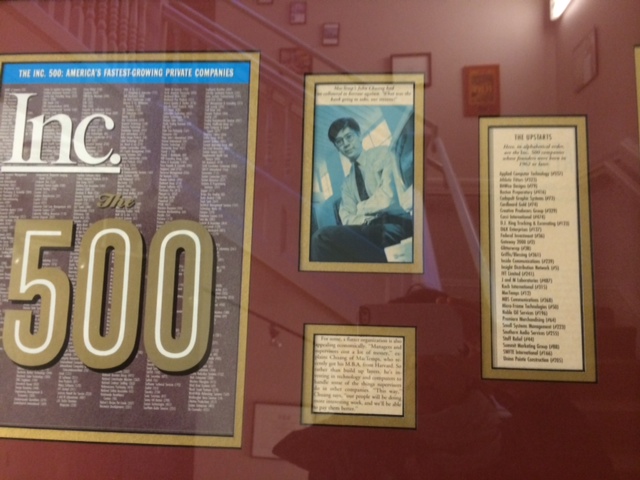
Chuang completed his Harvard undergraduate degree in 1987 and an MBA at Harvard Business School in 1992, continuing to serve as CEO. Wenjen and Kapner were pursuing business degrees too. Studying how companies worked while managing one gave the lessons an immediate deadline. MacTemps reached number 12 on the 1992 Inc. 500 list. The small specialist had become a business with offices across cities and countries.
A name with room to move
The difficulty with a beautifully descriptive name is that eventually it can describe too little. As the business expanded beyond Mac specialists, MacTemps became a reminder of an earlier boundary. In 1999, the company became Aquent. Its work encompassed independent professionals in design and technology, with both contract and permanent placements.
By October 1999, it had 41 offices in 10 countries and had placed more than 35,000 professionals. Those figures belong to that moment, when the commercial web was making new kinds of expertise valuable. Aquent was finding work for people whose job descriptions were changing along with the tools they used.
The internet boom also brought the internet bust. Chuang responded by acquiring struggling businesses and broadening what Aquent could offer. By 2003, its activities included running creative departments for corporate clients such as Campbell Soup and Capital One. Providing a person for an assignment had grown into taking responsibility for a team's work. That progression helps explain the place of Aquent Studios in the company today.
The Corolla in the company story
Chuang's personal spending offered a different picture from the company's international expansion. In 2003, he was still driving the 1987 Toyota Corolla he had owned since college. Aquent had no private office for its chief executive. Earlier cost controls had included Motel 6 stays and asking employees to provide their own pens. The stationery cupboard, apparently, was no place to become extravagant.
“Spending money is not very impressive,” he said. It is a revealing preference for an entrepreneur whose work repeatedly involves deciding which expensive things are useful. A printer could justify a serious purchase. A grander car apparently had a less persuasive business case. The anecdote is firmly a snapshot of 2003, rather than a claim about what occupies his driveway today.
There is a practical tension here. Frugality can fund experimentation, but experimentation still costs money. Chuang has pursued both. His record includes investments beyond staffing and a consumer computer venture, alongside the steady work of building Aquent. Saving on the visible trappings of success left plenty of room for ambitions that were considerably less modest.
“Spending money is not very impressive.”John H. Chuang, 2003
The computer that wanted a place in the living room
In 2009, Chuang introduced the litl Webbook, a $699 computer conceived around everyday home use. Its screen could fold into an easel position. The device treated browsing and viewing as activities that might belong on a kitchen counter or in a shared room, rather than only at a desk.
The idea grew from watching his family use computers. He spent almost three years developing it and financed the venture himself. The design question was specific: could a computer make web content easier to enjoy without asking its owner to become absorbed in maintaining the computer? A two-year money-back guarantee gave buyers an unusually long invitation to decide.
Litl also looked beyond the laptop shape. In 2010, Chuang previewed an interface intended to bring web experiences to television, including applications people could enjoy together. Hardware, software and the setting in which someone used them all mattered. The venture sits comfortably beside his staffing work in one respect: buying a tool and finding it useful are two different events. A business can live in the gap.
One dollar, another hiring problem
His involvement with Angie's List took him into a different kind of matching business: helping consumers choose service providers. He joined its board in 1996 and became board chair in May 2014. By then, the company reported more than 2.6 million members and nearly 50,000 participating providers.
On becoming chair, Chuang asked to reduce his annual director compensation to $1. The company agreed. It was a small numerical detail attached to a substantial role, and it fits the earlier Corolla story without requiring much embroidery. He had been involved for 18 years before taking the chair.
The connection with Aquent is easy to understand. Both businesses deal with decisions people make under imperfect information. A résumé or a listing can tell a buyer something. The consequential question is whether the person will do the work well. Chuang's career repeatedly returns to that uneasy interval between a promising description and an actual result.
A recruiter still has to earn the match
His enthusiasm for technology has included a willingness to describe when it disappointed him. In the late 1980s, Aquent built an elaborate HyperCard database for matching candidates and clients. The candidate profiles went well beyond skills. The system's sophistication became part of the sales pitch, but clients wanted suitable people and valued the recruiters' judgment.
That experience makes his later recruiting technology work more interesting. The task remains difficult even when computing improves. In 2019, Aquent introduced Book, a portfolio search tool using image recognition and natural language processing. It applied more than 24 million image and object labels, allowing creative work to be found by what appeared in it as well as by text.
The aim was to make portfolios discoverable without requiring every creative professional to label everything manually. In this case, the machine could shoulder part of the cataloguing work. A recruiter still faced the more contextual question of whether the person behind the portfolio suited the assignment. Better search changes what can be seen; the hiring decision carries its own responsibilities.
An office can be a very large search filter
Chuang has also questioned how geography limits the available workforce. In 2020, he described a Cleveland employer whose team included people in Michigan, Illinois and Raleigh. A company accustomed to hiring locally had access to a wider group through remote work. The example was ordinary enough to be useful: three people, three places, one employer.
At a 2021 CNBC discussion with General Assembly CEO Lisa Lewin and moderator Contessa Brewer, he emphasized people's desire to learn and develop. Remote work expanded the choice of employers. Companies had to consider the opportunities they offered employees, including learning new skills as technology changed the work itself.
His management instincts also show up in former colleague Chris Moody's account of a product meeting. Faced with poor customer feedback from an email, Chuang wanted colleagues to call customers or visit them. The technology executive was asking for more human effort. A cheap message could be easy to send and expensive in what it failed to discover.
The next balance sheet includes carbon
The question of where people work eventually became part of Aquent's environmental program. Chuang has advocated changing operations as well as investing in cleaner energy. Aquent's current leadership biography records that the company reached net-zero carbon status in 2024, helped by its virtual-first model and sustainability initiatives.
The further ambition is to offset the company's historical footprint back to 1986. Aquent has invested directly in solar projects, including a Maryland facility purchased in 2024 and a project at an Ohio manufacturing plant. The company puts the combined annual production capacity of its two largest projects at 8,098 megawatt-hours. Capacity is a description of what those installations can produce, rather than a running total of electricity already generated.
Today, the Aquent family includes Studios, Scout, RoboHead and Skill, bringing creative services, recruiting and software into the same group. Chuang remains founder and CEO of the parent company. The equipment has changed considerably since Harvard Square. The useful habit is still recognizable: notice where a customer gets stuck, then consider whether the business ought to move there.
Keep following the work
A few places to continue with Chuang’s work, conversations and company history.