The encore nobody asked for, except the patients
Most founders who reach a billion-dollar outcome buy a boat. Sam Whitaker went back to the exact problem he had already solved - and decided he'd only solved half of it.
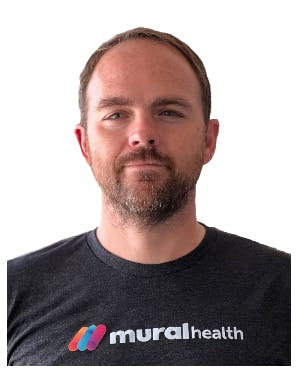
The company is Mural Health, founded in 2022 in the Philadelphia suburbs with co-founders Jason Dong and Shawn Milochik. Its flagship platform, Mural Link, does something the clinical research industry has spent decades treating as an afterthought: it puts the trial participant first. Payments arrive without fees. Rides to the clinic are booked through Uber and Lyft without anyone fronting cash. Participants message site staff in-app, and they get to rate their experience - data the sponsor can finally see in real time, across every site in a study.
That last part is the quiet revolution. For the first time a study sponsor can watch satisfaction and retention as they happen, spot the participant about to drop out, and fix the problem before the person walks. In an industry where a single dropout can cost a trial dearly, knowing who is unhappy before they leave is close to magic.
The pitch is almost suspiciously simple. Treat the person generating the data like the customer, and everyone else - the site, the sponsor, the science - benefits downstream. Whitaker has signed three of the top 15 global pharmaceutical companies on that logic, plus biotechs and research sites, and raised an $8 million seed round led by Bessemer Venture Partners in 2023.
A small plastic card in nearly every trial in America
Rewind to 2008. Whitaker co-founds Greenphire and invents the ClinCard - a reloadable debit card that lets research sites pay participants in real time. It sounds mundane. It was not. Before the ClinCard, paying a trial participant could mean paper checks, weeks of delay, and people quietly dropping out because the reimbursement never showed up. The card became the default across the industry.
Greenphire grew for thirteen years. It passed through The Riverside Company, then Thoma Bravo, and crossed a billion dollars in value - on roughly $2.2 million of outside investment. That ratio is the kind of number investors frame on a wall. In 2025 the company merged with Suvoda. Whitaker, by then, had already moved on to do it again.
Before any of it, the resume reads like a riddle: a Bachelor of Arts in philosophy from the University of Pennsylvania, investment banking at HSBC and Legg Mason, a product role at Ecount, a stint as CTO of Signant Health. Philosophy to finance to the inside of every clinical trial in the country. He is also an angel investor with Project Mayhem Ventures, one of the funds that later backed Mural Health.
Greenphire's capital efficiency is the stat that explains the man. He doesn't burn money to manufacture growth - he finds the friction nobody else thinks is worth fixing, removes it, and lets the value compound. Then he does it again, on purpose.
A friend, a diagnosis, and a tax bill that shouldn't exist
In 2016 Whitaker's close friend Harley Jacobsen was diagnosed with ALS. The one option to buy more time with his family was a clinical trial. The travel, the lodging, the child care came to nearly $20,000. The sponsor covered a fraction - and then the tax code treated those payments as ordinary income.
Here is the part that should make you put down your coffee: under current law, payments to trial participants beyond direct expense reimbursement count as taxable income reported to the IRS. For the estimated 110 million Americans on social welfare programs, reporting that income can disqualify them from the benefits they live on. So the people who most need access to experimental treatment are the people the system quietly pushes out.
In October 2023 Whitaker drafted a letter to Congress. That letter became the Harley Jacobsen Clinical Trial Participant Income Exemption Act - a bipartisan bill to exclude payments to participants and caregivers in all clinical trials from taxable income. Reintroduced in Congress with sponsors on both sides of the aisle, it carries the name of the friend he lost. For a founder, naming a federal bill after a friend is not a marketing move. It is a debt being paid.
Whitaker's argument, in one chart
"There's no reason not to use it"
Ask the industry why trials skip emerging markets and the old answer was a shrug: those populations sit on the margin, not worth the operational hassle. Whitaker's whole career is an argument against the shrug. The technology to pay people locally, almost anywhere, already exists. What was missing wasn't capability. It was will.
That is the through-line from the ClinCard to Mural Link to a bill before Congress. Find the friction everyone has decided to live with. Refuse to live with it. The philosophy major turned payments founder keeps asking the same stubborn question - why does it have to be this hard? - and then building the answer.