BREAKING   Ceresti Health raises $11.7M to scale GUIDE-powered dementia caregiver platform TWO ACTS   Digitized pathology, then redesigned dementia care APERIO   1,000+ systems across 35 countries before Danaher acquired it THE PIVOT   Patented a therapy, then walked away from the plan BREAKING   Ceresti Health raises $11.7M to scale GUIDE-powered dementia caregiver platform TWO ACTS   Digitized pathology, then redesigned dementia care APERIO   1,000+ systems across 35 countries before Danaher acquired it THE PIVOT   Patented a therapy, then walked away from the plan
Founder · Engineer · CEO, Ceresti Health

Dirk Soenksen

He keeps finding the person everyone forgot was in the room - and rebuilding medicine around them.

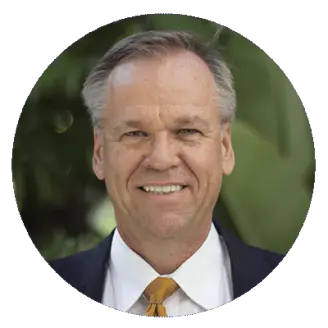
CARLSBAD, CA Dirk Soenksen, co-founder and CEO of Ceresti Health

Same look an engineer gets right before he tells you the obvious thing everyone missed.

The Now

In a diagnosis with two people, he builds for the second one.

Dirk Soenksen runs Ceresti Health, a company in Carlsbad, California with a stubborn idea at its center: when someone has dementia, the most powerful and most ignored tool in the house is the spouse or adult child standing next to them. Ceresti turns that person - the family caregiver - into a trained, monitored, supported part of the care team, and it gets paid to do it through Medicare's GUIDE model.

In August 2025 the company raised $11.7 million to scale the platform. It is the kind of bet that only makes sense if you have spent a career noticing that the official patient is rarely the only one who needs help. Soenksen has built that bet twice.

We observed caregivers getting into an argument with the patient because the patient could not remember their name. We thought, this is not going to work if we cannot make the caregiver part of the solution. - DIRK SOENKSEN, ON THE PIVOT THAT BECAME CERESTI
By The Numbers
2
companies, each built around an overlooked human
35
countries running Aperio scanners at acquisition
$11.7M
raised by Ceresti in 2025
3
degrees: chemistry, electrical engineering, business
Act One · 1990s-2012

The pathologist on a phone book.

In the late 1990s pathologists still leaned into microscopes the way their teachers had. Some, the story goes, sat on telephone books just to reach the eyepiece. Soenksen, an engineer, watched his own kids play Nintendo on bright high-resolution monitors and asked the question that would not let go: why can't microscopists look at computer monitors, too?

The answer took about eighteen months of intense work, much of it starting in a garage. Out of it came Aperio - Latin for "to reveal" - and a scanner that could digitize a tissue slide at half-micron resolution in roughly two minutes, around 900 million pixels of disease rendered as a file you could share.

He named it well. Aperio became the recognized global leader in digital pathology: about 200 employees, a thick portfolio of patents, multiple FDA clearances, and more than a thousand systems installed across 35 countries. In 2012, Danaher's Leica Biosystems acquired it. Four years later he founded the non-profit Digital Pathology Association, building the field's institutions after building its machines.

The Spark

Nintendo, not a microscope

The insight wasn't a breakthrough in optics. It was a parent watching his children look at a better screen than the one doctors used, and refusing to accept the gap.

The Name

Aperio = "to reveal"

A company that took the pathologist's hidden glass world and put it on a monitor, where it could be measured, sent, and seen by more than one set of eyes.
In His Words Why can't microscopists look at computer monitors, too? - THE QUESTION THAT STARTED AN INDUSTRY
Act Two · 2013-Now

A coffee on his last day at Leica.

The day he left Leica, a former Aperio colleague named Kevin Liang - a neuroscientist - invited him for coffee. Liang argued that brain disease was the next great frontier, and talked about growing up with grandparents who had dementia. Soenksen, Liang, and fellow Aperio veteran Mark Wrenn founded Ceresti in 2013 with about $4 million from friends and family. All three had watched a parent or grandparent decline.

The first instinct was the obvious one: treat the patient. They built digital cognitive therapies for tablets and tested them in a memory-care facility. The results were good enough that Soenksen filed for a patent. Then they took the product into homes, where more than 80 percent of dementia patients actually live - and the plan fell apart in the most human way possible.

Overwhelmed spouses arguing with a parent who couldn't recall their name. The engineer did what engineers do when the data contradicts the design. He changed the design. Ceresti stopped building for the patient and started building for the caregiver: education, remote coaching, monitoring, and predictive analytics aimed at catching trouble before it becomes a hospital bill.

ACT ONE

Aperio

  • Overlooked person: the pathologist
  • Fix: put the slide on a screen
  • Scale: 1,000+ systems, 35 countries
  • Exit: Danaher / Leica, 2012
ACT TWO

Ceresti

  • Overlooked person: the family caregiver
  • Fix: train and support the caregiver
  • Engine: CMS GUIDE reimbursement
  • 2025: $11.7M raised
The Record

A line drawn through two industries.

LATE 1990s
Eighteen months of work, much of it in a garage, produce a high-speed slide scanner. Aperio is born.
1999 - 2012
Serves as President, CEO and Chairman, building Aperio into the global leader in digital pathology.
2012
Aperio is acquired by Danaher / Leica Biosystems.
2013
Co-founds Ceresti Health with Kevin Liang and Mark Wrenn; raises about $4M from friends and family.
2016
Founds the non-profit Digital Pathology Association.
2018
Ceresti spotlighted by Inc. for its caregiver-first approach to dementia.
2025
Ceresti raises $11.7M to scale its GUIDE-powered caregiver platform.
Footnotes & Quirks

Things that don't fit on a slide deck.

01

Three degrees, three disciplines: A.B. in chemistry from Bowdoin, a master's in electrical engineering from Penn, and an MBA from Pepperdine.

02

His first Ceresti product worked well enough to patent. He walked away from the strategy anyway - because it failed in real living rooms.

03

The spark for an entire industry was watching his kids play Nintendo on a sharper screen than doctors had.

04

Both of his companies reframed a disease by focusing on someone other than the obvious patient - first the pathologist, then the caregiver.

You need to integrate the digital-slide information with a hospital's laboratory information system, with the radiology system, and other systems. You will need all of those interfaces to enable sharing. - DIRK SOENKSEN, ON WHY HARD THINGS TAKE YEARS