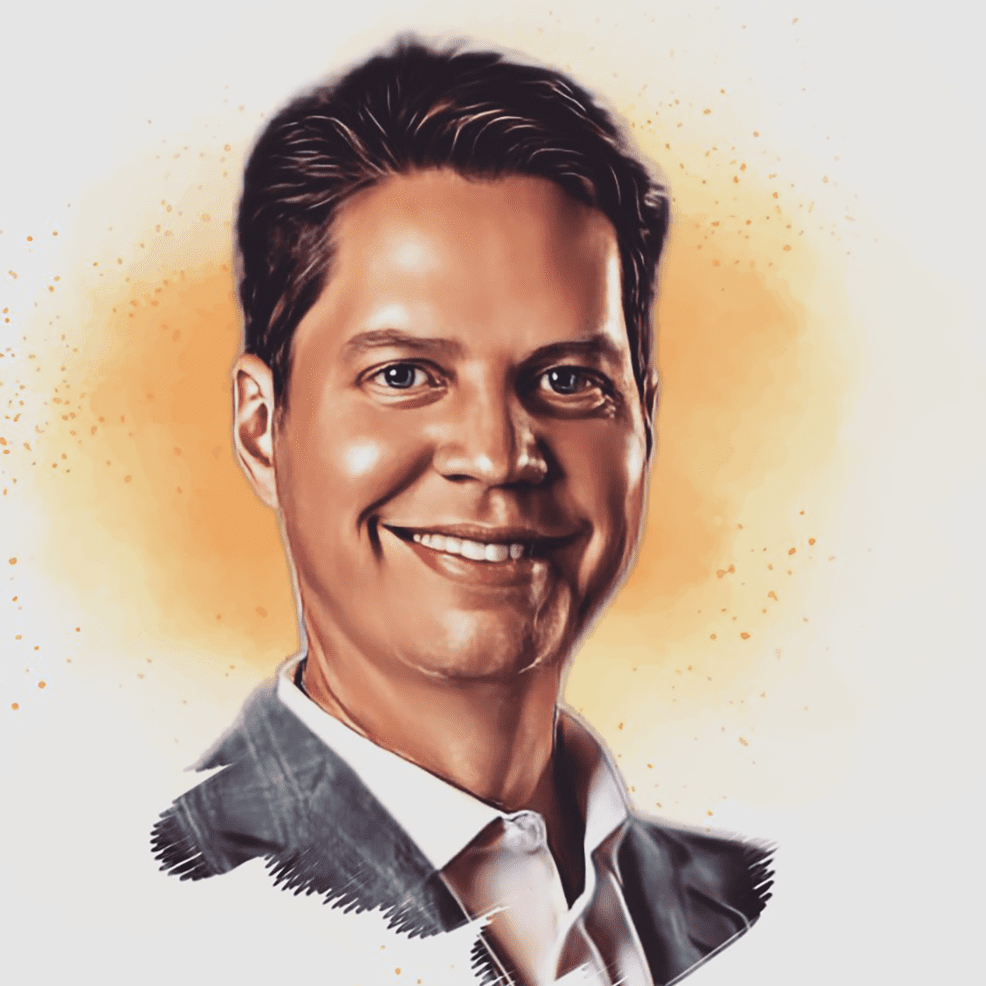
Rebuilding the interface to care, one screen at a time
Eric Rock spends his days on a deceptively simple proposition: the most powerful health-monitoring device most people will ever own is already in their pocket. As co-founder and CEO of Percipio Health, the Dallas company he launched publicly in early 2025 with $20 million in Series A funding, he is trying to turn an ordinary smartphone - no cuffs, no kits, no hubs - into a tool that reads a person's whole health and flags trouble before it becomes a crisis.
Percipio's platform uses a single mobile app to collect what Rock calls "whole-person health signals" every day. Vision-based AI reads vitals and medication use through the camera. Vocal biomarkers pick up signals from the sound of a person's voice. The goal is not a prettier dashboard but a different economics of care: assessments cheap enough to run across an entire population, not just the sickest and best-insured slice of it.
"After two years of intensive R&D, we are thrilled to unveil Percipio Health, breaking through the high-cost barriers that have prevented remote patient monitoring from reaching broader populations," Rock said when the company came out of stealth. It is a pointed line, because Rock knows those barriers intimately. He built one of the platforms that ran into them.
Four companies, one recurring problem
Rock is a serial entrepreneur whose career reads like a tour through the last three decades of how technology meets everyday life. His first company, ProHost, built the first restaurant table management and reservations system - the kind of software that OpenTable would later make ubiquitous. OpenTable acquired it.
He moved next into hospitals with MEDHOST, the first touchscreen electronic medical record built for emergency departments. It introduced ideas that are now standard equipment in health systems: patient self-service kiosks, geographic bed and facility views, and multi-touch data visualization. At its peak MEDHOST served more than 500 hospitals and roughly 10 million patients a year.
In 2009 he founded Vivify Health, one of the first cloud-based remote care platforms connecting providers to patients through wireless mobile devices. Vivify grew into one of the largest remote patient monitoring platforms in the country, used by organizations representing more than 800 hospitals and health plans. In 2019 UnitedHealth Group's Optum acquired it, and Rock stayed on as VP of Digital Strategy, scaling the platform he had built.
Starting over, on purpose
Most founders with an Optum exit behind them do not sign up for two more years of research and another company. Rock did. Co-founding Percipio Health in 2022, he set out to remove the single thing that had capped every prior remote-monitoring effort: the cost and friction of hardware. If the phone can do the sensing, the argument goes, then monitoring stops being a premium service and starts being something a health system can offer to everyone on its rolls.
"With our advanced AI health signals, we deliver instant health risk assessments, proactive health monitoring, and comprehensive virtual care at scale," Rock said at launch. He frames it less as a product and more as a first: "This is the first-ever opportunity to represent scalable care to an entire population and also scalable health risk assessments to identify those that have the need for those services."
The pitch has drawn serious backing. Percipio launched in North Texas with its $20 million round and a partnership with UPMC Enterprises, the venture arm of one of the country's larger health systems - a sign that hospital operators, not just investors, see something in the approach.
The TimelineFrom reservations to real-time risk
Worth knowing
- The company he built before healthcare, ProHost, was an early ancestor of the OpenTable-style reservation systems now taken for granted.
- His platforms have touched hundreds of hospitals and millions of patients across three decades.
- Percipio's core claim is that the medical device is the smartphone people already own - no extra hardware to ship or charge.
- He studied at both Oklahoma State University and MIT Sloan, pairing a business foundation with formal work in artificial intelligence.
- Rather than rush Percipio to market, he spent roughly two years in R&D before letting anyone see it.