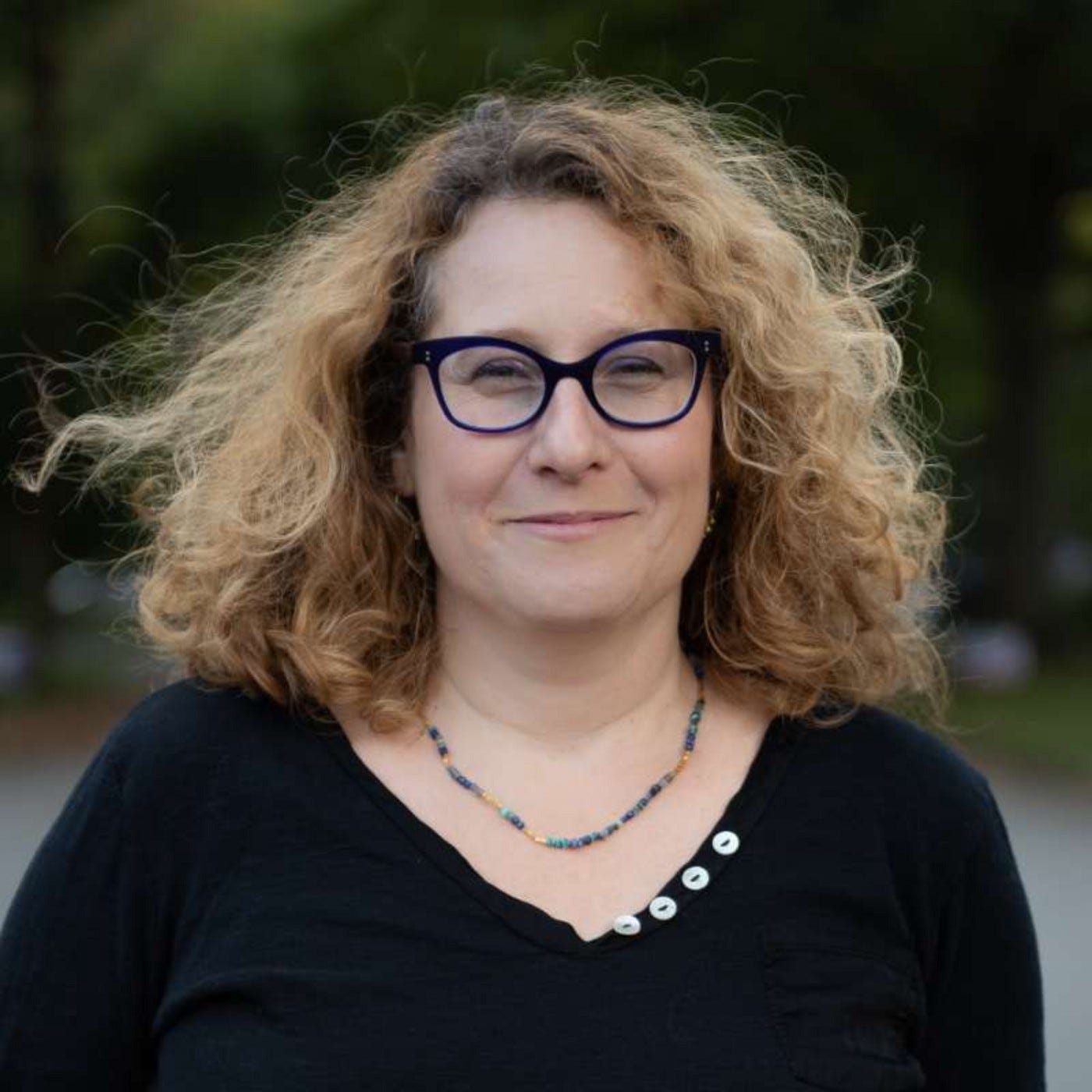
A search engine for the treatment you did not know you could get
Here is the problem Tzvia Bader spends her days on. There are on the order of 100,000 oncology clinical trials running in the world at any moment. A person who has just been told they have cancer has, functionally, no way to search them. They have a diagnosis, a doctor whose knowledge stops at the edge of what that doctor happens to know, and an insurance network that quietly decides which options are on the table.
Leal Health - the New York company Bader co-founded in 2017 as TrialJectory and renamed in 2023 - is her answer to that. A patient, or a family member, or a caregiver fills out a questionnaire. Machine-learning models read it against the FDA trial and treatment databases and hand back a ranked list of the options that actually fit. The service is free to the patient. The bill is paid by the pharmaceutical companies who need to find the right people for their trials.
There is a small mechanical elegance to that arrangement worth pausing on. Pharmaceutical companies spend enormous sums looking for the right participants, and trials routinely stall because the right people never learn the trial exists. Bader sits in the middle of that gap. The patient wants options; the sponsor wants participants; the matching is the same act viewed from two ends. She built a company that gets paid to do the introduction, and the person who most needs it never sees an invoice. It is the kind of structure that sounds obvious once described and almost never gets built, because the tempting move is always to charge whoever is most frightened.
That last detail is the whole design, and it is worth sitting with. The obvious way to build this company is to charge the desperate person. Bader built the other one. The people she set out to help are never the customer, which means the incentive to help them and the incentive to make money point in the same direction. Alignment is usually a slogan. Occasionally it is just an org chart.
Dare to think differently, be agile and change your mode of operation.
By the time the company had helped more than 6,500 patients understand their options, it was still called TrialJectory. The rebrand to Leal Health came with a wider ambition: not just clinical trials but a single point of access to FDA-approved treatments too. In 2024 the company layered generative AI onto the matching and rolled out an analytics platform aimed at helping pharma companies get more patients into trials in the first place. The reported funding now stands around $53.7 million, with a Series B closing in 2024.
The generative-AI turn is the part everyone wants to talk about, and it is also the part Bader is least starry-eyed about. She was interested in machine learning applied to messy medical data long before the current wave made it fashionable, and her framing is stubbornly practical. The point of the model is not that it is clever. The point is that it collapses a haystack of a hundred thousand studies into a shortlist a single person, on the worst week of their life, can read and act on. That is the whole job. Everything else is decoration.
The system failed her family twice, twenty years apart
Most founder origin stories are retrofitted. This one is load-bearing. About twenty years before she started the company, Bader's mother was diagnosed with terminal cancer - Non-Hodgkin lymphoma. Conventional treatment failed, and the family turned to clinical trials, and then ran into the thing Bader would later spend a decade dismantling: it was nearly impossible for people with no medical background to navigate. By the time they found a trial that fit, her mother's condition had already worsened. She died.
Thirteen years after that, in December 2013, Bader herself was diagnosed with malignant melanoma. She survived it. What she found, going through it, was that the maze had not been fixed. The same broken search, the same dependence on whichever doctor you happened to have, the same patients left to do a full-time job of research at the worst moment of their lives. So she went back and fixed it. There is a version of this life where you grieve and move on. Bader took the other one.
A change is coming. Women are stronger than they think. Don't be intimidated by the challenge and grab it by the horns.
Fake news, family calendars, cancer trials
Read Bader's resume cold and it looks like three different people wrote it. She held senior roles at Frutarom Industries, at NICE Systems, and at Nasdaq-listed Amdocs, where she headed a global business unit responsible for product growth strategy and global sales and marketing. She founded Vocativ, a startup built to identify fake news on social media using advanced analytics. She founded KIDDOapp, a family-scheduling app for iOS and Android. Then oncology.
The pattern only resolves from the inside. Bader calls herself "a geek from the day that she was born," someone for whom technology was interesting from a young age. What actually fascinated her, as AI matured, was a narrower thing: taking a data set too large for any human to hold and turning it into a decision one person could act on. Fake-news detection is that. Trial matching is that. The industry keeps changing; the skill does not. She just kept aiming it at whatever hurt most, and eventually that was cancer.
She holds an MSc from the University of Nottingham in the UK. She is a mother of three daughters. In the early days the company ran on about seven people split between New York and a research team in Tel Aviv - a founder's-eye view of two cities and a seven-hour gap. None of this is the kind of detail that ends up on a pitch deck, which is exactly why it is worth knowing.
The Israeli thread runs through the whole story. Before oncology she headed a global business unit at Amdocs, a Nasdaq-listed company with deep Israeli roots, and worked at NICE Systems, another pillar of the Israeli tech scene. She is active with the Israeli American Council. The company she built kept a foot in both worlds - a commercial and go-to-market operation in New York, and the research muscle in Tel Aviv - which is a fairly common shape for founders who move between the two ecosystems, and an uncommonly deliberate one when the product depends on both regulatory fluency in the U.S. and hard machine-learning engineering.
What is striking, laid end to end, is how little of it was accidental. She did not stumble into healthcare; she chose it, against the grain of a resume that would have made a dozen easier moves available. The business-development instincts from Amdocs, the analytics chops from Vocativ, the consumer-product sense from a family-scheduling app - each of those looks, in hindsight, like a component she was quietly collecting for a machine she had not yet named. The naming came from grief, twice. The building came from everything before it.
The patient as CEO of their own case
Bader talks about "emancipation and democratization of access for patients to the best treatments," which is a mouthful, but the idea underneath is sharp. Today the range of treatments a cancer patient can reach is set by three things that have nothing to do with what would help them most: where they live, what their insurance covers, and how much their particular doctor happens to know. Bader wants to delete all three from the equation and let the patient see everything at once.
That is a quietly radical position. It reassigns the decision. It says the person with the disease, not the nearest hospital or the insurance network, should be the one holding the full menu. For a woman who twice watched that menu stay hidden until it was too late, it is not an abstraction. It is the specific thing she is building software to force into existence.
Ask her what she is proudest of and the number that comes back is not a valuation. It is patients helped - a figure she was already citing in the thousands before the company finished changing its own name. Scoreboards depend on which game you decided to play. Bader picked a hard one on purpose, and she keeps her eye on the only column that made her start.
Advice from a woman running an AI company
Bader has spent time in the interview chair women in her position keep getting put in - the one where you are asked how you cope with being one of few female founders in AI. Her stock answer is three words long: don't be afraid to be different. It reads like a bumper sticker until you line it up against the rest of her career, at which point it reads like a description. She switched industries repeatedly. She built a company on a business model that inverts the obvious one. She walked away from a senior corporate track to work in one of the least glamorous corners of healthcare. Different was never the obstacle she had to overcome. It was the method.
Her advice to executives generally is cut from the same cloth: dare to think differently, be agile, and change your mode of operation. Coming from most people this is the standard motivational filler that conference panels run on. Coming from someone who founded a fake-news-detection startup, a family-calendar app, and a cancer-trial platform in sequence, it is closer to a confession of how she actually operates. She does not appear to believe that a hard problem is supposed to stay hard just because it always has been. Two decades and several industries later, that is the one trait that shows up in every chapter.
She is also, by her own telling, a message-carrier for other women in business, with a habit of blunt encouragement - the sort of "grab it by the horns" line that sounds like a motivational poster until you remember it is coming from a person who twice grabbed the single worst problem in her life and turned it into a company. The gap between saying the thing and having done the thing is where her credibility lives.