Six times, Grace Lee Chen said yes to being a bridesmaid. Six times, that affectionate invitation led to a less affectionate encounter with the dress business. The wedding was someone else’s. The bill, quite reliably, was hers. She had been the friend in her twenties with little money to spare and the friend in her thirties with more room in the budget. Across that decade, the shopping experience seemed stubbornly familiar.
Expensive dresses. Long waits. Shopping that still revolved around physical stores. Made-to-order purchases with little room to change your mind. These were ordinary inconveniences, repeated often enough to become interesting. Chen’s eventual response was Birdy Grey, launched in 2017 with bridesmaid dresses priced at $99. Her education in the category had required no classroom, though it had required several weddings.
There is an unusual tension in the bridesmaid’s purchase. You are buying something personal as part of somebody else’s plan. A dress must work for your body, your budget and a shared photograph. An individual shopper might happily wander. A wedding party needs to arrive at a decision. Chen had lived inside that distinction long before she built a company around it.
The invitation and the invoice
Her starting point was specific. She wanted to make the dress easier to buy online and less painful to pay for. At the beginning, the $99 price was a concise answer to a question women already had. It also gave friends something easy to pass along: here is the dress, here is the price, here is a place we can all look.
The collection allowed colors and silhouettes to be mixed and matched. That choice acknowledged a social reality of wedding parties: friendship rarely assembles a group of people with identical tastes. Coordination can leave some room for preference. The bride could have a palette without requiring every friend to become a duplicate.
Chen’s experience gave the proposition its point of view. She had encountered the awkward parts as a customer. An affordable price meant something concrete to the younger version of herself who had been asked to stand beside a friend. By her thirties, she could spend more, but the extra money had not made the process more appealing. Time had changed her circumstances; the purchase had scarcely caught up.
A writer learns to ship
Before she was selling dresses, Chen was working with words. She began her career as a writer and reporter at InStyle, then worked in fashion and beauty on copy, social media and digital content. Her résumé included Kate Spade, Stila Cosmetics and Kate Somerville. She learned how a consumer brand could have a voice, and how that voice could travel through a screen.
Those skills became unusually practical when the brand belonged to her. Product pictures needed a setting. Ads needed copy. A website needed to make its choices understandable. Chen could do much of that creative work herself. The early company did not have to assemble an entire department before explaining why its dresses deserved a look.
“I love creative, I love visuals. I love copy.”
Grace Lee Chen
The other tasks were physical. She packed and shipped orders from her living-room floor, cut swatches by hand and handled customer service. The person deciding what the brand should sound like was also listening to what shoppers wanted. It is a useful combination, if a rather demanding job description. A dress business has little patience for a founder who would prefer to deal only in concepts.
In the first nine months of 2018, Birdy Grey’s Instagram advertising spend was $10 a day. The company recorded $2 million in revenue that year, with Instagram playing a major role in its growth. The small budget is memorable, but so is the selection of the audience: women already looking for wedding inspiration. Chen brought the dresses into a place where the decision was taking shape.
Her best friend had a different résumé
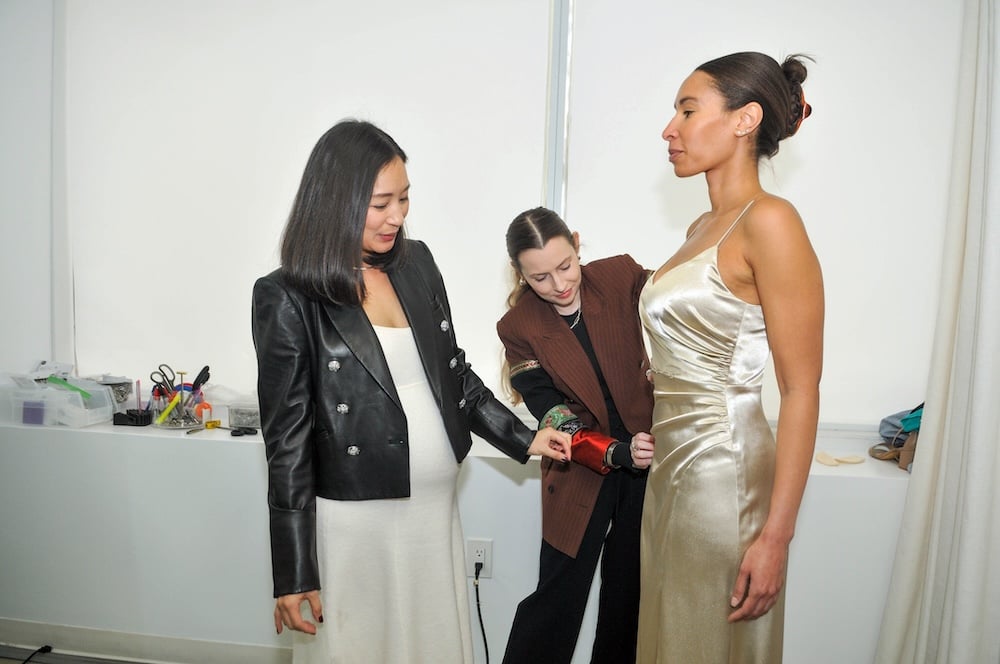
About a year after the launch, Monica Ashauer joined as co-founder and chief operating officer. Ashauer was Chen’s best friend, but her professional background was different: Wharton, McKinsey and retail strategy at Ralph Lauren. Chen brought the creative eye. Ashauer brought the operational experience. Their partnership gave the business more than a pleasant origin story.
It supplied a way to divide the work. Chen could shape the brand and its presentation; Ashauer could concentrate on the machinery behind the purchase. A wedding customer experiences those responsibilities together. The picture makes a promise. The package has to arrive in time to keep it. Neither part enjoys much success without the other.
The friends have discussed their transition into business partners together, including the role of their social community in product and marketing decisions. Their shared history is appealing, but their different expertise is the detail that explains the arrangement. Friendship gave them a relationship to build on. Experience gave each of them something distinct to contribute.
There is a pleasing symmetry here. A company serving people who are showing up for their friends was being built by two friends showing up for each other. The symmetry would mean little if the dresses failed to reach their destinations. Their partnership had to hold up under the ordinary tests of a retail business: orders, inventory, customer questions and the next decision.
A very consequential shade of blue
In spring 2018, customers were asking Birdy Grey for dusty blue. Chen had seen the requests in emails, messages and comments. She put two shades on Instagram and asked followers to choose. Within 24 hours, the team knew which shade they preferred. The company then tested a few styles rather than immediately applying the color across the collection.
That sequence makes her approach visible. Listen first, narrow the question, test the answer. By the time the dusty blue experiment was described in 2020, the shade had become one of Birdy Grey’s leading colors. The conversation had produced something more useful than applause for an attractive photograph. It had helped decide what to make.
“The customer feedback loop is everything.”
Grace Lee Chen
- ListenRequests arrive
- AskTwo shades, one poll
- TestA few dress styles
- ExpandFollow the response
The discipline lies in the small commitment between the poll and the rollout. A preference expressed on a phone is useful information. A purchase is another kind. Trying the shade in a limited group of dresses let the business learn without treating every response as an instruction to fill the warehouse.
For Chen, social media became a working surface. Her early career had taught her how to publish; her own business gave her reasons to ask. Color, fabric and shape were matters customers could discuss from immediate experience. The audience was planning an occasion, and its answers could change the collection. A conversation about blue had a deadline attached.
The dress gets a second invitation
Chen’s interest in the dress continues beyond its first outing. Birdy Grey partnered with The Princess Project to help customers donate dresses for teenagers who need outfits for prom. In 2022, she described that relationship as part of the company from its first day. A dress chosen for one celebration could be useful at another.
She also describes herself as a creative at heart, with satisfaction in seeing an idea move from concept to product or campaign. Her inspiration includes Instagram, Pinterest and YouTube. In the same period, the longtime city resident confessed to enjoying a move to the suburbs after ten years each in New York and Los Angeles. Apparently a person can change her preferred setting without surrendering her interest in a good picture.
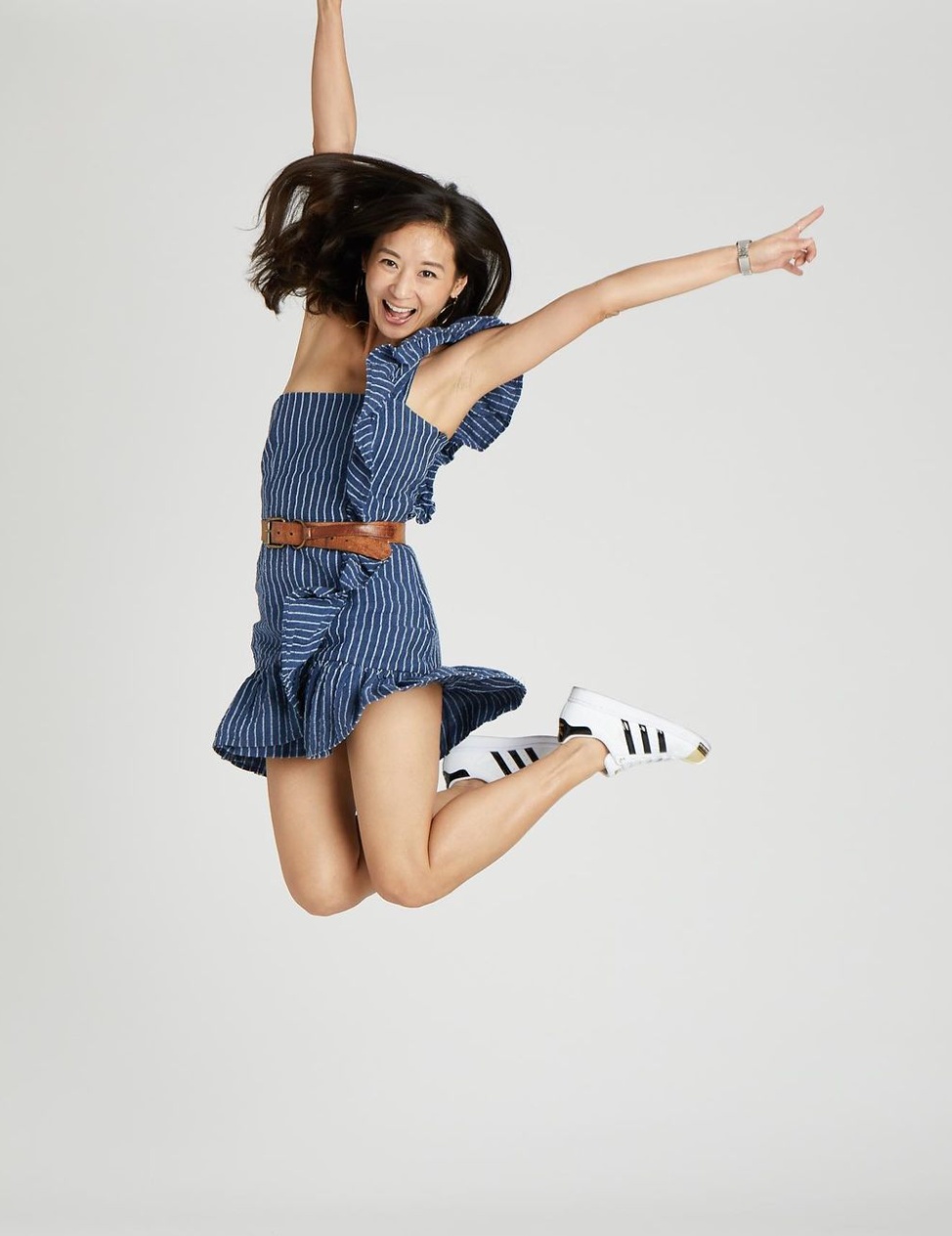
In March 2024, that creative work included a Little White Dress collection with Lauren Riihimaki, known as LaurDIY. The collaboration offered 11 styles under $150 for occasions such as bridal showers and bachelorette parties. Chen singled out a convertible mini with an oversized bow and a removable tulle train, alongside a mini adapted from the brand’s Mia bridesmaid dress.
Those details reveal the pleasure she takes in the product itself. A removable train is a small invitation to change the mood. A familiar bridesmaid shape can become something for the bride. The collection extended the company’s work into the events surrounding the wedding, where customers have another occasion to dress for and another set of choices to make.
Choosing the creative chair
In 2025, Chen announced that Jill Layfield was joining Birdy Grey as CEO. Chen moved into chief creative officer and board leadership. The former reporter who had become chief executive would now concentrate her title around the work that had drawn her toward building a brand in the first place.
Creative leadership remains a hands-on assignment. Her work includes conversations about new styles and colors, photo shoots and decisions with the team about the customer experience. These are the same kinds of choices that existed when she was cutting fabric squares at home, now made inside a business with a much larger reach.
By April 2025, Birdy Grey had passed $100 million in revenue and expanded into groomsmen suits. Chen’s original ambition had been to reach $5 million in sales. The distance between those numbers gives the role change some context. A company that has grown well beyond its founder’s first target has different demands on the people who lead it.
Her 2026 conversation with Jessica Chen on Leading By Example returned to the subjects threaded through that history: customers, creativity, her co-founder and the decision to step away from the CEO position. The next chapter still belongs to the company she started. It simply gives her a different seat at the table.
Six weddings had shown her a purchase that could be easier. Years of editorial work had given her ways to describe the alternative. A friend had brought the skills to help deliver it. Chen now spends her working days on the colors, images and choices behind that original promise. The dress will appear in a photograph. Before then, somebody has to make it a sensible thing to buy.