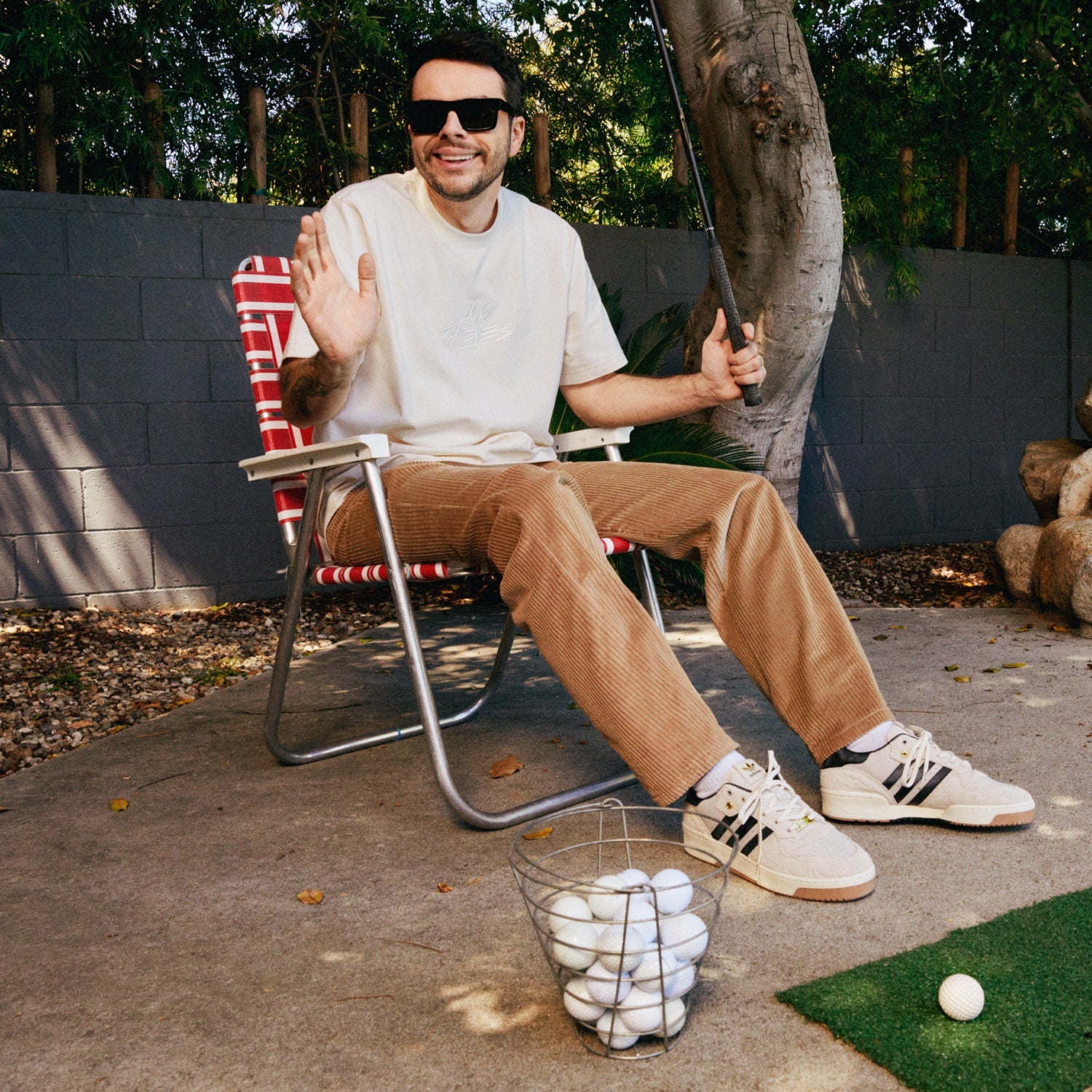
In the photograph, Matthew Haag has a golf club in his hand and a basket of balls at his feet. He looks pleased with the afternoon. Look down, though, and the business becomes visible: the former professional gamer is wearing his own collaborative adidas sneakers. A man famous for Call of Duty has become someone whose name belongs on a shoe. That small migration tells you quite a lot about 100 Thieves.
- Esports teams, creator entertainment and streetwear share one audience.
- A $60 million funding round financed ambitions beyond that core.
- Restructuring brought renewed attention to sponsors and repeat business.
A gamer who wanted a wardrobe
Haag, known as Nadeshot, founded the company in 2017 after playing professionally for OpTic Gaming. His advantage was unusual: he already understood both competition and the audience watching it. Fans recognized the person before they encountered the company.
The adidas Originals collection released in May 2024 included a track outfit, accessories and the Rivalry Nadeshot sneaker. Its off-white upper and gum sole offered a fairly ordinary pleasure: shoes you could wear outside. That mattered. Gaming merchandise could be something chosen for its appearance, with allegiance tucked into the details.
Three doors into the same club
100 Thieves occupies the overlap between an esports organization, an entertainment company and a consumer brand. People can watch its teams, follow its creators or buy its clothes. Those activities offer different levels of commitment. Watching costs time; a jersey costs money; supporting a team can cost an entire evening of nerves.
For customers, the practical offer is straightforward: entertainment to watch and products that make a private interest visible. For advertisers, the offer is access to people who have already gathered around that interest. Its expertise sits in producing gaming content, managing competitive teams and making collaborations feel recognizable to fans. The commercial challenge is to turn recognition into purchases and partner relationships that last.
Alternatives include Team Liquid, Cloud9, FaZe Clan and OpTic Gaming. Each competes for some combination of viewers, players and sponsors. Clothing brings another set of rivals altogether. The distinctive thing about 100 Thieves is the weight it gives fashion alongside competition. A customer might arrive for a hoodie and stay for a match; another might make the journey in reverse.
The price of having more ideas
Expansion had serious financial backing. In December 2021, 100 Thieves announced a $60 million Series C led by Green Bay Ventures at a $460 million valuation. The company said revenue had grown 111% that year. The distinction matters: a valuation expresses a financing agreement, while investment provides capital. Neither number tells you what remains after salaries, production and the rest of the bills.
Higround, the keyboard company acquired in October 2021, gave fans another object for their desks. Juvee put the company into energy drinks. Project X put it into game development; its Fortnite experience, Bank Heist, passed one million players by summer 2023. Each extension had a plausible audience. Each also required people, money and attention that could no longer be spent elsewhere.
By November 2023, management announced layoffs and plans to spin off Juvee and the game studio. John Robinson’s explanation was unusually plain: business growth had fallen behind organizational growth. The observable failure was the mismatch between the company’s size and what it could afford. A popular Fortnite island could coexist with an unaffordable organization. Participation and a sustainable balance sheet were separate achievements.
“We cannot afford as large of an organization as before”
John Robinson, November 2023
The customers already in the room
The expansion also complicated sponsorship. Digiday reported that beverage companies were put off by 100 Thieves owning an energy drink, while existing partners received less attention. Refocusing produced a measurable improvement: company-reported sponsor renewals rose from 50% in 2023 to 75% in 2024. New sponsors increased from 11 to 23. Those figures describe stronger relationships; they do not establish profitability.
Lexus offers a concrete example of what a partner buys. Its expanded 2024 relationship included three customized concept vehicles, an apparel collaboration and presenting sponsorship of the Summer Block Party. A car company could appear in several parts of a fan’s world. For 100 Thieves, one relationship could generate things to film, things to wear and an event to attend.
The jersey cannot promise forever
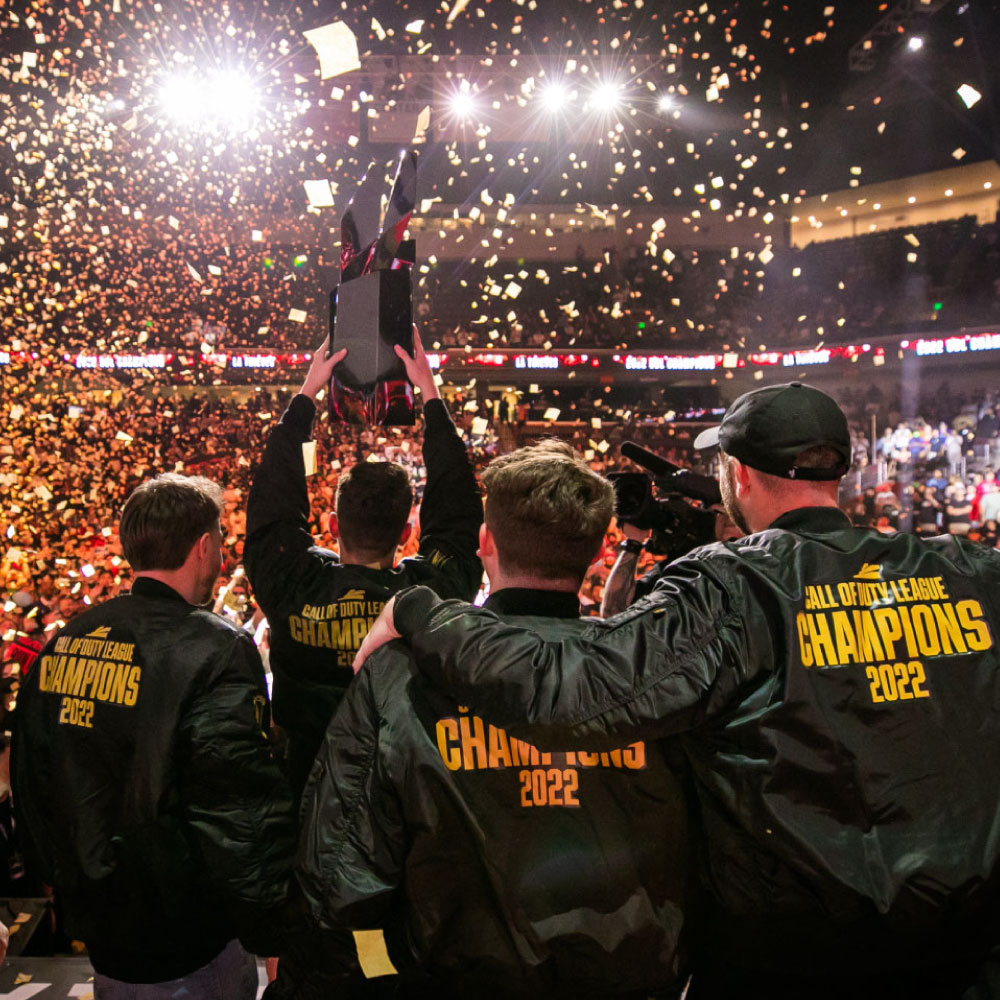
Competitive credibility was real. LA Thieves won the 2022 Call of Duty League Championship; the League of Legends team had won its first LCS title in 2021. Yet trophies did not guarantee permanence. In 2024, 100 Thieves sold its permanent League franchise slot, then competed as a provisional guest in 2025. Its departure announcement explained that Riot Games had selected another long-term partner.
This is a particular constraint of esports: the publisher helps determine the arena in which the team can operate. Fans may attach themselves to years of players and matches, while a business has to reconsider its commitments. In February 2026, 100 Thieves announced entry into Rainbow Six Siege as an R6 Share Partner. The competitive portfolio keeps changing; the brand asks supporters to travel with it.
A hoodie for two worlds
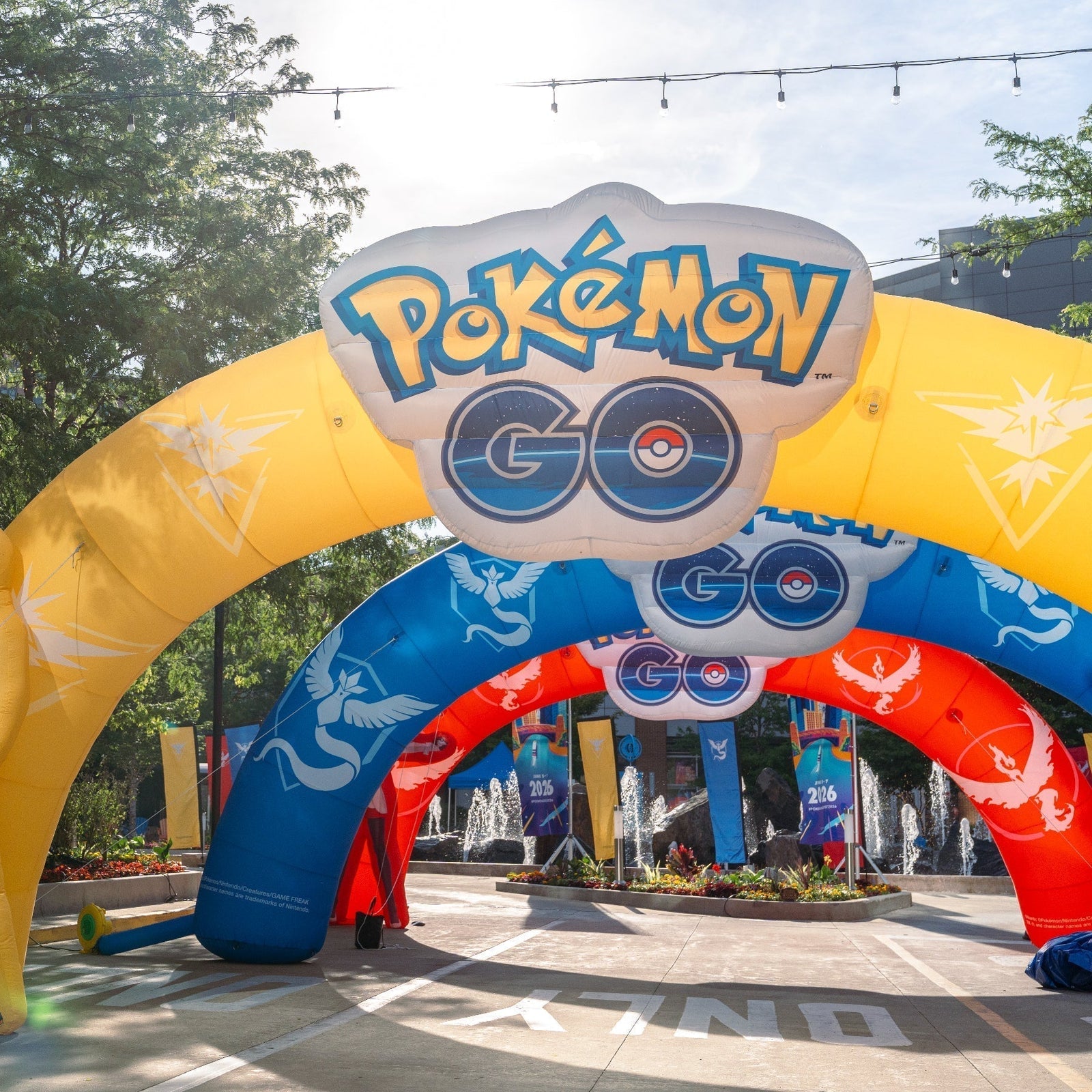
At Pokémon GO Fest Chicago in 2026, that invitation became wonderfully literal. A Mega Mewtwo capsule offered hats, shirts and hoodies in two versions. The publisher confirmed that buying a hoodie included a code for matching avatar apparel. The same fan could wear the same allegiance on the pavement and on a screen. This was a collaboration built around an existing habit.
The company can also make an occasion out of a visitor. For the Crime 101 campaign, Chris Hemsworth joined Nadeshot for a livestream, the headquarters temporarily became 101 Thieves, and fans received a screening and exclusive apparel. The machinery was familiar: a recognizable face, a story to watch and something to keep. The commercial work lay in giving a film campaign a place inside that machinery.
The useful lesson is to give an audience several credible ways to participate, then measure which ones earn another purchase or renewal. Copying the scarcity of a merchandise drop will do little without a reason to want the merchandise. Expansion becomes harder when it competes with existing customers, outruns staff capacity or depends on a publisher’s invitation. A founder’s fame can open the shop. Keeping it open requires a different set of skills.
Follow the next chapter
The store, the matches and the people behind them.
WATCH THE BUSINESS TAKE SHAPE
01 Nadeshot and John Robinson discuss the $60m round ↗02 Meet Higround: the first acquisition ↗