Turning a patient sounds like a small task until the patient has a serious back injury. Then a routine movement becomes a problem in mechanics: how do you change someone’s position while keeping the spine still? Homer Stryker, an orthopaedic surgeon in Michigan, worked on a turning frame. In 1941, he started a company to make his inventions. The problem came before the company. That order matters.
- Practical hospital problems became a portfolio of implants, instruments and software.
- Mako connects surgical planning with a robotic arm under a surgeon’s control.
- Growth has required expensive acquisitions, clinical trust and accountability when products fail.
A better way to turn a patient
Stryker’s early catalogue had the specificity of someone who had actually done the work: a turning frame, a walking heel, an oscillating cast saw. These were answers to particular difficulties. The saw, patented in 1947, tackled the delicate business of removing a hard cast around a person. You can see the appeal of a founder whose product research included his own working day.
Today’s catalogue stretches through the hospital. There are joint implants, surgical instruments, cameras and visualization equipment, beds, stretchers, stroke-treatment devices and clinical communications. The customers include hospitals, surgery centers and emergency care services; the users include surgeons and nurses. Stryker says its products, alongside its customers, reach more than 150 million patients annually. That is a company estimate of reach, rather than a count of customers.
A useful way to understand the range is to follow the work. Move the patient. See the anatomy. Remove damaged tissue. Put something in its place. Tell the next caregiver what matters. Different products, related moments of difficulty. The breadth looks less surprising when viewed from inside a hospital.
The $1.65 billion hand on the tool
The clearest modern example is Mako. In 2013, Stryker agreed to buy MAKO Surgical for approximately $1.65 billion. MAKO brought robotic assistance; Stryker brought joint-reconstruction products, instruments and commercial relationships. The purchase joined capabilities that could reinforce each other every time a surgeon planned and performed a supported joint replacement.
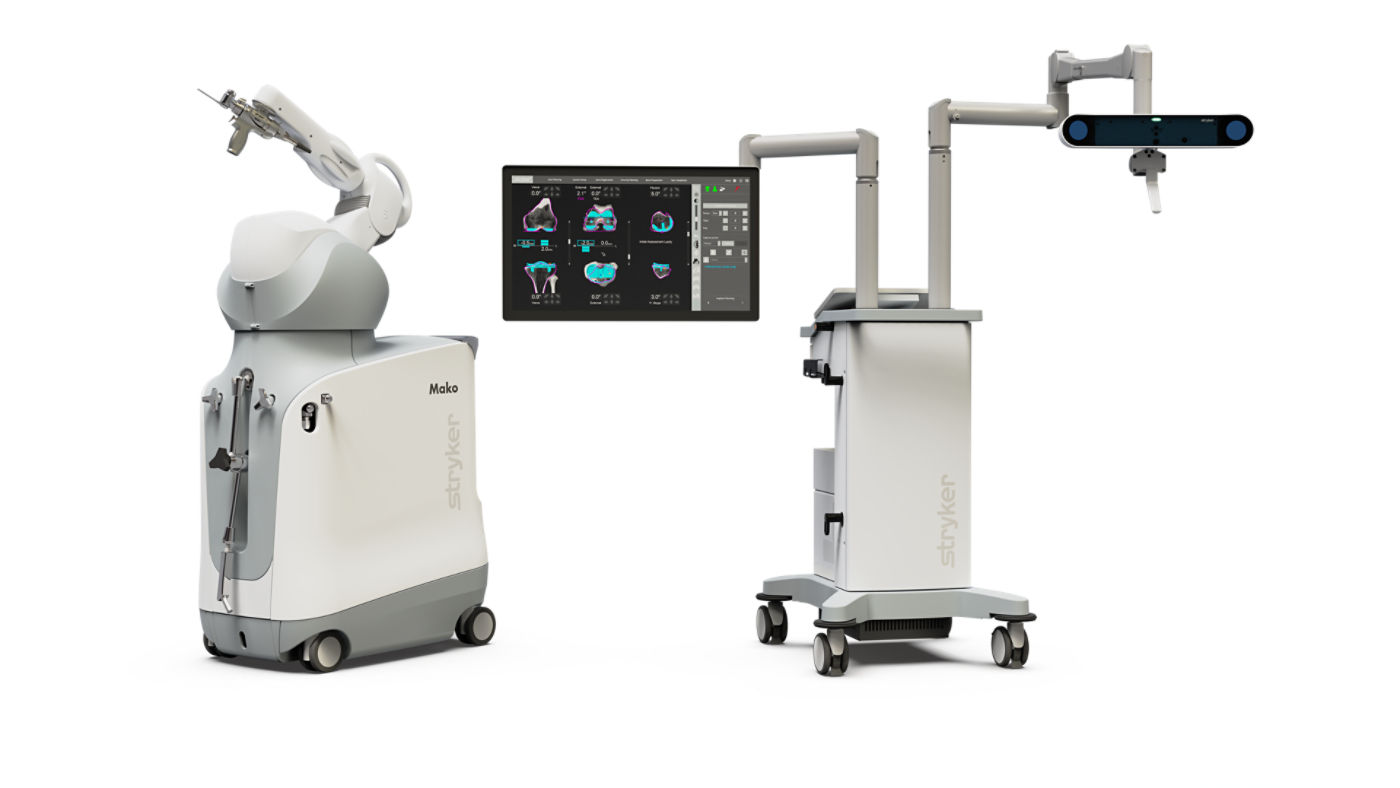
For Mako hip procedures, a CT scan supplies a three-dimensional model of the patient’s anatomy. The surgeon plans implant positioning, registers the actual anatomy against the model and guides the robotic arm. Haptic feedback helps constrain work to the planned area. The surgeon continues making decisions. Calling the machine a robot can obscure how much of its purpose is to support a human hand.
Competitors offer other routes. Zimmer Biomet has ROSA; Johnson & Johnson has VELYS, whose knee system uses a CT-free approach. Mako’s particular combination of CT-based planning and haptic guidance is a concrete distinction. It also creates requirements. Imaging, staff preparation, compatible implants and reliable support all become part of the purchasing decision. A hospital buys a method of working along with the equipment.
The bill arrives in several forms
Stryker earns money from capital equipment, implants, instruments, disposable products, services and software. A machine may be purchased occasionally; compatible products can be used repeatedly. That connection helps explain the attraction of a platform. The commercial opportunity continues after delivery, through procedures, supplies and service.
Reported growth: 11.2% in 2025. Bars start at zero.
Expansion has carried large price tags. The 2022 Vocera agreement valued that clinical-communications business at approximately $3.09 billion including convertible notes. In February 2025, Stryker paid approximately $4.94 billion in cash consideration to acquire Inari Medical, adding peripheral vascular thrombectomy devices. These are payments for capabilities and market access. Their eventual value depends on what happens after the transaction.
The Vocera rationale is especially revealing. In announcing the deal, Stryker described caregivers dealing with cognitive overload and disconnected sources of information. A company associated with physical tools was spending billions on communication. Its working definition of a hospital problem had widened.
“Together with our customers, we are driven to make healthcare better.”Stryker’s stated mission
A tiny junction. A very large consequence.
The history also contains a painful lesson in the distance between a promising design and a dependable implant. Stryker’s Rejuvenate and ABG II modular-neck hip stems were recalled in 2012 following concerns about fretting and corrosion around the neck junction. The FDA record describes an initial instruction update, followed by removal of affected products from the field.
In November 2014, Stryker announced a settlement for eligible U.S. patients who had undergone revision surgery. It had recorded $1.425 billion in charges, the actuarially determined low end of probable loss at that time. That figure was an estimate of exposure then, rather than the final lifetime cost. For patients requiring another operation, the consequences extended well beyond an accounting entry.
The sequence is instructive: evidence from use changed the response, from updated instructions to withdrawal and compensation. It gives the growth story a necessary constraint. An appealing idea still has to survive inside a person. Clinical performance can overturn the commercial argument.
The next difficult bit
Stryker is still adjusting its boundaries. In October 2026, it announced an alliance with CMR Surgical involving an approximately $400 million preferred equity investment, exclusive U.S. sales agency for Versius and an acquisition option, subject to conditions. The agreement reaches into soft-tissue robotics. Separately, Spencer Stiles is scheduled to succeed Kevin Lobo as CEO on January 1, 2027.
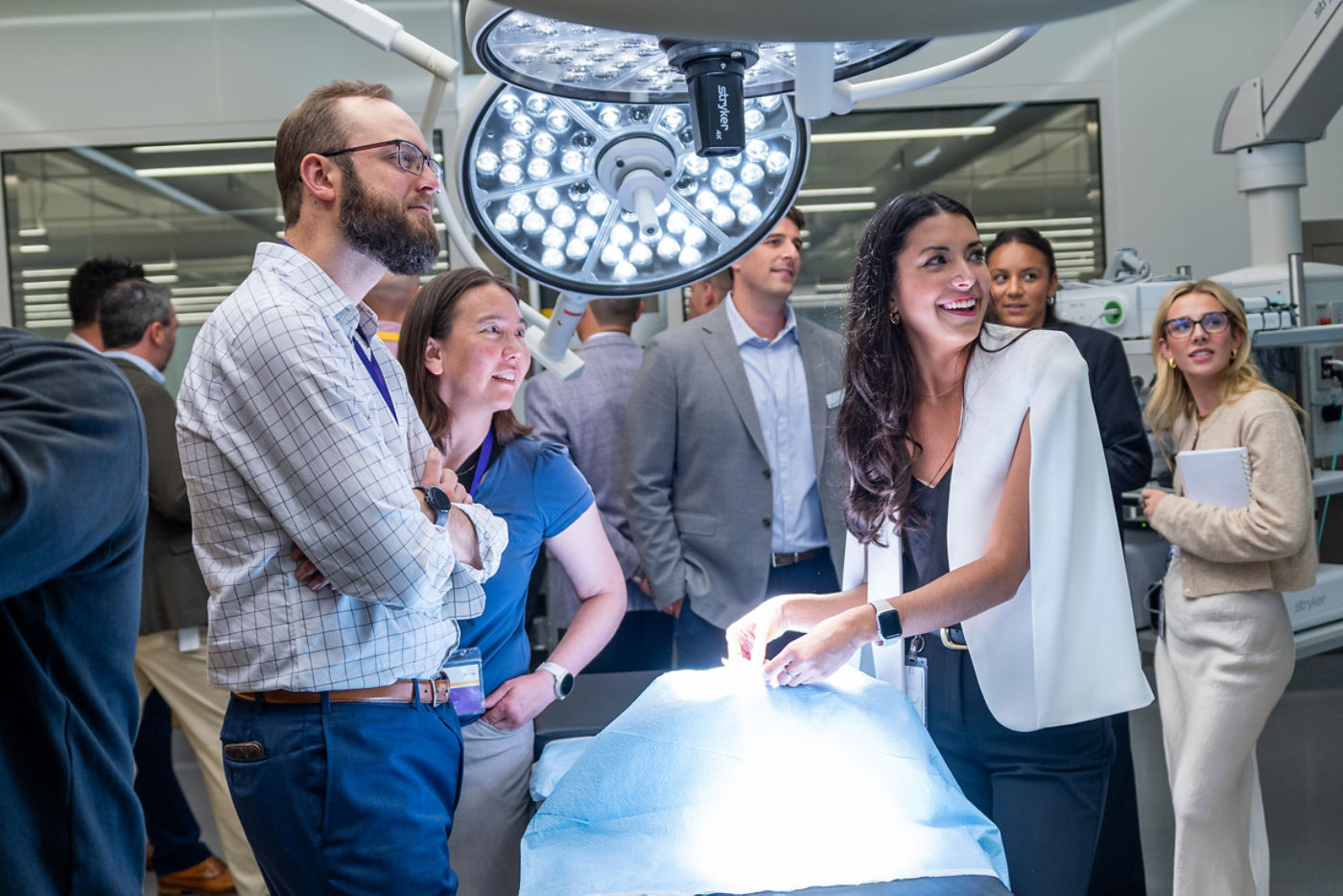
There is something readers can borrow without buying a robot: observe a difficult task closely, then build around the people who perform it. Budget for training and service. Test whether the improvement survives repeated use. This approach needs access to users, evidence and enough resources to support the product. Without those conditions, an elegant device can simply add another complicated job to someone’s day.
Follow the work
Explore Stryker’s products, the Mako platform, company news and the early inventions.