In 1958, an engineer with experience in pumps approached a surgeon with an idea: build an artificial heart. Miles “Lowell” Edwards was about sixty. Albert Starr, working in Oregon, had a more immediate problem. Patients were dying because a valve inside the heart no longer worked. Could they begin there? It was a consequential reduction in ambition. A whole heart became one component. The component became the foundation of Edwards Lifesciences.
- Edwards makes valves and repair systems for diseased hearts.
- Hospitals buy them; specialist teams decide who receives them.
- A $4.2 billion divestiture sharpened its focus on structural heart disease.
The useful size of an ambition
The first successful Starr-Edwards implantation came in September 1960. The mechanism was wonderfully plain: a ball inside a metal cage, allowing blood forward and blocking its return. Getting that mechanism to live inside a body was less straightforward. Early animal experiments encountered thrombosis. Starr’s team introduced a silastic shield around the implantation site. The difficult question concerned what blood did when it met the invention.
That distinction still matters. A valve can look elegant on a workbench and disappoint inside a person. Edwards’ accumulated expertise spans tissue, frames, delivery systems, manufacturing and clinical testing. The company that became independent of Baxter in 2000 inherited a problem with unusually demanding terms: make something small enough to implant, reliable enough to leave behind and useful enough to justify the intervention.
A shorter route to the same heart
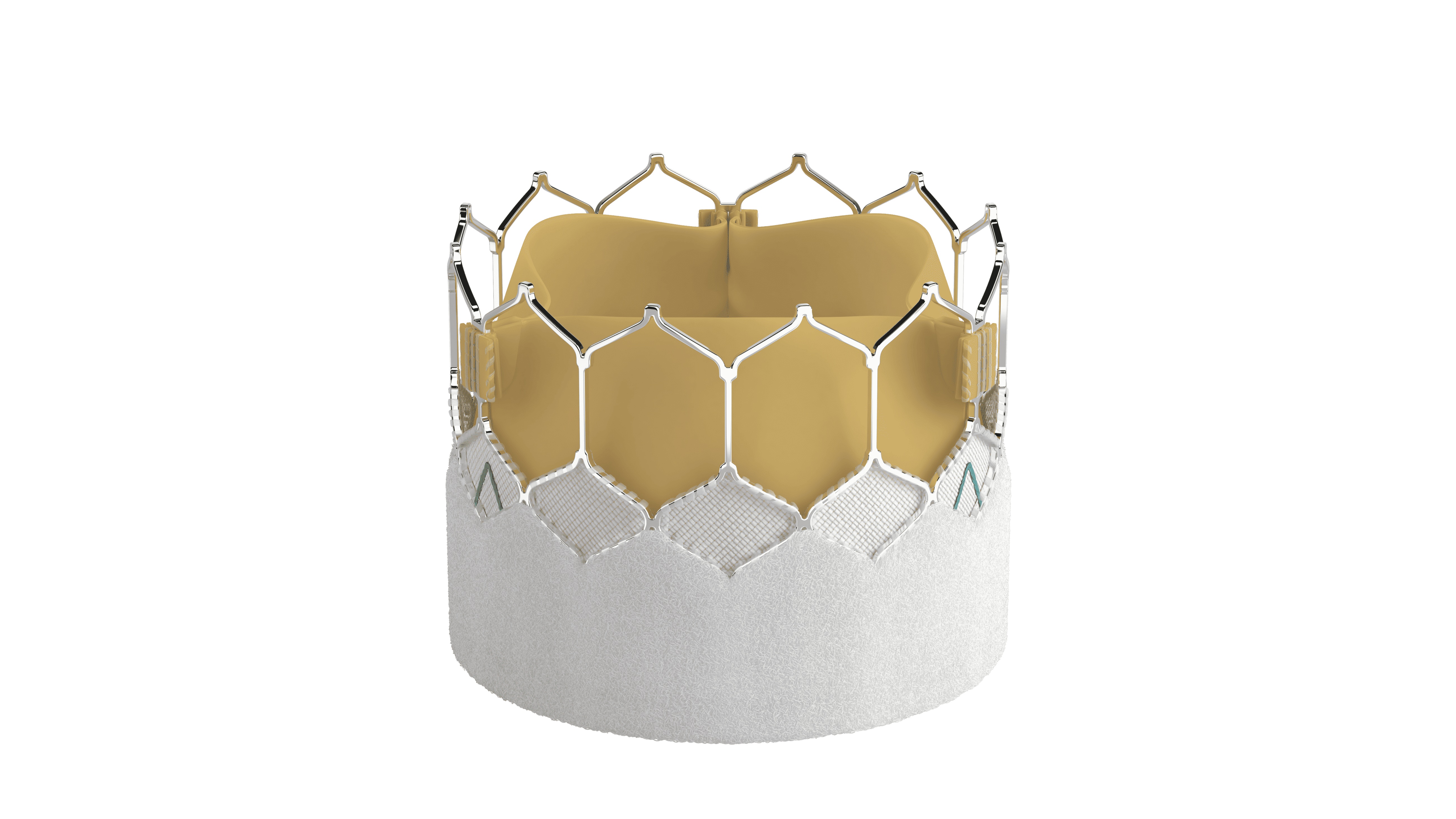
Today, Edwards concentrates on structural heart disease: physical problems with the heart’s valves and related structures. A narrowed aortic valve obstructs blood leaving the heart. A leaking mitral or tricuspid valve lets blood travel backward. These are different mechanical failures, and the treatment menu includes both repairing a patient’s valve and replacing it.
The SAPIEN family supplies catheter-delivered aortic replacements. A compressed valve travels through a blood vessel and is expanded into position with a balloon. The original SAPIEN gained U.S. approval in 2011 for inoperable patients with severe symptomatic aortic stenosis. For that population, the delivery route made a replacement available when conventional surgery was not an option.
Elsewhere in the portfolio, PASCAL grasps mitral leaflets to reduce leakage. EVOQUE replaces the tricuspid valve. SAPIEN M3, approved by the FDA in December 2025, provides transseptal mitral replacement for eligible patients considered unsuitable for surgery or edge-to-edge repair. Edwards also makes surgical valves and valved conduits, including its INSPIRIS, MITRIS and KONECT RESILIA platforms. Catheters have expanded the toolbox; surgery remains inside it.
The evidence is part of the device
For years, a central question in severe aortic stenosis was when to act if a patient had no symptoms. The Edwards-funded EARLY TAVR trial made that question measurable. It randomized 901 patients to early valve replacement or clinical surveillance. Over a median 3.8 years, death, stroke or unplanned cardiovascular hospitalization occurred in 26.8% of the intervention group and 45.3% of the surveillance group.
Death, stroke or unplanned cardiovascular hospitalization. Median follow-up: 3.8 years. Trial funded by Edwards; 901 randomized patients. Bar scale: 0-50%.
The distinction inside those numbers is essential. Death rates were 8.4% and 9.2%; unplanned cardiovascular hospitalizations were 20.9% and 41.7%. The composite result should not be read as proof that early treatment halved deaths. It demonstrated an advantage across the combined endpoint, with hospitalization doing much of the work. Good evidence earns its authority through this kind of precision.
“Helping patients is our life’s work, and life is now.”
Edwards Lifesciences credo
The price of choosing a lane
Edwards made its business boundaries clearer in September 2024, completing the sale of Critical Care to BD for $4.2 billion in cash. The monitoring business had a long history inside Edwards. Selling it redirected the company toward structural heart innovation. A proposed spin-off had given way to an outright sale, with proceeds available for acquisitions, other strategic initiatives and share repurchases.
The results give that strategy a scale: Edwards reported $6.0676 billion in 2025 sales. By the second quarter of 2026, quarterly sales reached $1.74 billion, including $195.9 million from transcatheter mitral and tricuspid therapies. Those newer therapies add another source of growth alongside the established aortic business. The numbers describe product sales, not a count of people treated.
That focus requires expensive patience. Edwards invested more than $1 billion in research and development in 2025. This is a company-wide research bill, rather than the cost of developing one valve or the price charged for an operation. Its implants must move through studies, regulatory review and hospital adoption before a promising design becomes an established treatment.
Acquisitions carry their own constraints. In January 2026, Edwards abandoned its proposed JenaValve purchase after a federal court granted an injunction. The FTC had challenged the combination on competition grounds in devices for aortic regurgitation. Expanding a focused portfolio can still collide with the public interest in keeping independent developers competing.
A valve needs a whole system
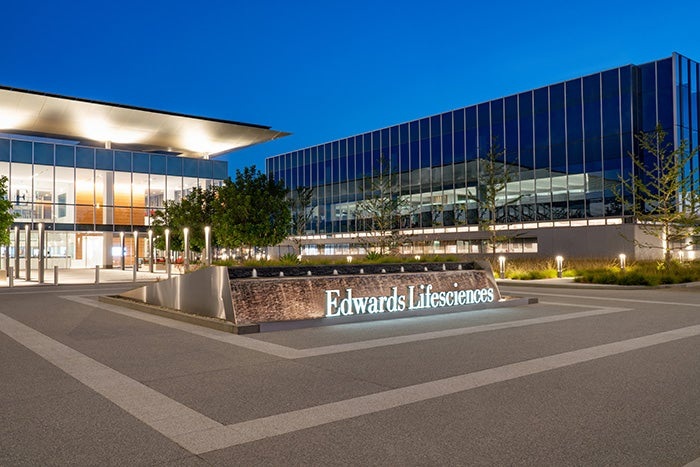
Edwards sells to hospitals and healthcare providers. Cardiologists and surgeons use the products; patients live with the results. Its alternatives include Medtronic’s self-expanding Evolut valves and Abbott’s repair and replacement systems. Balloon expansion distinguishes SAPIEN’s architecture, but a design difference cannot establish the right choice for every anatomy. Clinical evidence and patient selection remain decisive.
Reaching those buyers takes more than shipping a sterile box. Edwards uses direct sales teams and distributors, and supports physician education. New therapies require hospitals to assemble the right expertise. A regulator can authorize a device, but a commercial launch still advances hospital by hospital.
The company’s culture puts patients in front of employees through Patient Experience events. Outside its walls, Edwards became the founding sponsor of the American Heart Association’s Heart Valve Initiative in 2025. Diagnosis and referral matter commercially and clinically: an available implant helps nobody who never reaches an appropriate specialist.
Nor does catheter delivery remove risk. In the study summarized for EVOQUE’s FDA approval, about 28% of treated patients experienced a major safety complication within thirty days. Infection, anatomy and inability to tolerate required blood thinners can rule out particular devices. Trained teams, coverage and careful selection determine how far an invention can travel.
There is a practical lesson here for readers building anything complicated: let the practitioner help define the first solvable problem, then measure what happens after delivery. Edwards began when a surgeon persuaded an engineer to make his ambition smaller. The work since has been discovering how much responsibility fits inside that smaller thing.