The first useful thing to know about Eric Goslau is that he does not tell the tidy version. The tidy version would begin in Denver with a clever medical device, glide across a few patent drawings, pause for applause at a financing announcement and finish with a company moving toward a pivotal study. Goslau's version includes Fargo, rejection, a study that stopped early, a redesign that collided with a pandemic, and the difficult arithmetic of keeping a small hardware company alive while the evidence catches up.
This is more revealing than a founder mythology polished until it squeaks. Goslau, the co-founder, president and CEO of Transverse Medical, has spent his career around products that must work somewhere far less forgiving than a slide deck. POINT-GUARD, the company's investigational system, is designed to sit in the aortic arch during procedures such as transcatheter aortic valve replacement and filter debris before it reaches the vessels supplying the brain. It is intricate work in a crowded place. The design must cover, seal and remain stable while staying out of the operator's way.
The company's challenge is therefore both geometric and existential. Can a filter accommodate variable anatomy? Can a team finance the next clinical question before time expires? Goslau has come to treat those as versions of the same problem: define the next proof, remove what interferes and keep moving.
Origin story, without the garageBefore the company, there was the industry
Medical devices were family furniture. Goslau's father entered the field in the 1960s with American Pharmacy and later worked at Valley Lab in Colorado, the electrosurgery business that eventually became part of Medtronic. As a University of Colorado Boulder student, the younger Goslau took internships around the local medtech community. He saw product development, packaging and customer service. He attended industry conferences. The point was not to perform entrepreneurship. It was to learn how the machine worked from several rooms inside it.
One conference connection led to Johnson & Johnson's Recent College Graduate program. The assignment was Fargo, North Dakota. Goslau was 22, and even he has conceded that Fargo was not the obvious fantasy. Yet unglamorous beginnings have a useful lack of ceremony. You carry the bag. You learn the territory. You discover that a career can begin before it resembles the career you intended.
He moved through Everest Medical and Guidant, then crossed paths with Brad Lees at Cordis and later at Spectranetics. Their eventual venture grew from Lees's concept for a better way to protect the vessels leading to the brain during cardiovascular interventions. Goslau brought a commercial operator's sense of what would be required to turn the concept into a company: clinicians, engineers, patents, capital and a tolerance for calendars that refuse to behave.
“The sources are out there, but you have to dig deep to find them.”Eric Goslau on early-stage capital
The education of version oneWhen confidence met anatomy
Transverse was founded in 2012 and used seed funding to begin developing POINT-GUARD. The team worked through roughly 50 to 60 prototypes. Bench testing followed. So did animal work. By the time the first-generation device entered an early human study in Germany, confidence had been earned in all the familiar ways.
Then the initial cases taught a less familiar lesson. Real human anatomy exposed limitations the previous models had not. The company paused the study and returned to the design. This is the moment that defines Goslau's operating philosophy. He does not romanticize the setback, but he does refuse to waste it. A prototype is an argument. Human use, conducted within the proper clinical process, is the reply.
The evidence ladder / confidence must be earned again at every rung
By 2019, the redesign was underway. POINT-GUARD 2.0 became longer and wider, with an asymmetric form intended to cover the three great vessels along the arch. The team added a cantilever spring to help the frame maintain its perimeter seal as the aorta moves with cardiac output, and built in responsive positioning through its nitinol elements. The point of the redesign was not novelty for its own sake. Each change answered something version one had failed to answer well enough.
The interruption inside the interruptionA redesign meets 2020
A medical-device redesign already moves at the speed of testing, documentation and capital. Then 2020 arrived. Goslau had expected to raise a Series B around the time the revised program was taking shape. Instead, the pandemic slowed the work and made an already difficult financing task more awkward. Existing investors stayed involved. A non-dilutive grant from Colorado helped. The team continued toward a design freeze for POINT-GUARD 2.0.
This period explains why Goslau talks about money without the usual founder perfume. He calls fundraising a cycle. A company may combine high-net-worth individuals, angels, family offices, grants and venture capital, depending on how much is needed and what milestone the money must buy. Too many small checks create a shareholder-management burden. A lead investor who understands multiple stages can steady the room. Round labels matter less than matching capital to the next credible proof.
The lesson comes from sales. Goslau spent roughly 16 years in commercial roles, where hearing no is less an event than weather. A sales cycle requires a plan, a pipeline, repeated explanation and the patience to separate objection from verdict. An early-stage CEO cycles among versions of the same work: persuade an investor, align a board, recruit a specialist, translate a device for a clinician and keep the team oriented toward a result that may still be years away.
“At the end of the day, time is money. If you don't have any money, you're going to run out of time real quick.”Eric Goslau
Progress is a sequence, not a revealThe long road becomes visible
Transverse Medical forms and begins turning the original filter concept into a development program.
Early human experience with version one produces a pause and a major redesign brief.
The company continues through the pandemic, freezes the 2.0 design and closes a $3 million Series B1 round.
New U.S. patents are granted around filter apparatuses and methods, while the company prepares for feasibility work.
The first series of Australian feasibility-study patients is completed, followed by more than $10 million in Series B2 capital.
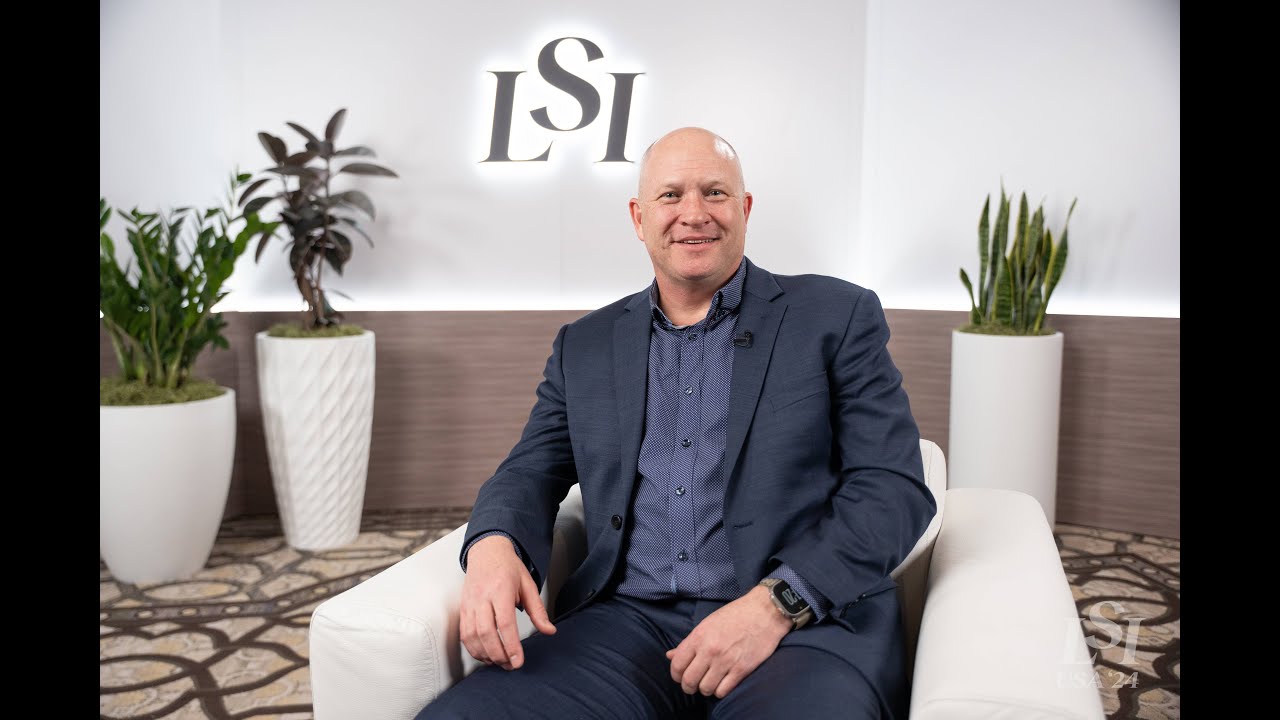
Goslau joins an LSI panel on advancing neurovascular technology through the startup lifecycle.
In August 2023, Transverse announced a $3 million Series B1 round to support manufacturing and preparation for feasibility work. In April 2025, it reported completion of the first series of patients in a feasibility study at Victorian Heart Hospital in Melbourne. One week later came the announcement of more than $10 million in Series B2 capital, led by a longstanding family-office investor with participation from B1 backers.
The money was assigned jobs: continue clinical validation, develop the platform, expand engineering, regulatory, quality and operational capacity, and prepare for a later pivotal program and a U.S. investigational device exemption submission. In 2026, the company added finance leadership and Goslau appeared at LSI USA to discuss the startup lifecycle. POINT-GUARD remains investigational and is not cleared for sale. The remaining work is not a footnote. It is the work.
The founder outside the fundraiseRepetition, with a human face
Goslau's public résumé has a curious second column. He has mentored University of Colorado Boulder business students for more than a decade. He has coached high-school and youth rugby at USA Level 200. He is the owner and chief instructor of Iwayama Martial Arts. He also co-founded Secure Closure, another Denver device venture, and serves as its chairman.
The pattern is hard to miss without pretending the roles are interchangeable. Coaching, martial arts, sales and medical-device development all reward repetition, direct feedback and composure after an imperfect attempt. They also punish performance without practice. Goslau's stated leadership style is hands-on, working beside his team and clinical operators. His interviews sound the same way: plain language, concrete constraints, very little interest in decorating uncertainty.
He has a phrase for the perfection trap: “The evil of good is great.” It is deliberately crooked, which may be why it sticks. His point is not that a medical device should merely be adequate. The clinical and regulatory standard is necessarily demanding. His point is that a team can spend so long perfecting its private answer that it postpones the public test capable of disproving it.
Goslau's career offers a sharper alternative. Build enough to ask the next honest question. Take the answer personally enough to act on it, but not so personally that version one must be defended forever. Sell the plan, fund the proof and allow the proof to alter the plan. The setback is not the heroic part. The useful part is what the team knows how to do on Monday.
Continue exploringEric Goslau, in his own working world
POINT-GUARD is described by Transverse Medical as an investigational device. It is not cleared by the FDA, is not approved for sale and is limited to clinical investigation.