A shopper is standing in front of a crowded wall of drinks. There are colors, claims, functional promises and a small republic of bubbles. The shopper has perhaps 45 seconds. Strick Walker's answer to this commercial riddle was not another adjective. At Spindrift, where he served as chief marketing officer, the message became almost stubbornly plain: real fruit, bubbles and water.
The simplicity was earned in other people's kitchens. Walker and his colleagues visited consumers at home, spent hours talking about food and drinks, met spouses and children, and looked inside refrigerators. He preferred the texture of those visits to the antiseptic remove of a focus group. In context, choices had motives. Confusion had a shelf. The package redesign that followed pushed the real-fruit proposition forward because the team had watched how quickly people had to decide.
That story offers a compact introduction to Walker's career. His résumé roams from advertising agencies to an environmental nonprofit, from sneakers and jackets to sparkling water and fishing waders. Yet the method has stayed legible: get close to the person, find the proposition that can survive plain speech, and make sure the institution behaves in a way that supports it.
A career with muddy boots and clean lines
Walker studied at the University of Richmond from 1991 to 1995. His later career included the agency side, with work at IDEO and Y&R, followed by a striking sequence of organizations whose products were different but whose identities demanded care. He helped build 1% for the Planet, the network through which member businesses commit at least one percent of annual sales to environmental causes. During his time there, it grew to more than 1,200 member businesses in 40 countries and supported more than 2,000 nonprofit groups.
There was global marketing at Converse, including brand work in Europe, the Middle East and Africa and global communications. There was Patagonia, where he served as senior director of global marketing. At Patagonia he described responsible communication as downstream of responsible action. Consumers, he argued, were perfectly capable of noticing when a campaign did not resemble a company's values. The useful order was action first, speech when there was something important to say.
Spindrift followed, bringing a new category and the happy oddity of a marketer trained in footwear learning the beverage aisle. Walker said at the time that he was learning every day. The brand's environmental alignment mattered to him; Spindrift had been a 1% for the Planet member since its beginning. So did the chance to translate a product difference into language a hurried shopper could use.
“We really just wanted to get that real fruit proposition out there in a very clear, very simple way.”Strick Walker, on Spindrift's package refresh
In 2017, Merrell hired him as chief marketing officer to lead global brand strategy and marketing. The appointment returned him squarely to footwear and the outdoors, but his public comments resisted the category's old habit of confusing expertise with exclusivity. He called hiking a great uniter and spoke about showing people of different backgrounds, experience levels and points of view. Outdoor sport did not need to define a person's entire life for that person to belong in the picture.
Technology gets a job description
Walker was also willing to demote a fashionable medium when it stopped serving the mission. Merrell had experimented with virtual reality before his arrival, building an immersive mountain experience. His later verdict drew a sensible boundary. If virtual reality could inspire people to go outdoors, the brand would consider it again. If it became a substitute for going outdoors, the path was wrong.
The distinction is more useful than a blanket opinion about technology. It asks a channel to accept a job description. A headset, film, social platform or package is not automatically modern, intimate or effective. Each must move a person toward the experience the brand exists to enable.
He made a related case for documentary film. Traditional advertising occupied less of Merrell's plan; better content could travel through people who chose to experience and share it. Walker described film as part of a long brand-loyalty puzzle, not a machine expected to report instant sales. The patient horizon matched his broader preference for conviction over reach purchased by the yard.
At Simms Fishing Products, which hired him as chief marketing officer in 2019 for a 2020 start, that kind of story found hospitable water. Walker described the job as a rare chance to marry personal passion with profession. He would split his time between Grand Rapids and Bozeman. Simms made technical fishing products; the brand also had a platform from which to talk about fisheries and the people whose lives formed around them.
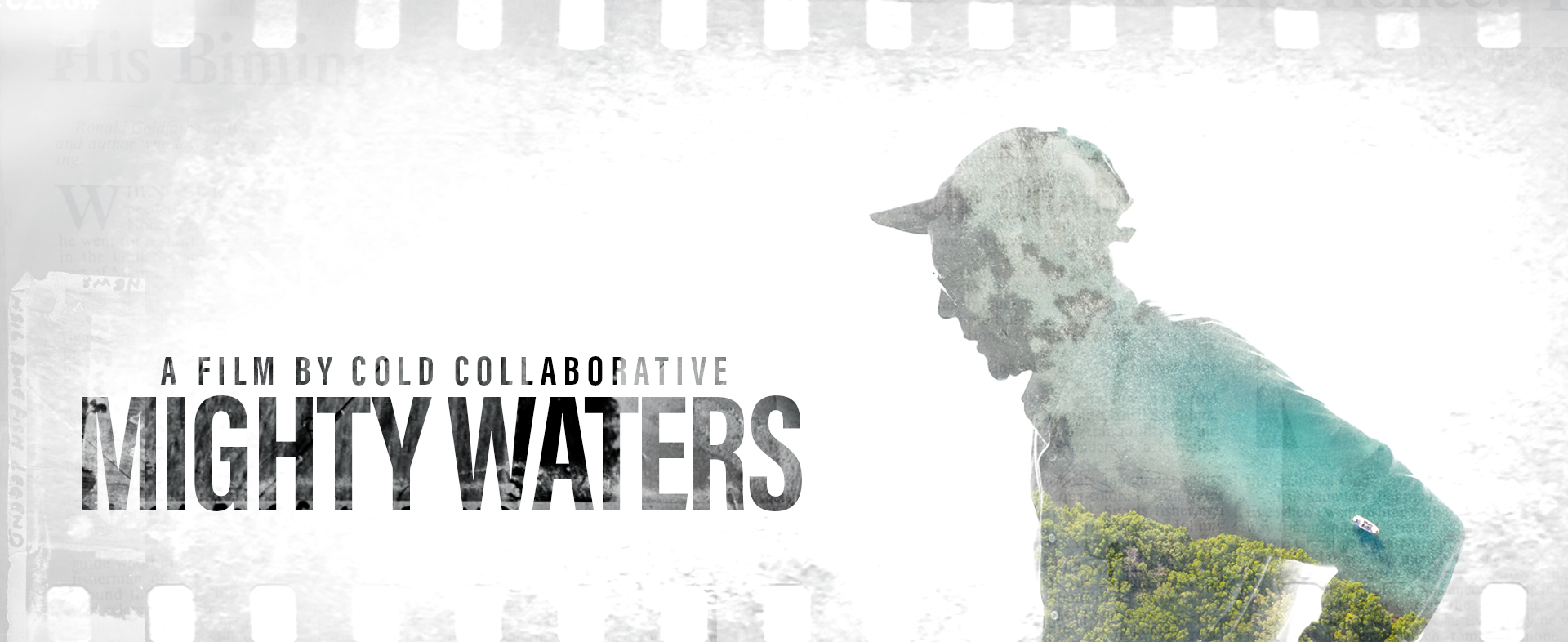
One example was Mighty Waters, the film about Bahamian bonefishing guide Ansil Saunders, his pursuit of social justice and his connection with Martin Luther King Jr. Walker praised its ability to speak beyond fishing. When Simms later built an online mechanism allowing customers to direct one percent of a sale to one of four conservation groups at no extra cost, Walker shared it with characteristic proportion: “It's not enough. But it's something.” The sentence declined both cynicism and self-congratulation.
The usefulness of being disliked
By early 2024, Walker was leading marketing across a Revelyst group that included Simms, Bushnell, Camp Chef, Stone Glacier, Primos and Blackhawk. Later that year he became CEO and co-founder of M72 in Grand Rapids. Public detail about the venture remains spare, but his own writing supplies a clear view of the operating philosophy he carried into this chapter.
“Friction creates traction,” he wrote in November 2025. The target was the sea of sameness: products engineered to attract mild approval from everyone and devotion from no one. Walker distinguished meaningful friction from brash advertising or convenient disruption. He meant an offer that could be less appealing to the mainstream because it was much better for a particular group.
“Don't be liked by everyone. Be unique, loved by some.”Strick Walker, 2025
The commercial logic sits just beneath the provocation. Deep affection can become loyalty. Loyalty can become word of mouth. Word of mouth can reduce the need to buy every encounter. Walker asked investors to stop thinking only in three-year exits and to support businesses whose useful friction might need time. His preferred trade was “depth with purpose” over “flashy breadth.”
It is tempting to treat this as a late-career manifesto. The earlier evidence suggests continuity. Spindrift accepted the peculiar color and few calories that came with actual fruit when clear, zero-calorie seltzers had trained shoppers to expect something else. Patagonia asked customers to repair clothing before replacing it. Merrell chose real outdoor participation over a virtual substitute. Simms backed stories and conservation efforts that extended beyond a wader's technical specifications.
Across each case, the edge came from deciding what the organization would preserve when a smoother, broader answer was available. Clarity was not a cosmetic reduction. It revealed the choice underneath.
Brand as evidence
Walker lives and works from Grand Rapids. A Simms announcement introduced the domestic cast too: his wife Leanna, children Ruby and Fred, and a dog named Millie. The detail is small and welcome. A career spent telling outdoor stories still returns home to Michigan, while its work has moved through Boston, Bozeman, California and the many trails, rivers, stores and kitchens where people meet products.
His public record does not present marketing as a clever sentence placed on top of a business. The sentence matters, sometimes enormously. But it works when the product, the customer experience and the institution underneath it agree. “Real fruit” lands because fruit is in the can. Conservation lands when money and organizational attention move with it. Inclusion lands when the frame expands and stays expanded.
The pattern also explains why his moves across categories feel less random than they first appear. Shoes, drinks and waders ask different things of a product team, but every one of them enters a crowded field of claims. Walker's portable skill has been locating the proof that lets a brand speak simply. Sometimes that proof is an ingredient. Sometimes it is a donation mechanism, a repair program, a casting choice or the decision to tell one person's story with enough patience that an audience can meet him properly.
There is an unfashionable durability to that view. A brand can borrow attention, but belief is usually rented on worse terms. Walker's career suggests another arrangement: observe people without reducing them to a segment, make a promise without fog, and accept the friction required to keep it. The result may not be liked by everyone. It has a chance to matter to someone.