Steven Eidelman grew up with an unusually persuasive argument against starting a business: his father had done it. His parents had emigrated from the Soviet Union, and his father’s small business was a means of making a living in a new country. The long hours were visible. So was the work that followed him home. Entrepreneurship looked rather less like liberation when it was spread across the kitchen table.
His parents encouraged him to choose a more secure career. For a while, he obliged. He studied political science at the University of Pennsylvania, graduating in 2007, and went into consulting at Bain & Company. There followed work in online strategy at Warner Music Group and investing at Spectrum Equity. On paper, the arrangement had much to recommend it. Unfortunately for a tidy career plan, Eidelman wanted to build something of his own.
That tension gives his story its character. Here is a founder who remembers being wary of risk, who admits that his first business began with a search for an opportunity, and who speaks openly about getting decisions wrong. The polished version of entrepreneurship tends to remove these details. Eidelman keeps putting them back.
The family business he was advised to avoid
“I think I was always somewhat risk averse,” he recalled in 2018. The qualification matters. He could appreciate the security his parents wanted for him while feeling the pull of the life they hoped he would avoid. A child may inherit an example even when the accompanying instructions say to do something else.
His account of taking the leap is less concerned with eliminating doubt than with deciding which possibility deserves conviction. He has described weighing the many reasons an idea might fail against the single reason it might work. There is no promise of comfort in that calculation. There is, however, a decision someone eventually has to make.
At Spectrum Equity, he focused on consumer internet investments. Looking at businesses professionally gave him proximity to entrepreneurship; it did not give him a company to run. His early career supplied experience in examining other people’s decisions. Founding would make the consequences considerably more personal.
By 2012, he was ready. With Ben Jacobs and Kevin Lloyd, he co-founded Whistle, a company making connected devices for pets. Eidelman became its chief operating officer. A political science graduate had entered consumer electronics. Dogs, it would seem, were quite indifferent to the subject of his degree.
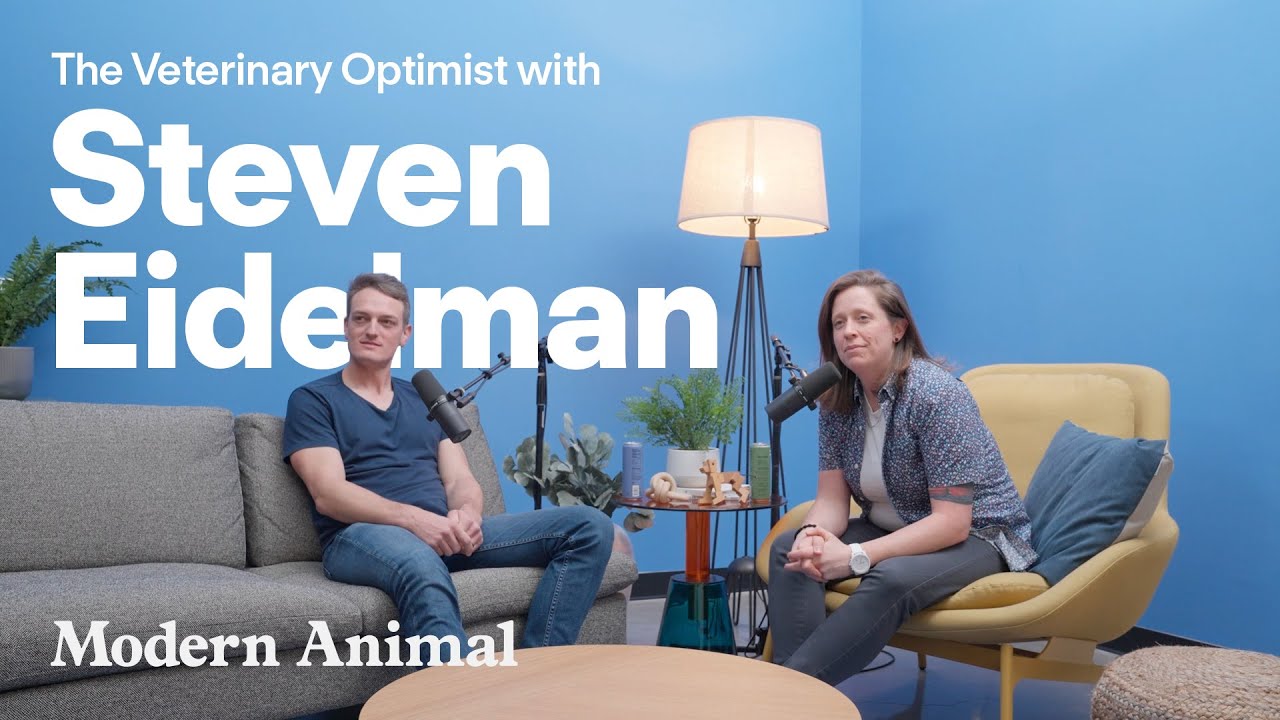
A whiteboard is a very agreeable customer
Whistle began with the sort of exercise that looks sensible in a room full of ambitious people: potential businesses on a whiteboard. Eidelman and his roommate were investors who wanted to become entrepreneurs. Pets were one of the categories they considered. Both had grown up with dogs. They could see a large market and room for technology.
The difficulty with a whiteboard is its impeccable manners. It never declines to buy anything. Eidelman later described the first product launch in much less flattering terms. The team had worked through the night at its engineering leader’s house. When the product went live, the early sales response gave him reason to worry while others were still celebrating the launch.
Whistle subsequently moved toward GPS location tracking, where it found stronger customer interest. The experience taught him something expensive and useful about the distance between an attractive idea and a product people want. Hardware makes that distance especially awkward: a device already built is a stubborn object to revise.
Mars Petcare acquired Whistle in 2016. Eidelman stayed on and worked on innovation within the larger business. The transaction gave him an exit, but it also gave him access to a different set of operating problems. He was learning how a large pet business worked from the inside.
Graduates from Penn
Co-founds Whistle
Whistle joins Mars
Starts Modern Animal
Coming home with a different question
Modern Animal began in December 2018, with Eidelman back in Los Angeles. The return was personal as well as professional: he has described leaving San Francisco to move home. His next company would have physical premises, local teams, software, and a brand that people encountered in their own neighborhoods.
There is an instructive difference between his descriptions of the two ventures. In a conversation with his cousin Joshua, he said Whistle had been driven more by identifying an opportunity, while Modern Animal rested on a clearer personal conviction. Experience had given him a subject he wanted to stay with.
His cousin’s interview also explored the influence of their immigrant fathers. Eidelman talked about growing up between cultures and about marrying into another entrepreneurial family. The family connection to business had followed him into adulthood. The parents’ caution and the son’s ambition could occupy the same story without either being a mistake.
By October 2019, Modern Animal had announced $13.5 million in seed financing and plans for its first Los Angeles location. The proposition combined a membership business, an app, and deliberately designed spaces. Eidelman was asking customers to form a relationship with an organization they could recognize across both a screen and a storefront.
The first hire tells you quite a lot
Modern Animal’s first employee was software engineer Keith Hackbarth. For a company planning to open clinics, that was a revealing place to begin. Software would be part of how the business operated from its earliest days, with its builders working alongside the people who used it.
The decision was hardly an uninterrupted triumph. In a later public reflection, Eidelman explained that the team had first hoped to build on outside systems. Limited integrations pushed it toward developing its own platform, scheduling tools, communications tools, and mobile app. Building the basics took years.
He also acknowledged poor rollouts, misplaced priorities, and failures to listen to employees. Confidence in the software suffered, including his own. It is a useful admission from someone selling a business built partly around technology. A founder can be correct about the destination and still make the journey unnecessarily unpleasant for the passengers.
“Seek hard feedback and own your mistakes.”
Steven Eidelman, on Modern Animal’s first three years
By the company’s third anniversary, he was describing a more deliberate practice of listening: roundtables at individual locations, councils examining tools and workflows, and employee surveys. He said he read every piece of feedback. The ambition was to give criticism somewhere useful to go.
These habits make his account more interesting than a simple tale of a founder with an app. They suggest a business whose software and operating methods were being negotiated with its own employees. There is considerable distance between announcing that a company listens and arranging a recurring meeting at which someone can disagree with its chief executive.
Some lessons arrive wearing sensible shoes
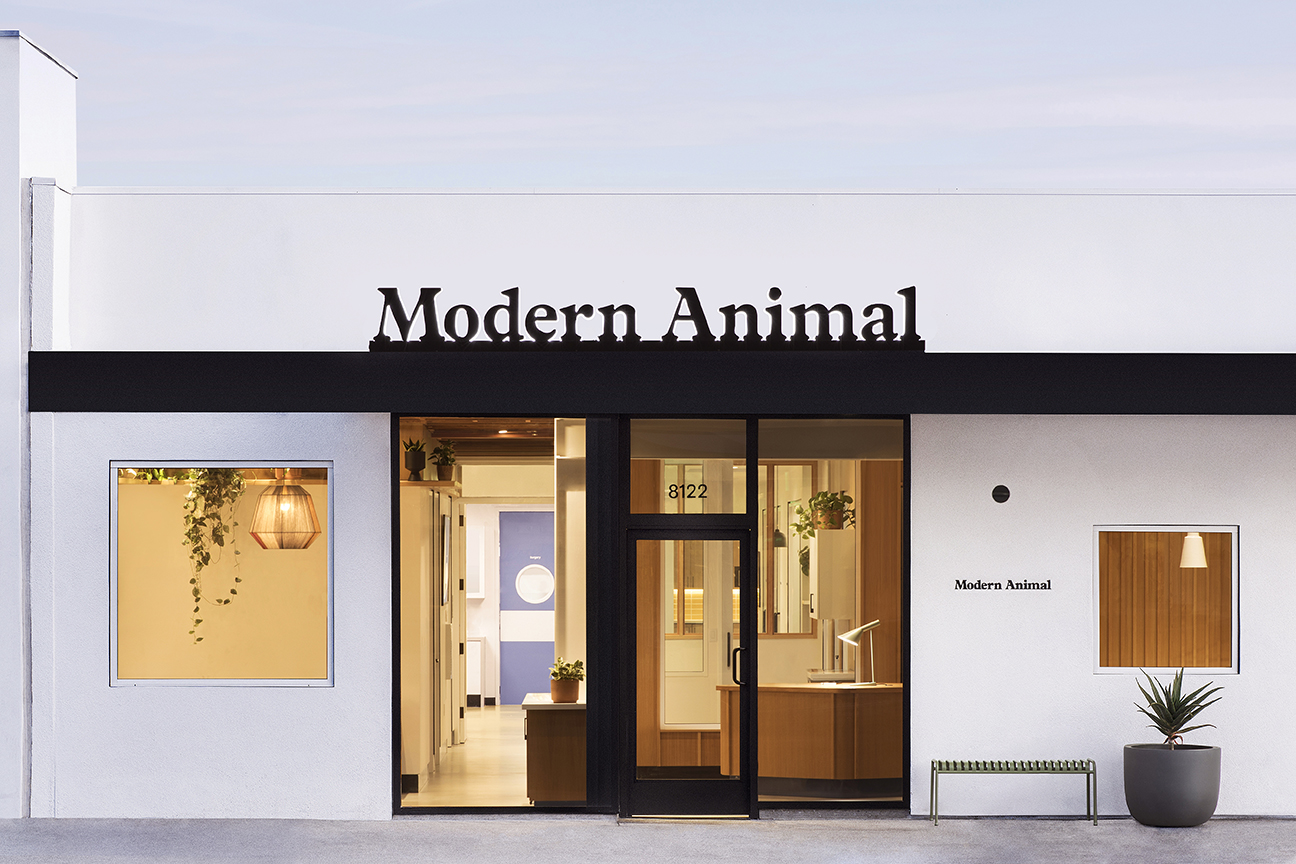
The physical spaces received comparable attention. Architects Rebecca Rudolph and Catherine Johnson’s firm, Design, Bitches, worked on Modern Animal’s clinics. Their approach included open sightlines, carefully chosen surfaces, softer seating, and a palette with periwinkle, cinnamon, and yellow. Each location occupied an existing building, requiring a different layout.
That last detail is easy to overlook in a photograph. An appealing room can look like a repeatable formula; an existing building has its own opinions. Doors, corridors, materials, and maintenance turn an aesthetic into an operating responsibility. Building a recognizable business means accommodating those differences without losing what customers recognize.
Eidelman’s board brought experience from other businesses with physical locations. By July 2021, it included former Restoration Hardware finance chief Karen Boone and former Blue Bottle Coffee operating and finance executive David Bowman, alongside True Ventures partner Tony Conrad. Modern Animal announced $75.5 million in new funding that month.
The connections help explain the company’s shape. Eidelman was assembling knowledge about technology, service, capital, and the economics of individual locations. A company can have a pleasing name and lovely chairs while still needing someone who knows how the numbers work behind each door.
A sale, with work still on the calendar
On April 8, 2026, Chewy announced an agreement to acquire Modern Animal. At the announcement, the business had 29 owned clinics and more than 100,000 member families. The proposed combination would take Chewy’s location count from 18 to 47. These were concrete dimensions for an idea that had once lived on a whiteboard.
The acquisition closed on May 21, 2026. Chewy paid $400 million for the company’s stock, using cash on hand. For Eidelman, it was the second time a business he had co-founded had joined a larger pet company, ten years after Whistle’s sale to Mars.
Chewy’s purchase price for Modern Animal
at announcementMay 21
completion date
He said he would remain chief executive, with Ashley Peterson Siegler continuing as chief operating officer and Christie Long continuing in her leadership role. He described the next stage in terms of taking the model to more communities. An acquisition could change the resources available to the business while leaving its founder with a familiar assignment: keep building.
There is a quieter companion to that ambition. Eidelman has named Alan Watts’s The Wisdom of Insecurity as an influential book during his Whistle years. He has also argued that founders should seek wisdom while accepting responsibility for their own choices. The point suits a career spent moving from evaluating businesses to answering for one.
His parents had good reasons to favor security. Their son had reasons to try something else. Two companies later, Eidelman’s story still contains both impulses: the wish to make something that lasts and the knowledge that conviction offers no exemption from difficult work. The whiteboard was the easy part. He seems increasingly interested in what happens after somebody opens the door.