Joseph Elias Phillips keeps photographs of his grandfather on his desk. Before there was a payments platform, a board or a venture round, there was Roberto Martinez, a Cuban immigrant who built a business to support his family. When Phillips faces a difficult decision, he still considers what his grandfather would do. It is an unusually personal advisory arrangement for a business concerned with APIs, underwriting and the orderly movement of money.
Phillips, known as Jo, co-founded Payabli with William “Will” Corbera in 2020. By 2026, the company had reached No. 43 on the Inc. 5000. That makes for a tidy introduction at a conference. The longer introduction involves jewelry, restaurant orders, contractor software and a Miami salsa club. Entrepreneurship has a habit of making the résumé look more linear than the life.
The grandfather at the desk
His early exposure to business came through his grandfather’s jewelry operation in Southern California. The example stayed with him as his own career moved into technology. A family enterprise makes entrepreneurship tangible: somebody you know has taken responsibility for making the whole thing work. The concept has a face before it acquires a pitch deck.
Years later, Phillips had a career and a salary to leave behind. Starting Payabli meant spending savings and accepting the possibility that the reputation he had built would offer little protection against the difficulties of beginning again. Encouragement came from his grandfather, a former company CEO and a former customer. Two mentors eventually became angel investors; one became a formal adviser.
He describes the early encouragement as “micro momentum”. The phrase is modest enough to be useful. A founder can spend quite a while assembling reasons to wait. Someone else’s confidence may provide the small push that turns an idea into the next day’s work. His grandfather’s photographs remain within reach of that work.
A sales education, paid in experience
Phillips studied Innovation and Entrepreneurship at Clark University and earned an MBA from USC’s Marshall School of Business. His practical education came through helping young technology companies find customers. At Seamless, he helped expand the national sales organization through the merger with Grubhub and its subsequent public offering. Food ordering supplied an early view of software entering the daily routines of independent businesses.
ServiceTitan brought him into another world of working businesses: home-services contractors. As its original head of sales, he helped build the commercial organization before moving into business development. A software company serving contractors must make sense to people whose attention is already divided among jobs, crews and customers. Getting the transaction right matters beyond the demonstration.
At ServiceTitan, Phillips and Corbera helped establish the company’s payments strategy. They saw both the revenue opportunity and the difficulty of putting payments inside an industry-specific software product. The experience supplied Payabli’s central problem. Other software companies would want to own more of the financial relationship with their customers. Building the necessary machinery could absorb time, money and engineering effort.
A partnership with a dance-floor prehistory
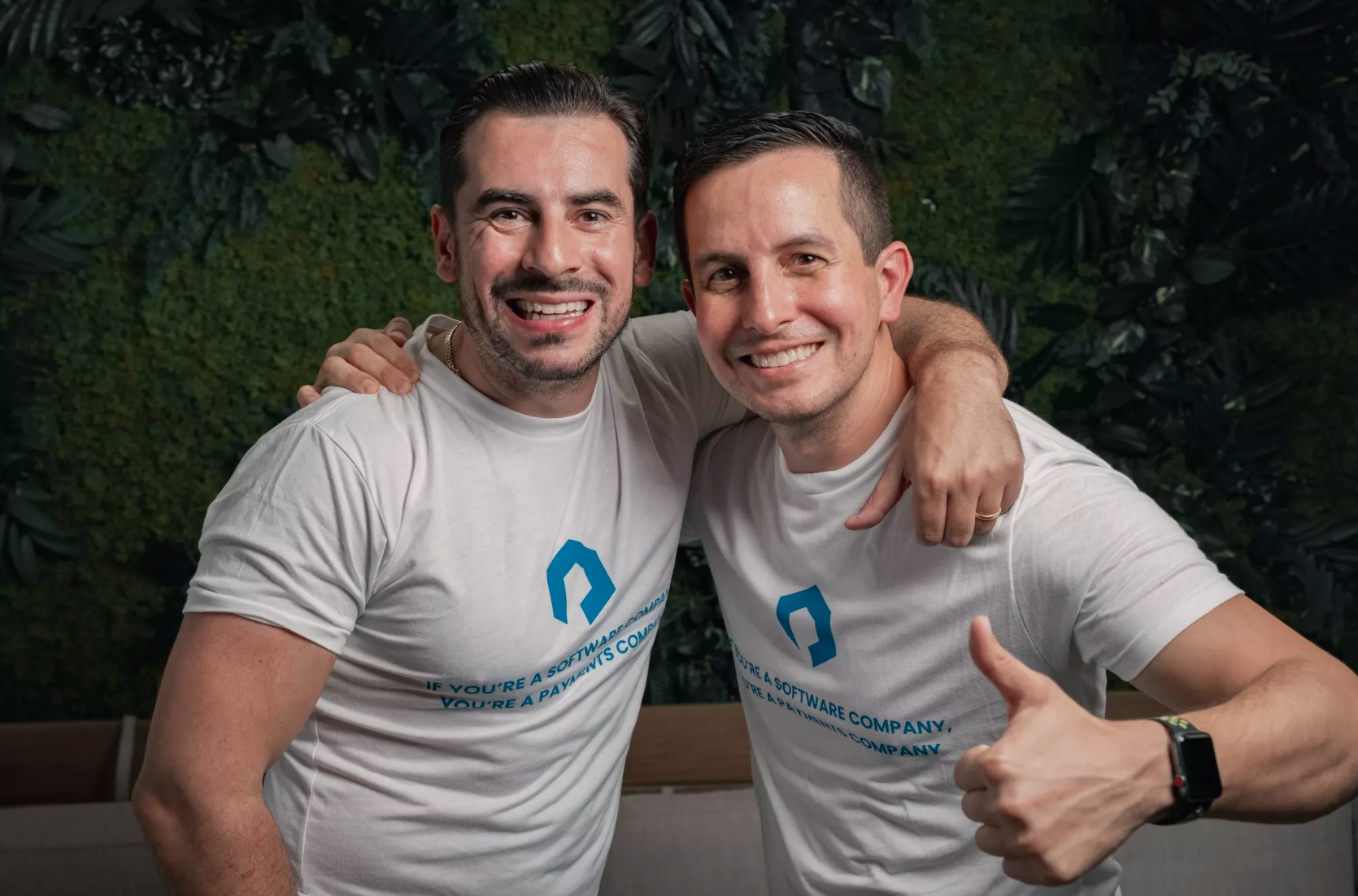
Phillips and Corbera first met at Kukaramakara, a salsa club in Miami’s Brickell neighborhood. By their 2025 account, the meeting had happened roughly 15 years earlier. It grew into a friendship long before Payabli’s first code. The founding team had an origin story with a considerably better soundtrack than most corporate histories.
Their professional experiences fit together. Corbera had built payments businesses; Phillips had helped early-stage technology companies grow their sales and business-development teams. Investors later pointed to that combination when explaining their interest. Payments expertise could meet commercial experience in the same conversation, with a shared ServiceTitan lesson behind it.
Payabli’s first code was written in December 2020. A friendship had become an operating partnership, with both founders taking the co-CEO title. Their public conversations return to a common purpose: helping entrepreneurs through the software they already use. The club meeting is memorable. The years of knowing one another give it business significance.
The work hidden behind “paid”
Payabli’s proposition starts with a familiar observation from Phillips’s career. Industry-specific software increasingly sits close to the moment money moves. The platform that helps a business organize its work can also help it accept a customer’s payment or pay a supplier. Those transactions can become revenue for the software provider.
The difficult part is the collection of responsibilities attached to them. A merchant needs approval. A transaction needs reconciliation. A dispute needs attention. Payabli combines payment acceptance, outgoing payments and the operations supporting both through one API and infrastructure stack. The company calls them Pay In, Pay Out and Pay Ops. Three short labels spare everyone an exceptionally long business card.
Accept customer payments inside the software.
Pay vendors, suppliers and contractors.
Handle onboarding, risk, disputes and reporting.
One infrastructure stack connects the transaction with the work around it.
For Phillips, the commercial question continues after integration. In an August 2026 conversation with Corbera, he discussed the importance of onboarding, pricing and having somebody responsible for payments as an ongoing business. A working connection alone cannot guarantee adoption. Somebody still has to make the experience useful enough for customers to use.
Money follows the operating lesson
TTV Capital first invested in May 2022, when Payabli already had a product generating revenue. Its investment account emphasized the founders’ complementary experience and the breadth of a product joining incoming payments, outgoing payments and operations. The firm subsequently led a seed round in March 2023. The early product had given investors something concrete to examine.
QED Investors led the $20 million Series A announced in June 2024. Phillips described an investment plan that included further development of Pay Out and Pay Ops, alongside helping software partners activate their processing volume. The wording revealed the sales operator’s concern: software sitting unused inside an integration has limited commercial charm.
In June 2025, Payabli announced a $28 million Series B led by Fika Ventures and QED Investors, taking announced capital raised to $60 million at that point. The company reported more than 50,000 merchants and sevenfold year-over-year revenue growth. The money was intended to support product development, including AI, and expand the teams responsible for customers, operations and growth.
Series B announced by Payabli
Trust, with a language lesson attached
“The number one attribute I look for in any role at Payabli is resourcefulness.”
Joseph Elias Phillips · Unstacked conversation
Phillips values people able to take ownership amid uncertainty. His approach to investors has a similar preference for substance. He has described appreciating a prospective investor who returned to meetings with harder questions and a deeper understanding of the business.
The company’s public values include attention to small details, curiosity and facing difficult situations directly. In the founders’ conversations, those commitments extend to the daily experience of colleagues. A remote company must make choices about how people encounter one another. Leaving that entirely to the calendar would be a rather optimistic personnel policy.
Payabli offers English lessons to non-native speakers and added Spanish lessons for English-speaking colleagues. It provides a $300 annual learning stipend and brings employees together at twice-yearly offsites. One gathering featured a salsa dance-off. The founders appear to have retained some confidence in the professional possibilities of a dance floor.
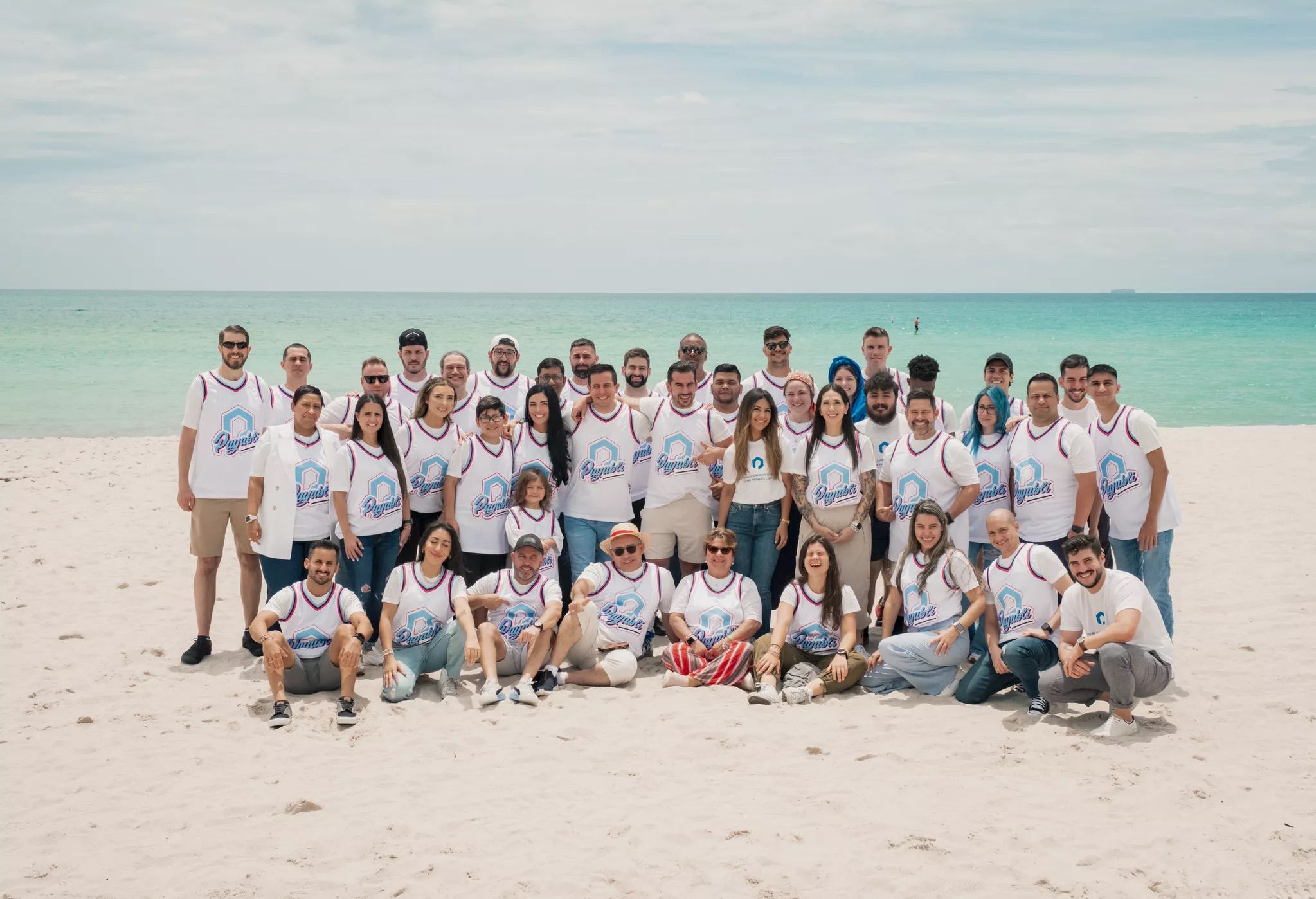
In June 2026, the founders reported employee retention above 90 percent over the previous three calendar years. Phillips described trusting colleagues to do their work rather than monitoring them throughout the day. The language lessons and gatherings give that trust a practical setting: people get opportunities to learn, meet and understand the people on the other side of the screen.
His route also explains why the business involves more than moving a transaction from one account to another. A sales leader hears the obstacles customers describe in their own language. Payabli’s three-part offering gives those obstacles a place in the product: collecting money, sending it and managing the consequences. The arrangement reflects the practical experience that preceded the company.
There is a pleasing continuity between a family business and the infrastructure serving thousands of other businesses. Both depend on someone attending to what happens after a customer says yes. For Phillips, the scale has changed considerably. The attention to the people relying on the business remains part of how he describes its purpose.
The bank joins the conversation
By 2026, the customer conversation had widened. Payabli announced a collaboration with Huntington Bank to bring payment capabilities into its digital banking experience. Business customers would be able to accept, issue and manage payments within the bank’s environment. The operating problem Phillips recognized in software could also appear inside a banking portal.
Automation is becoming another part of the proposition. In July 2026, Payabli announced its Amigo AI agent suite, with Amigo Insights answering account-specific payment questions, alongside automated vendor capabilities. Other agents for areas including risk, disputes and onboarding were described as in development. The distinction matters: the operating ambition is broader than the products available on announcement day.
Through these changes, Phillips’s interest remains recognizable. He built commercial teams, saw how payments could change a software business, and started a company around the burden of making that happen. The story now includes banks and AI agents. It still has room for an older kind of guidance: the grandfather whose photographs sit on the desk, beside decisions he helped make possible.
Follow the conversation
More from Phillips, his co-founder and the company they are building.
Payabli Company website ↗Joseph Elias Phillips LinkedIn ↗Coffee with a Founder Watch on YouTube ↗The Unstacked conversation Watch on YouTube ↗The business of payments PAYMENTS FM interview ↗The people behind the leap Mentorship feature ↗The next chapter at Payabli 2026 company interview ↗Inside the payment business Payabli blog ↗