William Corbera began his payments career in a University of Miami dorm room, with members of the football team recruited as his sales force. It is an unusually vigorous answer to the student question of how to earn some money. A folding table would have been easier to explain. Corbera’s enterprise had a merchant-services proposition and a connection to the football team.
The enterprise was an independent sales organization, or ISO, selling payment processing. In time, selling the service led to building software for it. An opportunity to create a payment platform for a large South Florida property manager took the business into the world of rent, condominium fees, and homeowners associations. A rather ordinary set of bills proved capable of supplying an entire career.
Today, Corbera is co-founder, co-CEO and Product Architect at Payabli. He works on the infrastructure that allows other software companies to put payments inside their products. The distance from the dorm room is considerable. The underlying interest remains recognizable: how money moves through a business, and how much unnecessary work accompanies its journey.
The dorm room had a sales department
Corbera earned his bachelor’s degree from the University of Miami in 2004. His upbringing had taken him through Miami, Barcelona, and Costa Rica. The geography gives his story several settings before the university business even enters it. Miami would become a recurring one, eventually serving as the home of the company he now leads with Joseph Elias Phillips.
Before Payabli came RevoPay, which Corbera co-founded with his brother Mike. He served as its Head of Product. Its electronic-payment software addressed markets including real estate, education, charitable giving, business payments, and retail. Here was the education beyond the degree: a payment product has to fit the business using it. A landlord’s monthly collections and a retailer’s transactions make different demands on the same apparently simple act of paying.
The property work is particularly revealing. Rent and association fees recur. They belong to a schedule and an administrative system, and somebody has to account for them. This is fertile territory for a product builder willing to spend time on details. Nobody pays an HOA fee for the pleasure of admiring the interface. The software earns its keep by making an obligation easier to complete.
Corbera’s early company became a payment facilitator, taking a more direct role in enabling merchants to process payments. That experience put him close to the operational responsibilities behind the transaction. When he later set out to build tools for software platforms, he brought the memory of having operated a payments business himself.
A business partner, by way of the dance floor
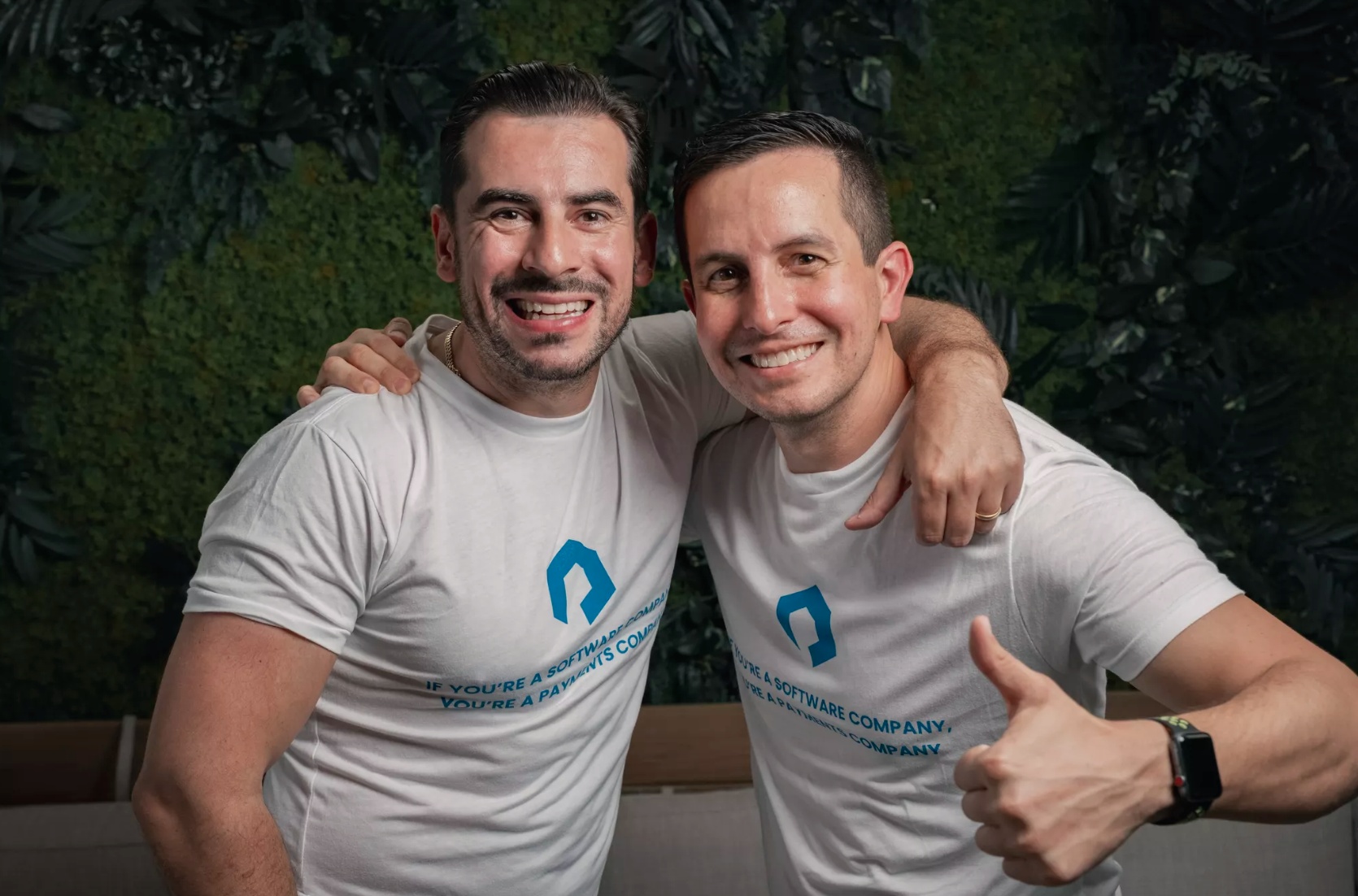
Corbera and Phillips first met at Kukaramakara, a salsa club in Miami’s Brickell neighborhood. The partnership had the good manners to wait. Years of friendship came before a shared company. Their paths continued through Los Angeles, where Corbera’s brother was co-leading RevoPay and Phillips pursued business school and a career in software.
Phillips had worked at Seamless and later ServiceTitan, the software company serving contractors. Corbera asked him about sales strategy and encouraged him to become an entrepreneur. A future founding relationship was developing through conversations between people who knew different sides of growing a business. There was no need to manufacture complementary experience; each was acquiring it at work.
ServiceTitan offered a useful view of what happened when payments became part of an industry’s everyday software. For the two friends, it helped clarify the opportunity for a company serving other software builders. A platform could own more of its payment experience and earn revenue from it. Assembling all the necessary financial infrastructure, however, was a considerable undertaking.
Payabli was founded in 2020, with its first code written that December. By then, the salsa-club meeting had become a friendship with a practical proposition attached. Corbera brought years inside payment products. Phillips brought experience growing software businesses. Their next assignment was to build something that another generation of software companies could use.
“We want to be the AWS of payments.”
William Corbera
After the button comes the business
The Product Architect part of Corbera’s title matters here. Payabli divides its offering into Pay In, Pay Out, and Pay Ops. Those names are refreshingly resistant to interpretation. They cover receiving money, sending it, and running the operation around those activities. Together, they describe a wider responsibility than adding a payment button to a screen.
Consider a property-management platform, an illustrative example close to Corbera’s professional history. It can help a business collect money, then support payments to the vendors who maintain its properties. Somewhere in that journey, people also need to understand the status of transactions and manage the payment business. A successful collection begins another set of questions.
One infrastructure stack for the work surrounding a payment.
Payabli’s unified API gives developers access to that infrastructure. The business proposition is that software companies can offer payment-facilitator capabilities without taking on the entire cost and administrative undertaking themselves. Corbera’s role sits at the meeting point of those two audiences: the developers making an integration and the operators who have to live with it afterward.
The choice of markets also follows the work. Payabli has focused on industries with bills that need paying, including property management, government, utilities, and field services. Such categories may lack the glamour of an impulsive purchase. They possess other attractions for a patient builder: recurring needs, established workflows, and customers with specific reasons to want the machinery improved.
In June 2025, the company announced a $28 million Series B and reported more than 50,000 merchants on its platform. It also reported sevenfold year-over-year revenue growth. These were company milestones, shared across the founders and team. They marked a stage in the work, with engineering, operations, and customer support still requiring attention the following morning.
Company-reported milestone / June 2025
For Corbera, expanding the payout side was an explicit priority. In the Series B announcement, he described the time and resources spent on that team and product suite, alongside On-Demand Payouts and a planned spend-management offering. Receiving a customer’s money was one part of a platform’s financial life. Paying its bills deserved product attention too.
Questions are part of the job
Corbera’s public account of hiring is pleasingly specific. He asks candidates about asking questions, learning the industry, and hard work. His explanation draws a line from curiosity to knowledge, from knowledge to mastery, and from mastery to better judgment. In a business that handles other people’s money, a well-placed question has a practical value that an impressive vocabulary may struggle to match.
There is a product philosophy inside that hiring philosophy. Understanding a customer’s problem requires enough knowledge to notice what is unusual about it. The details that make a payment workflow inconvenient can be easy to dismiss from a distance. They become harder to dismiss when somebody has to reconcile the result or answer the customer’s question.
He is equally deliberate about the phrase “team members.” Corbera has explained that he and Phillips chose it from the beginning because they wanted language that reflected people’s contribution and ownership. His examples concern colleagues solving urgent integration issues and rebuilding systems after finding a better approach. The vocabulary is intended to recognize that kind of participation.
Relationships get similar attention. Corbera has written appreciatively about engineering leaders spending time together over meals and connecting beyond their screens. He links that trust to the work customers receive. For a remote company, a shared meal has an obvious advantage over another calendar invitation: conversation can briefly escape the agenda.

In a November 2025 conversation with Phillips, the founders discussed principles including putting the team first, customer care, honesty, and attention to small details. Those statements describe the kind of company they intend to run. Corbera’s comments about hiring and team relationships make the intention concrete enough to examine: ask questions, understand the work, and spend time with the people doing it.
The magazine comes around again
Miami remains part of his ambition. Corbera has spoken about the city’s established entrepreneurial energy and the technology businesses growing within it. His own career supplies a connection between those worlds. The student merchant-services business, the property-payment work, and Payabli all belong to a longer local history than a recent arrival might imagine.
By August 2026, he and Phillips were discussing Payabli’s evolution on the Vlad Kachur Show, including developer tools and growth across more than a dozen vertical software categories. The product vocabulary had expanded to an intelligent fintech operating system. The underlying architectural subjects remained Pay In, Pay Out, and Pay Ops. Corbera was still occupied with how those pieces should work together.
That month, Payabli announced its No. 43 position on the 2026 Inc. 5000. Corbera’s response supplied a smaller, more personal detail: he had been reading Inc. since high school because entrepreneurship already interested him. A magazine once read as a teenager now contained a ranking with his company in it. Even a founder preoccupied with the next problem could allow that moment its due.
The dorm-room sales force makes an entertaining beginning. What followed gives it weight: years building payment products, a brother as an early partner, a friend who became a co-founder, and work that kept acquiring new complications. Corbera has made a career of staying with those complications. For all the financial terminology, the recurring question is fairly plain. How can somebody else get on with running their business?